MRI Testing
MRI testing can feel mysterious the first time: a referral appears, an appointment gets booked, and you are told to lie still inside a loud tunnel.
MRI testing can feel mysterious the first time: a referral appears, an appointment gets booked, and you are told to lie still inside a loud tunnel. This guide walks through the whole journey, from why a doctor orders the test to how the results reach you, so you know what to expect and what questions to ask along the way.
The short version
- MRI testing is usually ordered to look at soft tissue such as the brain, spine, joints and organs, where it often shows more detail than an X-ray.
- It uses a strong magnet and radio waves, so there is no ionizing radiation involved.
- Preparation is mostly about safety screening for metal and implants, and sometimes fasting when contrast is planned.
- A radiologist reads the images and reports to your referring doctor, who explains what the results mean for you.
Why a doctor orders MRI testing
An MRI is a targeted test, not a routine screen. Doctors order it to answer a specific question raised by your symptoms, an examination or an earlier scan. According to RadiologyInfo, body MRI helps evaluate organs such as the liver, kidneys and pelvic structures, along with blood vessels and lymph nodes, and it assists in diagnosing tumours, liver disease and inflammatory conditions. MedlinePlus adds that MRI is widely used for the brain, spinal cord, nerves and joints like the knee and shoulder.
If you want the underlying technology explained rather than the testing experience, see our guide to MRI technology, and for the core clinical overview read what a magnetic resonance image is.
Booking the appointment
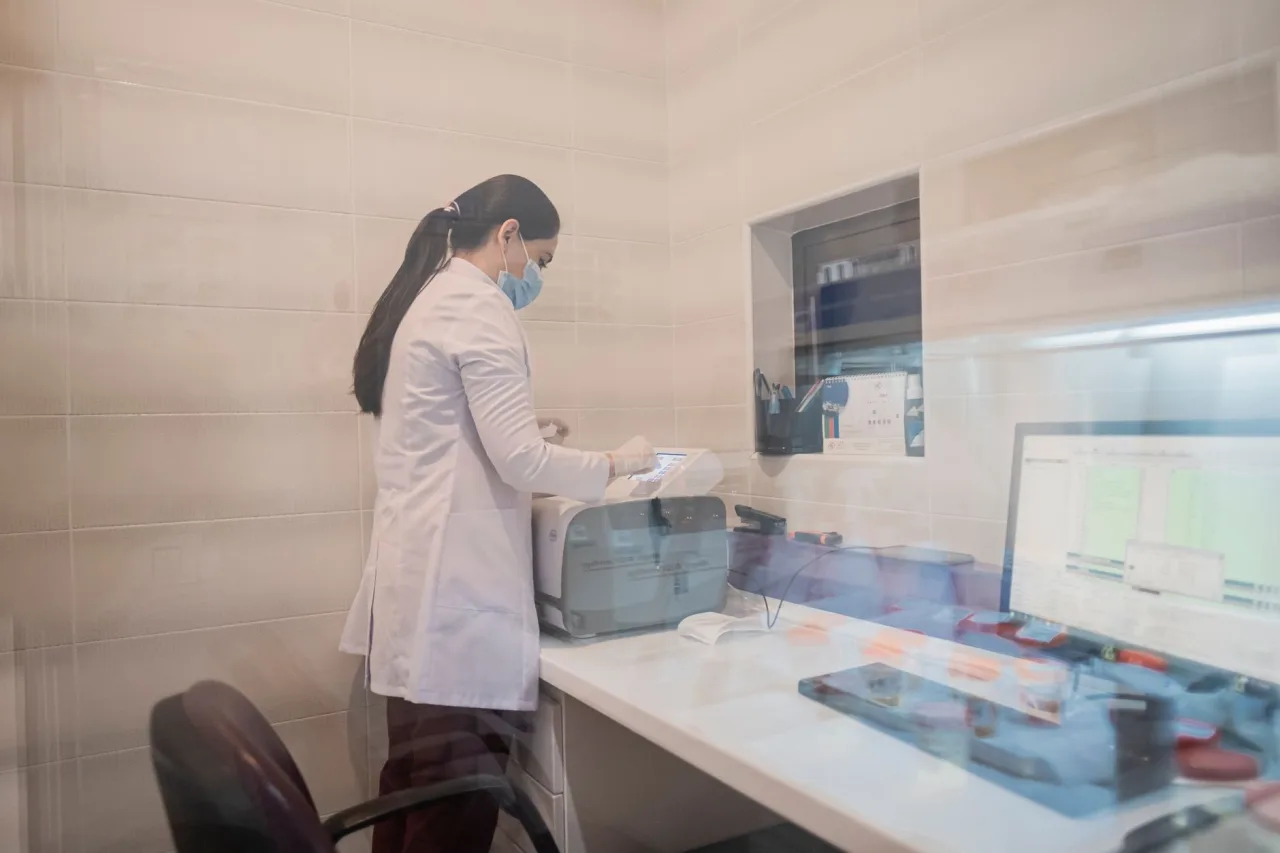
Once your clinician sends a referral, the imaging center schedules you. MRI slots are often longer than other scans because each study can take 15 to 60 minutes or more. When you book, it helps to ask three things: how long the appointment will run, whether contrast is planned, and what you should bring, such as prior images or an implant card. If enclosed spaces make you anxious, ask whether the site offers a wide-bore or open scanner, or search for an open MRI location near you.
How to prepare
- Metal screening: The NHS advises removing jewellery, some clothing and hearing aids, and you will be asked about pacemakers, surgical clips and other implants. This screening is the most important part of preparation.
- Clothing: Wear something without metal fasteners, or expect to change into a gown.
- Fasting: Some abdominal or contrast studies ask you to avoid food or drink for a few hours. Follow the exact instructions from your clinic.
- Medication and comfort: If you know you struggle with claustrophobia, discuss options with your doctor in advance rather than on the day.
Tell the team about pregnancy and kidney health. RadiologyInfo notes MRI has been used in pregnancy since the 1980s with no reports of ill effects on the pregnant person or baby, though first-trimester scans still warrant careful risk-benefit thought. Because gadolinium contrast can rarely affect people with serious kidney disease, your team may check kidney function before using it.
What happens during the test

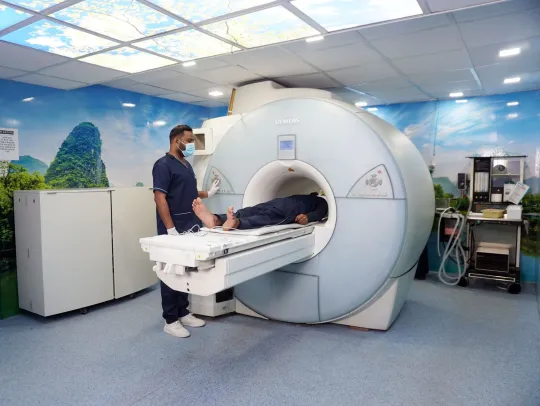
You lie on a padded table that slides into the scanner. A device called a coil may be placed over the area being imaged. You are given ear protection because the machine is loud, and you must stay still so the pictures are sharp. The technologist runs the scan from a nearby room, talks to you through an intercom and gives you a call button. If contrast is used, a small cannula is placed in a vein and the agent is given partway through the study.
The scanner captures a series of images from different angles. Between sequences you may be asked to hold your breath for a few seconds, especially for chest or abdominal studies. Nothing touches or hurts you, and you will not feel the magnetic field.
MRI compared with other tests
MRI is not always the first or best choice. For bone detail, bleeding or an urgent chest look, doctors may prefer a CT or a plain film. Our overview of CT and MRI compares the two, and if your question involves the lungs or a fracture, an X-ray imaging study may be ordered instead. The choice of test is a medical decision based on what your doctor needs to see.
After the scan
Most people return to normal activity right away. If you had contrast, you may be watched briefly. The NHS notes that contrast can occasionally cause mild effects such as nausea or a metallic taste, and serious reactions are rare. Drink normally afterward unless told otherwise. There is no radiation to clear from your body, so you are not a risk to anyone around you.
Getting and understanding results
A radiologist reviews your images and writes a report, which goes to the doctor who referred you. That doctor then explains the findings in the context of your symptoms, examination and any other tests. Reports use technical language, and a single phrase can mean very different things depending on your history. Resist the urge to decode the raw report or images on your own.
Turnaround varies from a day or two to about a week depending on the clinic and urgency. If you have not heard back within the promised window, call the ordering office. To plan for cost, review typical MRI prices with and without insurance and confirm the exact quote with the facility and your insurer.
This is general information, not medical advice. This article explains the MRI testing process in general terms. It cannot tell you whether you need the test or what your results mean for you. Please discuss your own care with your referring clinician or a radiologist.
Frequently asked questions
How long does MRI testing take?
A single MRI study usually takes about 15 to 60 minutes, and sometimes longer if several areas are imaged or contrast is used. Plan to arrive early for check-in and safety screening, and ask the clinic for the expected length when you book.
Does MRI testing hurt?
No. The scan itself is painless. You may find lying still and the loud noise uncomfortable, and if contrast is used you will feel a small needle for the cannula, but the magnetic field and radio waves cannot be felt.
Do I need contrast for my MRI?
It depends on the clinical question. Contrast, usually gadolinium, is given for some studies to highlight blood vessels, inflammation or certain tumours, and not for others. Whether you need it is decided by the radiologist and your doctor, who also check your kidney function when contrast is planned.
When will I get my MRI results?
A radiologist interprets the images and sends a report to your referring doctor, typically within a day or up to about a week depending on the clinic and urgency. Your own doctor then explains what the results mean for you. Contact the ordering office if you have not heard back in the expected time.
Can I eat and drive normally before and after an MRI?
For most MRI studies you can eat, drink and drive as usual, though some abdominal or contrast scans require fasting for a few hours. Follow the specific instructions your clinic gives you, and afterward you can generally return to normal activity right away.
More guides on MRI, CT & X-Ray
Have a question or a topic to suggest?
We read every message. Tell us what you would like to see next.
You may also like
MRI Tech
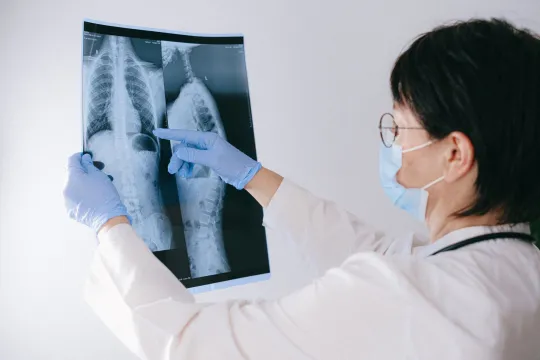
When people search for "MRI tech," they usually mean one of two things: the technology that makes a magnetic resonance imaging scan possible, or the technologist who runs the machine.
Stand Up MRI
A stand up MRI, sometimes called an upright, positional or weight-bearing MRI, lets you be scanned sitting, standing or bending rather than only lying flat.

X-Ray Scan
An X-ray scan is one of the fastest and most common medical imaging tests, often done in minutes to check bones, the chest and more. This guide explains what an X-ray exam involves, why doctors order it