CT Scan: Uses, Procedure and Results
Why a CT scan is ordered, how the procedure works, what contrast dye does, and how its radiation compares with a plain x-ray.
A CT scan, sometimes called a CAT scan, uses x-rays and a computer to build detailed cross-sectional pictures of the inside of your body. It can show bone, soft tissue, organs, and blood vessels in far more detail than a plain x-ray. This guide explains why a CT scan is ordered, how the procedure works, what contrast dye does, how the radiation compares with other tests, and why only a doctor can tell you what your results mean.
The short version
- CT stands for computed tomography. It combines many x-ray views into detailed slice-by-slice images of the body.
- Scans are quick and painless. A contrast dye is sometimes used to make organs and vessels show up more clearly.
- CT uses more radiation than a plain x-ray, so doctors order it when the detail it provides outweighs that small added risk.
- A radiologist interprets the images and reports to your doctor. Never try to read a CT result on your own.
What a CT scan is
A CT scanner is a doughnut-shaped machine with an x-ray tube that rotates around you. As it spins, it takes many x-ray measurements from different angles. A computer then combines them into cross-sectional images, often described as slices, which can be stacked to view an organ from any direction or rebuilt into a three-dimensional picture.
That layered detail is what sets CT apart from a single flat x-ray. According to RadiologyInfo.org, CT can reveal the chest, abdomen, and pelvis with enough clarity to detect tumours, injuries, blood clots, and vascular disease. For a broader map of imaging tests and where CT sits among them, see our overview of radiology.
Why a doctor orders a CT scan
CT is a workhorse of modern diagnosis because it is fast and detailed, which makes it especially valuable in emergencies. Common reasons a doctor requests one include:
- Assessing injuries after trauma, including internal bleeding and fractures.
- Detecting and staging cancers of the lung, liver, kidney, pancreas, and ovary.
- Looking for blood clots, aneurysms, and other vascular problems.
- Investigating severe abdominal pain, such as appendicitis or kidney stones.
- Guiding a biopsy needle or planning surgery and radiotherapy.
Because CT is so quick, it is often the first detailed test used when someone is seriously unwell and doctors need answers within minutes rather than hours.
How the scan works, step by step
A CT scan is usually straightforward and short. The scanning itself often takes only seconds to a few minutes, though the appointment is longer.
- You lie on a motorised table, usually on your back.
- If contrast is needed, a small cannula is placed in a vein, or you drink a contrast liquid, before the scan.
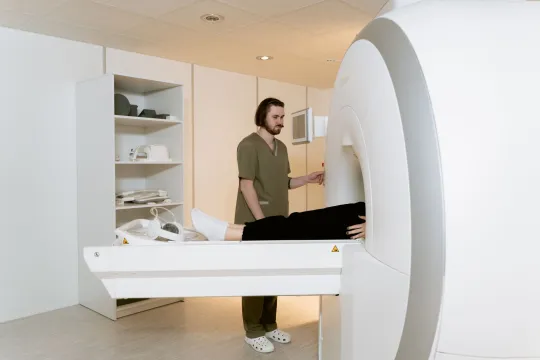
- The table slides slowly through the ring while the scanner rotates around you. You may be asked to hold your breath briefly.
- The technologist watches and speaks to you from an adjoining room, and the table moves you back out when the scan is done.
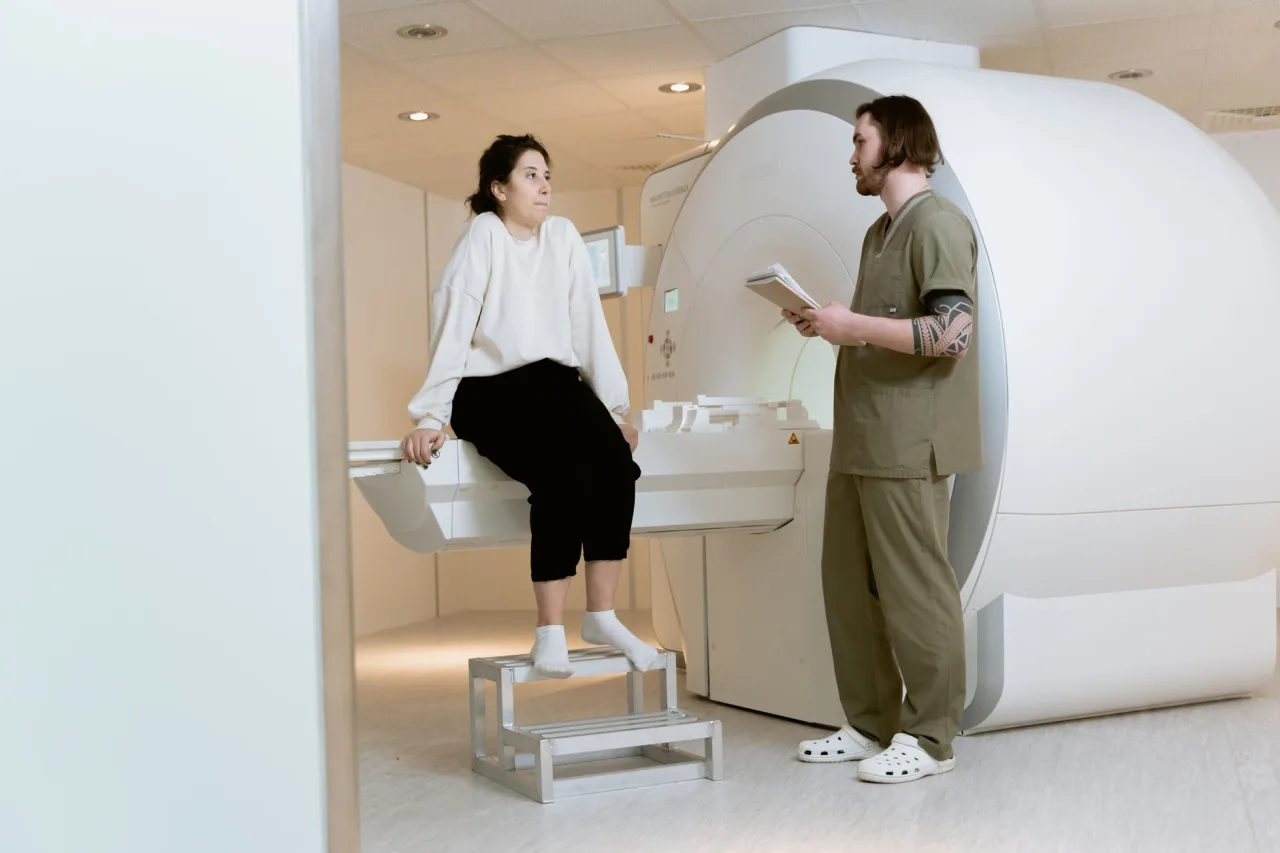
The scanner is an open ring, not an enclosed tunnel, so it feels far less confined than an MRI scan. You will not feel the x-rays, though intravenous contrast can cause a brief warm flush or metallic taste that passes quickly.
There are several kinds of CT, and your referral decides which you have. A plain CT uses no dye and is common for suspected fractures, kidney stones, or lung assessment. A contrast-enhanced CT adds dye to highlight organs or blood vessels. A CT angiogram maps the arteries in detail, and low-dose CT is used for lung cancer screening at roughly 1.5 millisieverts, far less than a standard abdominal study. Knowing which type you are booked for helps you understand the preparation and the small differences in radiation involved.
Contrast dye: what it does
Contrast medium is a dye that makes certain tissues, blood vessels, or the gut stand out more clearly on the images. As the NHS explains, it can be given as a drink, an injection into a vein, or occasionally into the back passage, and the body clears it naturally afterwards, mostly through urine.
Important: Serious reactions to modern contrast are rare, but tell the clinic in advance if you have had a reaction before, have kidney problems, take diabetes medicine, or are breastfeeding. RadiologyInfo.org notes that some manufacturers advise not breastfeeding for 24 to 48 hours after intravenous contrast, so ask your radiologist what applies to you.
Radiation: how CT compares
CT uses more radiation than a plain x-ray because it takes many images. RadiologyInfo.org lists a CT of the abdomen and pelvis at roughly 7.7 millisieverts, compared with about 0.1 millisieverts for a single chest x-ray and around 3 millisieverts of natural background radiation a year. No radiation stays in your body after the scan is over.
The NHS notes that having many CT scans over time carries a very small increase in cancer risk, which is why doctors weigh the benefit of each scan against that risk and use the lowest dose that still answers the question. Facilities follow the ALARA principle, meaning as low as reasonably achievable. If you are pregnant, tell the clinic, because CT is generally avoided during pregnancy unless it is essential.
It is worth keeping this in proportion. For someone who is unwell, the information a CT provides can be genuinely life-changing, and the small radiation risk is usually far outweighed by the benefit of an accurate, fast diagnosis. The goal is not to avoid CT out of fear, but to make sure each scan is justified, uses a sensible dose, and is not simply repeated when an earlier scan or an alternative test would answer the question.
What your results mean
After the scan, a radiologist examines the images in detail and writes a report for the doctor who ordered the test. That doctor then explains the findings to you in the context of your symptoms and history. A result described as a finding is not automatically bad news, and many so-called incidental findings turn out to be harmless.
How quickly you get results depends on the setting. In an emergency, a radiologist may review the images within the hour, while a routine outpatient report can take several days to reach your doctor. It is normal to feel anxious in the gap, but try not to draw conclusions from the images or an online portal before your doctor has explained them. Radiology reports are written for clinicians and often use cautious, technical language that can sound more alarming than the situation warrants.
This is general information, not medical advice. CT images are complex, and the same appearance can mean very different things depending on your situation. Do not attempt to interpret your own scan or an online report. Always discuss the findings with the doctor who ordered the scan or a specialist they refer you to.
Cost and where to have a CT scan
What a CT scan costs varies widely by country, by provider, by the body part scanned, and by whether contrast is used. In systems funded by insurance or self-pay, the same scan can differ by hundreds of units depending on the facility, so it is always worth confirming the price and your coverage with both the clinic and your insurer before booking. Our detailed guide to the price of a CT scan breaks down realistic ranges and how to ask for a quote.
Choosing an accredited clinic matters more than choosing the closest one. Our guide to finding a CT scan clinic near you explains what to check. The technologists who run these machines follow a defined training path, covered in our look at the x-ray technologist role.
Frequently asked questions
Is a CT scan the same as a CAT scan?
Yes. CAT scan is simply an older name for the same test. Both stand for computed axial tomography, now usually shortened to computed tomography, or CT. There is no difference between a CT scan and a CAT scan.
How long does a CT scan take?
The scan itself often takes only seconds to a few minutes. The full appointment is longer because of preparation, positioning, and any contrast dye. You are usually in and out within about 15 to 30 minutes, though this varies by clinic and scan type.
Is the radiation from a CT scan dangerous?
A single CT scan uses more radiation than a plain x-ray but is considered low risk when the scan is medically justified. Having many scans over time carries a very small increase in cancer risk, so doctors order CT only when the benefit outweighs it. Discuss any concerns with your doctor.
Will I need contrast dye?
It depends on the reason for your scan. Contrast helps show blood vessels, organs, or the gut more clearly, but not every scan needs it. Your clinic will tell you in advance and ask about allergies and kidney function first. Always mention past reactions to contrast.
Who tells me the results of my CT scan?
A radiologist interprets the images and sends a report to the doctor who ordered the scan. That doctor then explains what the results mean for you. You should not rely on reading the images or report yourself, because interpretation depends on your full clinical picture.
More guides on MRI, CT & X-Ray
Have a question or a topic to suggest?
We read every message. Tell us what you would like to see next.
You may also like
CT Scan Near Me: How to Choose a Clinic
A practical guide to finding a trustworthy CT scan clinic near you, covering accreditation, radiation dose, radiologist reporting, and honest cost ranges.

CT Scan Cost: With & Without Insurance
A clear breakdown of CT scan costs: why prices vary, typical ranges with and without insurance, what is in the bill, and how to get a real quote.

MRI Scan: Uses, Procedure & Results
A plain-language guide to MRI scans: what they show, why a doctor might order one, how to prepare, what happens during the scan, and how results are read.