Stand Up MRI
A stand up MRI, sometimes called an upright, positional or weight-bearing MRI, lets you be scanned sitting
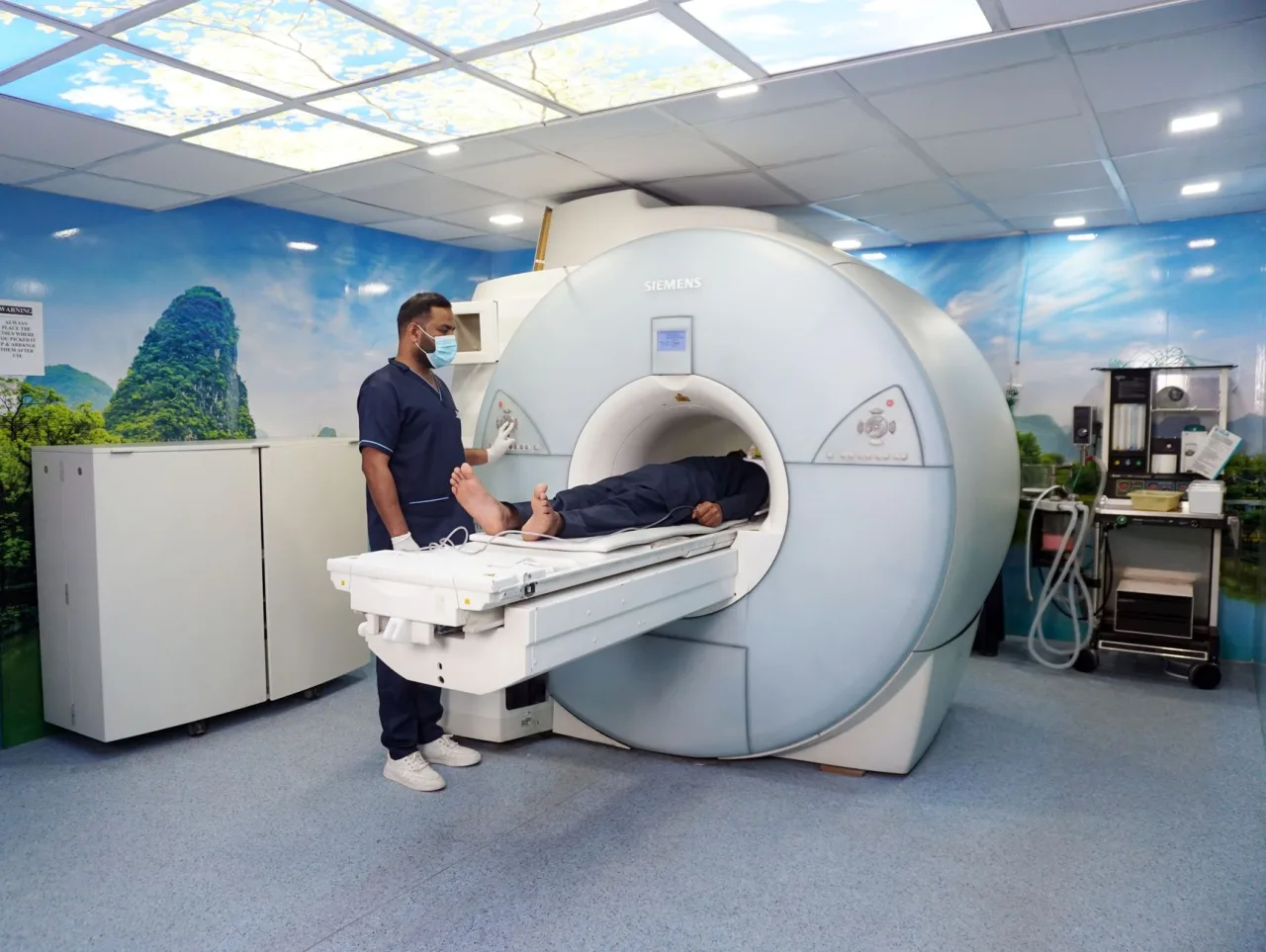
A stand up MRI, sometimes called an upright, positional or weight-bearing MRI, lets you be scanned sitting, standing or bending rather than only lying flat. The idea is to image the spine and joints in the positions that actually cause your symptoms. This guide explains how it works, when it may help, its trade-offs, and why the choice belongs with your doctor.
The short version
- Stand up MRI is an open, upright scanner that can image you in weight-bearing or bent positions, not just lying down.
- It uses the same magnet-and-radio-wave physics as any MRI, so there is no ionizing radiation.
- Upright and open designs often use a lower magnetic field strength, which can be a trade-off in image detail for some studies.
- It may suit people with claustrophobia or symptoms that only appear when standing, but it is not the right tool for every question. Your clinician decides.
What a stand up MRI is
A conventional MRI scans you lying on your back inside a tunnel. A stand up or upright MRI uses an open design that allows imaging while you sit, stand or hold a specific posture. The underlying technology is the same. As RadiologyInfo explains, any MRI uses "a powerful magnetic field, radiofrequency pulses, and a computer to produce detailed pictures," with no ionizing radiation. What changes with an upright unit is the position your body can be in while those images are taken.
Because it is an open configuration, a stand up MRI also tends to be roomier. RadiologyInfo notes that open units with larger diameters can accommodate claustrophobic patients, though it adds that some exam types still require a traditional closed design. If your main concern is enclosed spaces, you can also compare an open MRI facility near you.
Why position can matter
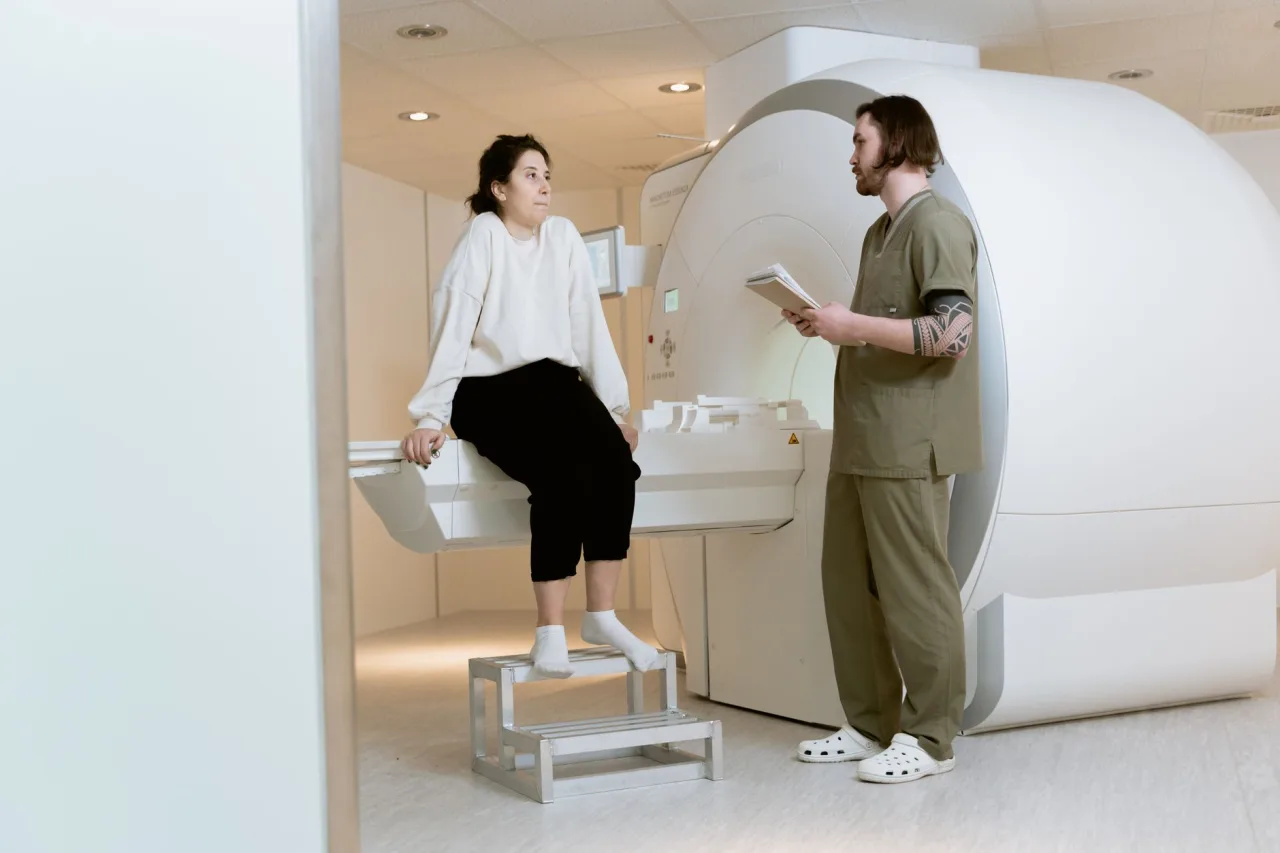
Some spine and joint problems change with load and posture. A disc or a joint may look different when you are lying down and relaxed compared with when you are upright and bearing weight. The theory behind positional imaging is that scanning you in the posture that reproduces your pain may reveal changes that a lying-down scan can miss. This is why stand up MRI is most often discussed for the spine and for weight-bearing joints.
It is important to be honest about the evidence: positional MRI is a useful option in selected cases, but it is not proven to be better for every condition, and a traditional high-field scan remains the standard for many studies. Whether it adds value for you is a clinical judgment, not a marketing claim. To understand the standard test first, read our overview of the MRI scan and what results mean.
When it may be considered
- Back and neck symptoms that change with posture: pain that appears or worsens on standing or bending may be assessed in those positions.
- Claustrophobia: the open, upright design can be far more tolerable than a narrow bore.
- Larger body size: more room can make the scan feasible where a closed bore is difficult.
- People who cannot lie flat comfortably: some patients find sitting easier than lying still for a long study.
None of these means a stand up MRI is automatically the best test. Your referring clinician weighs the clinical question against image quality and availability.
The main trade-off: field strength. Upright and open scanners frequently operate at a lower magnetic field strength than the 1.5T or 3T closed magnets used in most hospitals. Lower field strength can mean less image detail or longer scan times for some studies. For a fine-detail question, a radiologist may still prefer a high-field closed scanner. Ask which scanner and field strength a clinic uses before you book.
How the scan works in practice
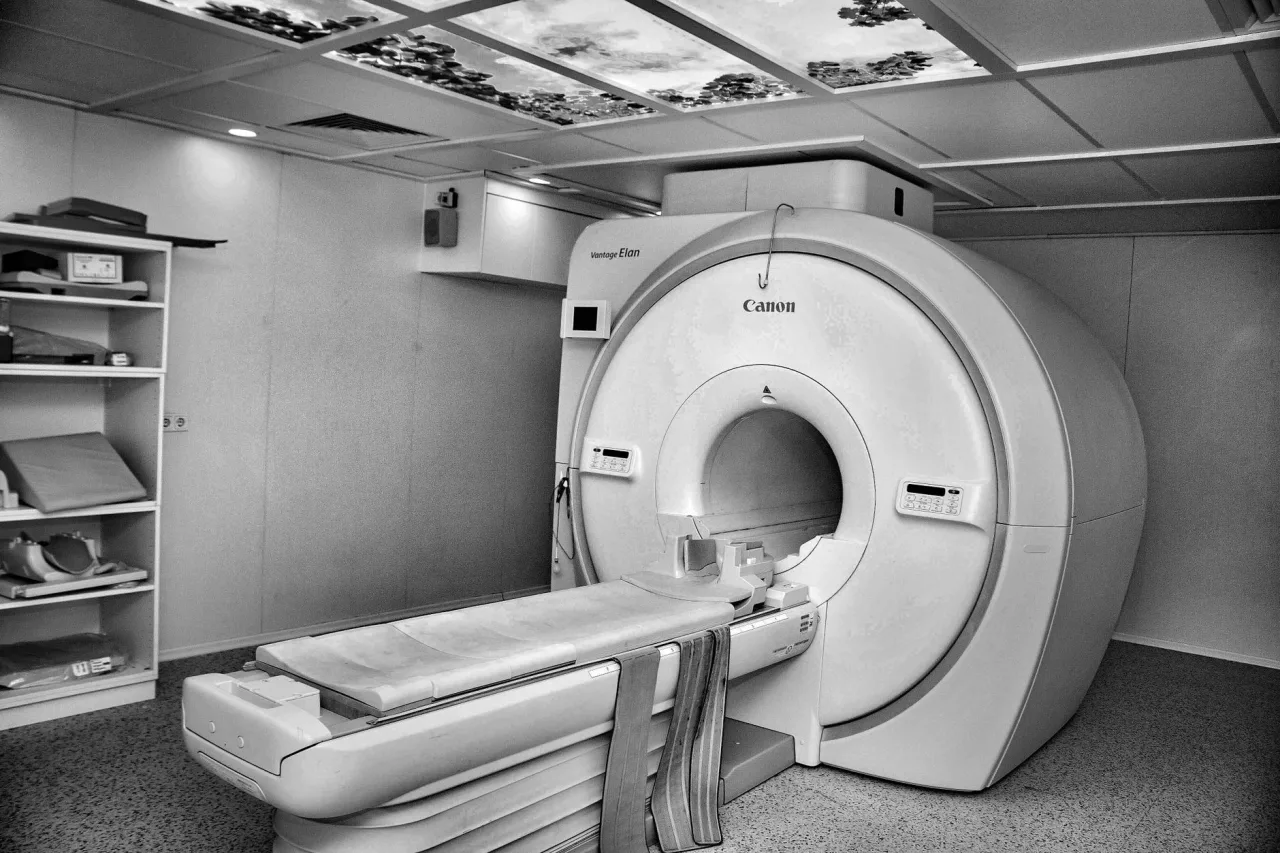
You are positioned sitting or standing in the open scanner, and you may be asked to hold a posture such as leaning forward or extending your neck. As with any MRI, you must stay still during each sequence so the images are sharp, and you are given a way to communicate with the technologist. There is no needle unless contrast is ordered, and you feel nothing from the magnetic field itself. Depending on how many positions and sequences are needed, the appointment can take from around 30 minutes to over an hour.
Safety and preparation
Safety rules are the same as for any MRI because the magnet is always on. The NHS advises removing jewellery, certain clothing and hearing aids, and disclosing pacemakers, surgical clips and other implants before the scan. Tell the team about every implant and surgery, and mention if you might be pregnant. Some studies use gadolinium contrast, which RadiologyInfo notes is generally well tolerated but is used with care in people who have serious kidney disease. Whether you need contrast is a medical decision.
Availability and cost
Upright MRI scanners are less common than standard machines, so you may need to travel or wait longer, and not every insurer covers positional imaging for every indication. Prices vary widely by country, provider and insurance, so confirm the cost with the clinic and your insurer before booking rather than relying on any advertised figure. Our guide to MRI prices with and without insurance gives realistic ranges to frame the conversation, and you can also compare an MRI center near you.
Understanding your results
The scanner produces images; a radiologist interprets them and reports to your referring doctor, who explains what they mean for you. Whether a positional finding is significant depends on your symptoms and the rest of your assessment. Do not treat images or a raw report as a diagnosis on their own. If you and your doctor are weighing tools, our comparison of CT and MRI can help frame the discussion.
This is general information, not medical advice. A stand up MRI is not automatically better than a standard scan. Only your referring clinician or a radiologist can decide whether positional imaging is appropriate for your situation and what any findings mean.
Frequently asked questions
Is a stand up MRI better than a regular MRI?
Not necessarily. A stand up MRI can image you in weight-bearing positions and is easier for people with claustrophobia, but upright and open scanners often use a lower magnetic field strength that can reduce image detail. For many studies a traditional high-field scanner remains the standard. Your doctor decides which is appropriate.
Does a stand up MRI use radiation?
No. Like any MRI, a stand up MRI uses a strong magnet and radio waves rather than ionizing radiation. There is no radiation exposure from the scan itself, which is one reason MRI can be repeated more freely than X-ray or CT.
Who might benefit from an upright MRI?
It may be considered for people whose spine or joint symptoms change with standing or bending, and for those who cannot tolerate a closed scanner because of claustrophobia or body size. It is not right for every condition, and the value in your case is a clinical judgment made by your referring clinician.
How long does a stand up MRI take?
Depending on how many positions and image sequences are needed, an upright MRI can take from about 30 minutes to over an hour. Ask the clinic for the expected length when you book, and allow extra time for check-in and safety screening.
Is a stand up MRI more expensive?
Costs vary widely by country, provider and insurance, and positional imaging is not always covered for every indication. Always confirm the price with the clinic and your insurer before booking rather than relying on an advertised figure.
More guides on MRI, CT & X-Ray
Have a question or a topic to suggest?
We read every message. Tell us what you would like to see next.
You may also like

MRI Tech
When people search for "MRI tech," they usually mean one of two things: the technology that makes a magnetic resonance imaging scan possible, or the technologist who runs the machine.

MRI Testing
MRI testing can feel mysterious the first time: a referral appears, an appointment gets booked, and you are told to lie still inside a loud tunnel.

X-Ray Scan
An X-ray scan is one of the fastest and most common medical imaging tests, often done in minutes to check bones, the chest and more. This guide explains what an X-ray exam involves, why doctors order it