Open MRI Near Me: How to Choose a Clinic
How open MRI scanners differ from closed ones, who benefits, the honest trade-off in image quality, and how to find and vet a good clinic near you.
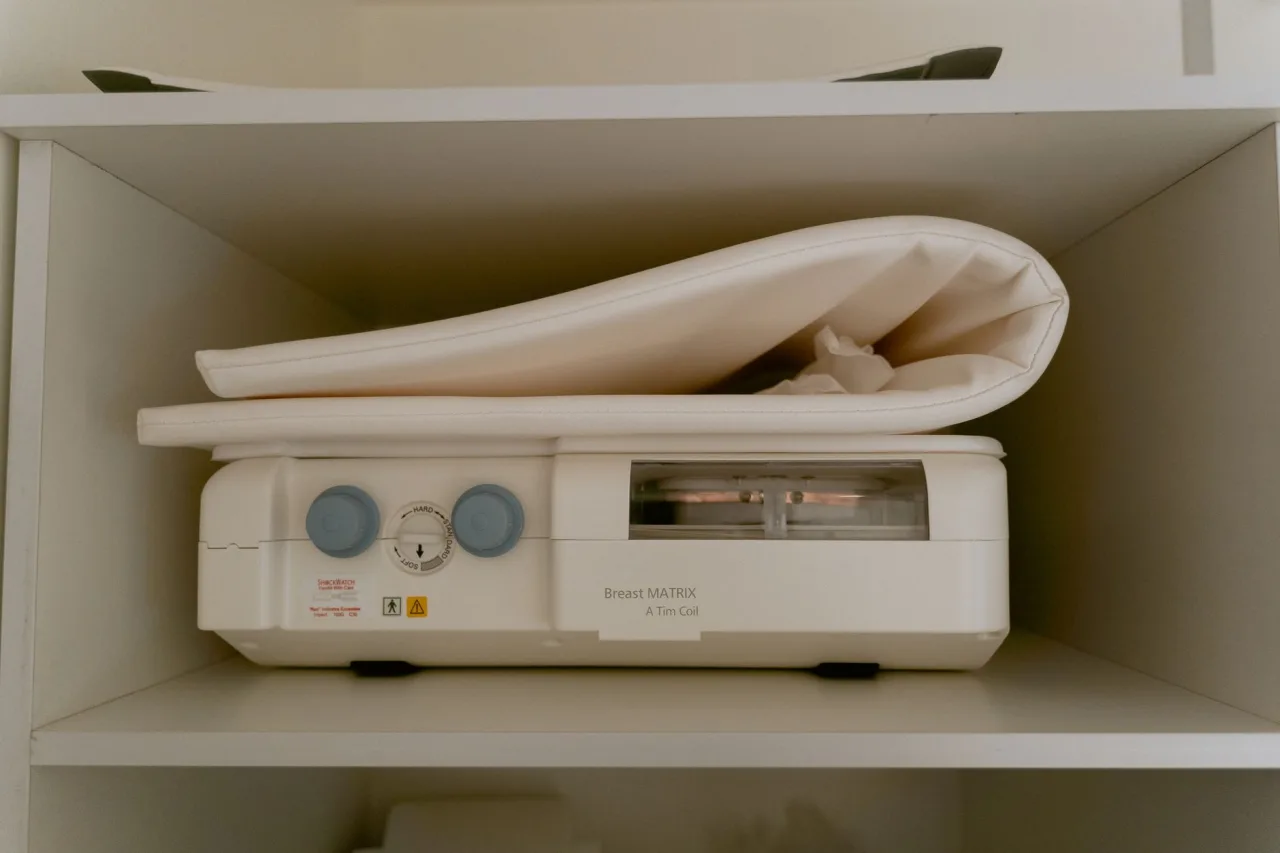
Searching for an "open MRI near me" usually means one thing: you want the detailed pictures an MRI provides without the tight, enclosed tunnel of a traditional scanner. This guide explains what an open MRI actually is, who benefits most, the honest trade-offs in image quality, and how to find and vet a good open MRI clinic in your area.
The short version
- An open MRI uses a magnet with open sides instead of a narrow tunnel, which helps people who feel claustrophobic or who need more room.
- MRI does not use ionizing radiation. It creates images with a strong magnetic field and radio waves.
- Open scanners often use a lower magnet strength than closed ones, which can affect image detail for some exams, so the best machine depends on the body part and question being asked.
- When choosing a clinic, prioritise accreditation, the magnet strength offered, and who reads and reports the scan, not just the shortest drive.
What "open MRI near me" really means
Magnetic resonance imaging is one of the most useful tools in medicine because it shows soft tissue, joints, the brain, the spine, and organs in remarkable detail. According to RadiologyInfo.org, MRI uses "a powerful magnetic field, radiofrequency pulses, and a computer to produce detailed pictures of internal body structures," and importantly it "does not use radiation (x-rays)." That radiation-free profile is a big part of why MRI is so widely requested.
The catch is comfort. A traditional MRI is a long, narrow cylinder, and lying inside it can feel confining. An open MRI is built differently: the magnet sits above and below you with open space on the sides, so you are not fully surrounded. When people type "open MRI near me," they are almost always looking for that more comfortable design within a reasonable distance. If you want a plain-language refresher on the scan itself before booking, our overview of the MRI scan and what results mean is a good starting point.
Open, closed and wide-bore: the real differences

There are three broad machine styles you will encounter, and clinics do not always use the labels consistently. Knowing them helps you ask better questions when you call.
- Closed (traditional) MRI: a fully enclosed tunnel. It typically offers the highest magnet strength and image detail, which matters for demanding exams.
- Open MRI: open on the sides, with the most room and the least enclosed feeling. It is the friendliest option for claustrophobia and for larger patients, though it often runs at a lower magnet strength.
- Wide-bore MRI: still a tunnel, but with a larger opening and a shorter length than a classic closed scanner. It is a middle ground that keeps higher magnet strength while feeling less cramped.
Ask this when you call: "Is your open scanner a true open MRI or a wide-bore machine, and what is its magnet strength in Tesla?" The answer tells you a lot about both comfort and the kind of image detail you can expect.
Who benefits most from an open MRI
An open design is not just a luxury. For some people it is the difference between completing a scan and not being able to tolerate one at all. You may benefit if you:
- Feel claustrophobic or anxious in enclosed spaces. The NHS advises telling the team in advance if you are worried about small spaces, and notes that medicine to help you relax may be an option, but an open scanner removes much of the trigger.
- Have a larger body or broad shoulders that make a standard tunnel uncomfortable or impractical.
- Are scanning a child who may find a tunnel frightening, or an older adult who struggles to stay still while enclosed.
- Need to be positioned in a way a tunnel cannot easily accommodate.
If your main worry is simply the enclosed feeling, ask whether a wide-bore scanner would also solve it, because it may give you better image quality while still feeling roomier. A clinic that reads a lot of these scans, such as a dedicated MRI centre, can advise on which machine suits your specific exam.
The trade-off: image quality and magnet strength

Here is the honest part that marketing pages often skip. Magnet strength is measured in Tesla (T), and it influences how much fine detail a scan can capture. Closed and wide-bore scanners commonly run at 1.5T or 3T. Many open scanners run at a lower field strength. A lower field strength does not make an open MRI useless, and for many joint, spine, and general exams it produces perfectly usable images. But for some detailed studies, a higher-strength machine may be preferred.
The practical takeaway is that the "best" scanner is the one matched to your clinical question. This is a decision for your referring doctor and the radiologist, not something to settle by comfort alone. If a specialist has asked for a particular field strength, follow that guidance even if it means a slightly less open machine. To understand the underlying technology, see our explainer on the magnetic resonance image and how it works.
Please note: This article is general educational information, not medical advice. It cannot tell you which scanner or scan you need, or what any result means for you. Always follow the guidance of your referring clinician and the reporting radiologist.
How to find and vet an open MRI clinic near you
A map search returns a list of names, but distance is the least important factor once safety and quality are on the table. Work through this checklist before you book.
- Accreditation: look for a facility accredited by a recognised body such as the American College of Radiology, whose program the ACR calls "the Gold Standard in medical imaging." Accreditation signals that equipment, staff, and image quality have been independently reviewed.
- Confirm it is genuinely open: ask whether the scanner is a true open unit or a wide-bore tunnel, and get the field strength.
- Who reports the scan: a qualified radiologist should interpret your images and send a written report to your doctor. Ask how quickly that report is delivered.
- Referral and pre-authorisation: check whether you need a doctor's referral and, if you have insurance, whether the scan needs prior approval.
- Safety screening: a good clinic will screen you carefully for implants and metal, because certain devices are not MRI compatible.
Comparing several nearby options on these points, rather than picking the first result, is the whole point of a sensible search. Our broader guide to choosing a radiology clinic near you walks through the same vetting across every scan type.
What an open MRI typically costs
Costs vary widely by country, provider, body part, whether contrast dye is used, and your insurance. As a rough guide only, a self-pay MRI in many private settings can range from a few hundred to well over a thousand US dollars per region scanned, with similar wide ranges in other currencies. Open scanners are not automatically cheaper or more expensive than closed ones.
Never treat any figure you read online as a quote. Confirm the total price with the clinic and, if you are insured, with your insurer, including any facility fee and the radiologist reporting fee. Ask whether the quoted price covers contrast if your exam needs it. For a sense of how imaging pricing works more generally, our look at the real price of a CT scan with and without insurance explains the same moving parts.
What to expect on the day
Preparation for an open MRI is much like any MRI. You will complete a safety questionnaire, remove all metal items, and usually change into a gown. The scan itself is painless, though MRI machines are noisy and you will be asked to stay very still so the images are sharp. Depending on the exam, it may last anywhere from around fifteen minutes to an hour.
If contrast dye is used, it is given through a small vein line, and the team will ask about kidney problems and allergies first. Because an open scanner is less enclosed, many anxious patients find they need less or no sedation, but discuss any concerns beforehand. Afterwards, the images go to a radiologist, whose report is sent to the doctor who referred you. Resist the urge to interpret your own images: the written report and your doctor's explanation are what matter.
Frequently asked questions
Is an open MRI as accurate as a closed MRI?
For many exams an open MRI produces perfectly usable, accurate images, but open scanners often run at a lower magnet strength than closed or wide-bore machines, which can matter for certain detailed studies. The most accurate choice depends on the body part and the clinical question, so follow the advice of your referring doctor and the radiologist.
Does an open MRI use radiation?
No. MRI does not use ionizing radiation. It creates images using a strong magnetic field and radio waves, which is one reason it is so widely used. This is true for both open and closed MRI machines.
Should I choose an open MRI or a wide-bore MRI for claustrophobia?
Both feel far less confining than a traditional closed tunnel. An open MRI gives the most room and open feeling, while a wide-bore scanner keeps higher magnet strength with a larger, shorter opening. If your exam needs high image detail, ask whether a wide-bore machine would relieve your claustrophobia while still meeting the clinical requirement.
How do I know if an open MRI clinic is any good?
Look for accreditation from a recognised body such as the American College of Radiology, confirm the scanner type and magnet strength, and check that a qualified radiologist reports your scan and sends a written result to your doctor. Careful safety screening for metal and implants is another sign of a well run clinic.
Do I need a doctor's referral for an open MRI?
In many settings you need a referral from a doctor, and if you use insurance the scan may also require prior authorisation. Requirements vary by clinic and country, so confirm both the referral and any pre-approval directly with the facility and your insurer before booking.
More guides on Find a Clinic (Local)
Have a question or a topic to suggest?
We read every message. Tell us what you would like to see next.
You may also like
MRI Centers Near Me: How to Compare
With a scan request in hand, the real question is which MRI centre is accredited, affordable and staffed by strong radiologists. Here is how to compare MRI centres near you like an informed patient.

Radiology Near Me: How to Choose a Clinic
Radiology near you spans X-ray, ultrasound, CT and MRI. Here is what a radiology clinic does, who the radiologist is, honest radiation facts by scan type, and how to choose an accredited practice.

MRI Scan: Uses, Procedure & Results
A plain-language guide to MRI scans: what they show, why a doctor might order one, how to prepare, what happens during the scan, and how results are read.