CT Scan Machine
The CT scan machine is one of the most powerful tools in modern medicine
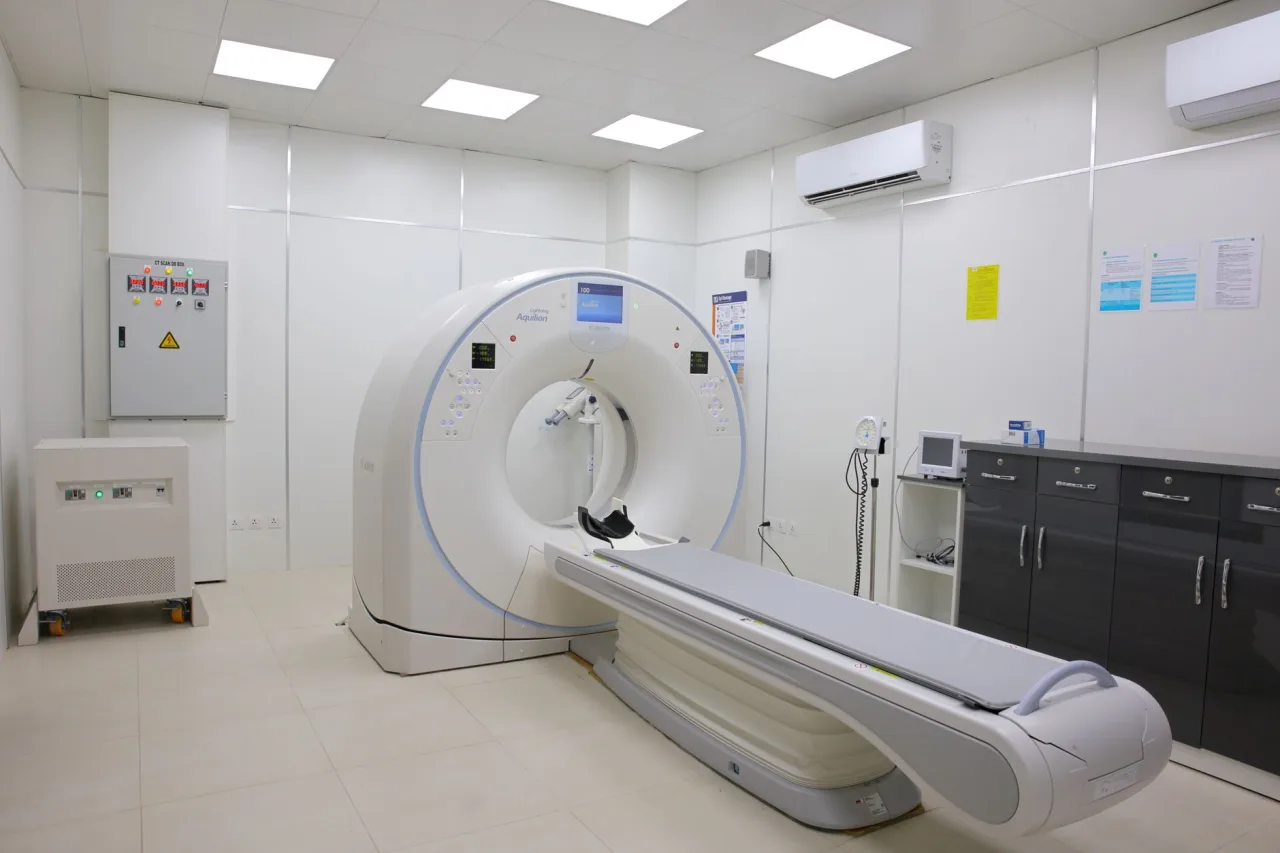
The CT scan machine is one of the most powerful tools in modern medicine, turning a series of x-ray measurements into detailed slice-by-slice pictures of the body. If you have been booked for a CT and want to understand the equipment before you arrive, this guide explains what the machine is, how it works, what happens during a scan, how the radiation compares, and why only a radiologist and your doctor can interpret the images.
The short version
- A CT scan machine is a doughnut-shaped scanner with a rotating x-ray tube that builds cross-sectional images of the body.
- The scan is quick and painless, and a contrast dye is sometimes used to make organs and vessels clearer.
- CT uses more radiation than a plain x-ray, so it is ordered when the detail it gives outweighs that small risk.
- A radiologist reads the images and reports to your doctor. Never try to interpret a CT result yourself.
What a CT scan machine is
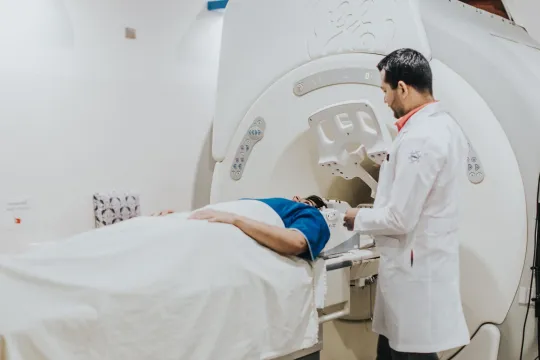
CT stands for computed tomography. The machine looks like a large ring, or gantry, with a flat motorised bed running through the centre. Inside the ring sits an x-ray tube and, opposite it, a bank of detectors. As the tube spins around you, it takes many x-ray measurements from different angles, and a computer combines them into cross-sectional images often described as slices. As the NHS describes it, the scanner is a large ring that moves around part of your body as you lie on a flat bed.
That layered detail is what sets a CT machine apart from a single flat x-ray. According to RadiologyInfo.org, the slices can be reformatted into other planes or rebuilt into three-dimensional images, letting a radiologist view organs, bones, soft tissue, and blood vessels from any direction. For a wider view of how CT sits among other tests, see our overview of radiology.
How the CT machine builds an image
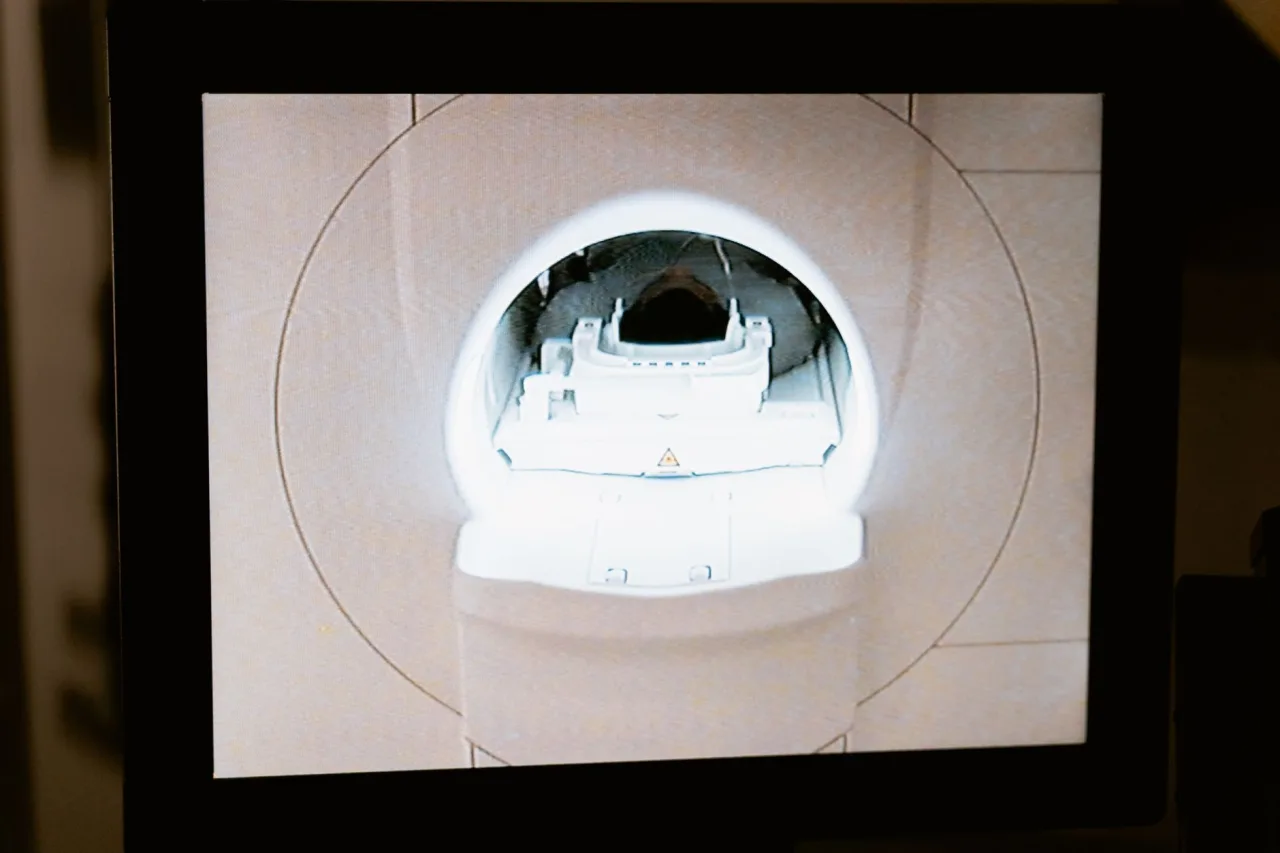
A plain x-ray flattens everything in the beam into a single picture, so structures overlap. A CT machine solves that by measuring from hundreds of angles as the tube rotates. The bed moves you slowly through the ring while this happens, so the scanner effectively captures a spiral of data along the body. Powerful software then reconstructs that data into thin slices, each showing a cross-section as if the body had been sliced like a loaf of bread.
Because it reads subtle differences in density, a CT machine can separate tissues that a plain film blurs together, which is why it is so useful for the chest, abdomen, and pelvis. This is also why a CT gives far more detail than a plain x-ray, at the cost of a higher radiation dose.
Why a doctor orders a CT scan
CT is fast and detailed, which makes it especially valuable in emergencies. Common reasons a doctor requests one include:
- Assessing injuries after trauma, including internal bleeding and fractures.
- Detecting and staging cancers of the lung, liver, kidney, and pancreas.
- Looking for blood clots, aneurysms, and other blood vessel problems.
- Investigating severe abdominal pain, such as suspected appendicitis or kidney stones.
- Guiding a biopsy needle or planning surgery and radiotherapy.
Because a CT machine can produce answers within minutes, it is often the first detailed test used when someone is seriously unwell and doctors cannot wait hours for results.
What happens during a scan, step by step
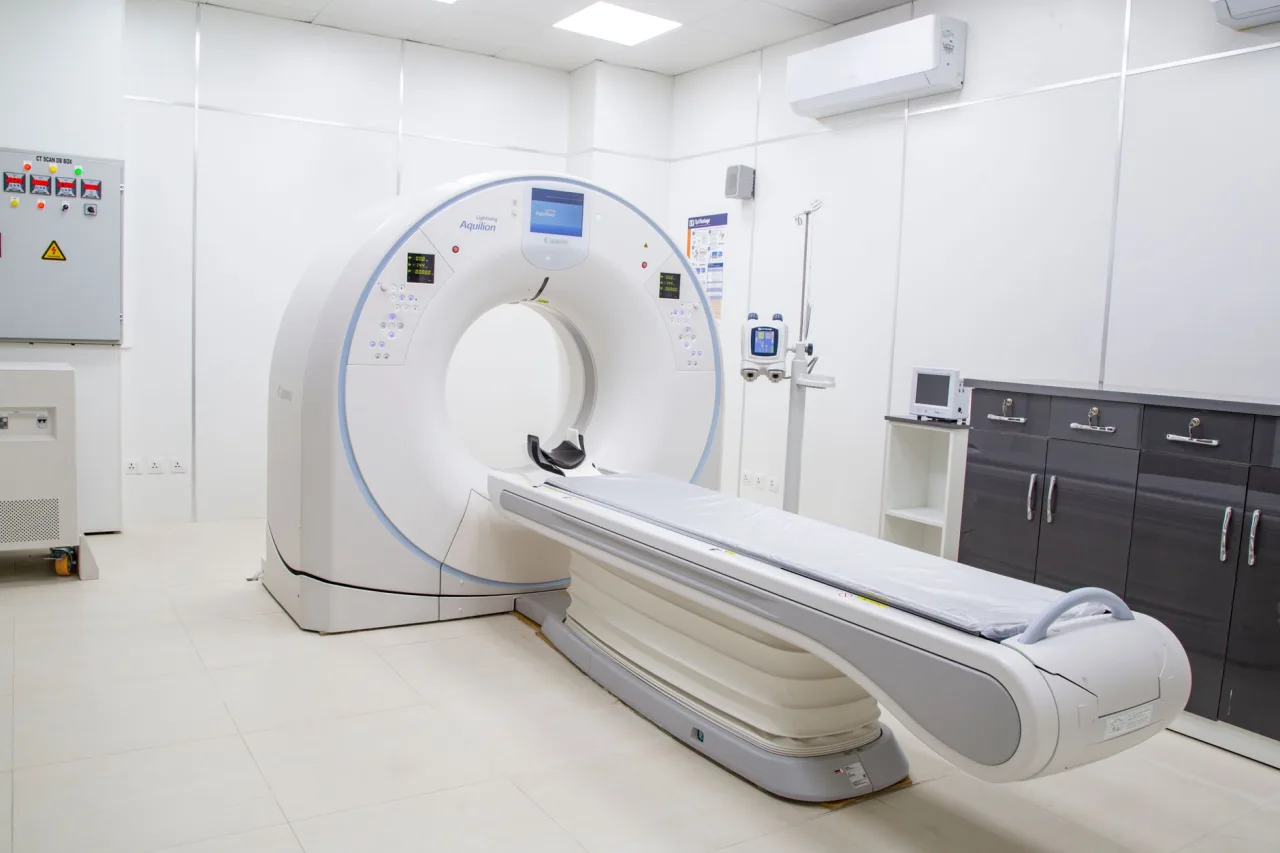
A CT scan is usually short and simple. The scanning itself often takes seconds to a few minutes, and the NHS puts the whole procedure at around 10 to 20 minutes.
- You may need to fast for a few hours beforehand and remove jewellery and metal, as RadiologyInfo.org advises for many body scans.
- You lie on the motorised bed, usually on your back, and the technologist positions you.
- If contrast is needed, a small cannula is placed in a vein, or you drink a contrast liquid, before imaging.
- The bed slides slowly through the ring while the machine rotates around you, and you may be asked to hold your breath briefly.
The technologist watches and speaks to you from an adjoining room. The ring is open, not an enclosed tunnel, so a CT machine feels far less confined than an MRI scanner. You will not feel the x-rays, though intravenous contrast can cause a brief warm flush or a metallic taste that passes quickly, as the NHS notes.
Radiation: how CT compares
A CT machine uses more radiation than a plain x-ray because it takes many images. RadiologyInfo.org notes that the exact dose varies by the type of scan, and that children are more sensitive to radiation and should be scanned with low-dose technique only when medically necessary. The NHS adds that having many CT scans over time carries a very small increase in cancer risk, which is why doctors weigh the benefit of each scan and use the lowest dose that answers the question.
Important: Tell the clinic in advance if you are pregnant, might be pregnant, or are breastfeeding, and mention any previous reaction to contrast dye or any kidney problems. CT is generally avoided in pregnancy unless it is essential, and your care team will decide the safest plan for you.
What your results mean
After the scan, a radiologist examines the images in detail and writes a report for the doctor who ordered the test. That doctor then explains the findings to you in the context of your symptoms and history. The NHS notes that results often take between one and two weeks, and sometimes up to four, depending on how urgent the scan is, though in an emergency a radiologist may review the images within the hour.
A result described as a finding is not automatically bad news, and many incidental findings turn out to be harmless. Radiology reports are written for clinicians and use cautious, technical language that can sound more alarming than the situation warrants, so try not to draw conclusions from the images or an online portal before your doctor has explained them.
This is general information, not medical advice. CT images are complex, and the same appearance can mean very different things depending on your situation. Do not attempt to interpret your own scan or report. Always discuss the findings with the doctor who ordered the scan or a specialist they refer you to.
Cost and where to have a CT scan
What a CT scan costs varies widely by country, by provider, by the body part scanned, and by whether contrast is used and whether you use insurance. Confirm the price and your coverage with both the clinic and your insurer before booking, and see our guide to the price of a CT scan for realistic ranges. Choosing an accredited clinic matters more than choosing the closest, and our guide to finding a CT scan clinic near you explains what to check.
Frequently asked questions
How does a CT scan machine work?
A CT machine has an x-ray tube that rotates around you inside a doughnut-shaped ring while the bed moves you through it. It takes many x-ray measurements from different angles, and a computer combines them into detailed cross-sectional slices that can be viewed from any direction or rebuilt in three dimensions.
Is a CT scan machine the same as an MRI machine?
No. A CT machine uses x-rays and a rotating tube to build images, while an MRI machine uses a strong magnet and radio waves and no ionising radiation. A CT ring is open and scans quickly, whereas an MRI is a longer tunnel and takes more time. Your doctor chooses based on what needs to be seen.
How long does a CT scan take?
The scan itself often takes only seconds to a few minutes, and the NHS puts the whole procedure at around 10 to 20 minutes. The extra time covers preparation, positioning, and any contrast dye. You are usually in and out fairly quickly, though this varies by clinic and scan type.
Is the radiation from a CT scan dangerous?
A CT scan uses more radiation than a plain x-ray but is considered low risk when the scan is medically justified. Having many scans over time carries a very small increase in cancer risk, so doctors order CT only when the benefit outweighs it and use the lowest dose that works. Discuss any concerns with your doctor.
Who tells me the results of my CT scan?
A radiologist interprets the images and sends a report to the doctor who ordered the scan. That doctor then explains what the results mean for you. You should not rely on reading the images or report yourself, because interpretation depends on your full clinical picture.
More guides on MRI, CT & X-Ray
Have a question or a topic to suggest?
We read every message. Tell us what you would like to see next.
You may also like
L Spine X-Ray
An L spine x-ray, short for lumbar spine x-ray, is a quick imaging test that takes pictures of the five bones in your lower back. Doctors use it to look for fractures, alignment problems, arthritis

Foot X-Ray Normal
A foot x-ray is a quick, painless test that shows the many small bones and joints of the foot. If you have searched for foot x-ray normal, you are probably trying to understand what a normal result actually means
CT Scan Abdomen and Pelvis
A CT scan of the abdomen and pelvis uses x-rays and a computer to build detailed cross-sectional pictures of the organs in your belly and lower trunk.