Low Dose CT Scan for Lung Cancer
A low-dose CT scan for lung cancer, often shortened to LDCT, is a specialized chest scan used to screen people at high risk for lung cancer before
A low-dose CT scan for lung cancer, often shortened to LDCT, is a specialized chest scan used to screen people at high risk for lung cancer before symptoms appear. It uses far less radiation than a standard chest CT while still producing images detailed enough to catch small nodules early. This guide explains who is eligible, how the scan works, what the results mean, and why the decision to screen is best made with your doctor.
The short version
- LDCT is a screening scan for people at high risk of lung cancer, not a test for everyone or for people who already have symptoms.
- Major guidelines recommend yearly screening for adults roughly aged 50 to 80 with a 20 pack-year smoking history who currently smoke or quit within the past 15 years.
- It uses up to about 90 percent less radiation than a conventional chest CT while still finding small lung nodules.
- Screening finds many nodules that turn out to be harmless, so follow-up and honest counseling with your doctor matter as much as the scan itself.
What a low-dose CT lung scan is
A CT scan uses X-ray technology to build detailed cross-sectional images of the body. A low-dose lung CT applies that same technology to the chest but deliberately dials the radiation down, producing images while using up to 90 percent less ionizing radiation than a conventional chest CT scan. The lower dose is possible because the goal is narrow: to spot small nodules in the lungs rather than to characterize every tissue in fine detail.
Because it is a screening test, LDCT is meant for people who feel well but carry a high risk based on age and smoking history. If you already have symptoms such as coughing up blood, a diagnostic scan, which may be a standard or contrast-enhanced CT, is usually more appropriate than a screening study.
Who should consider screening
The U.S. Preventive Services Task Force recommends lung cancer screening for adults aged 50 to 80 who have a 20 pack-year smoking history and currently smoke or have quit within the past 15 years. A pack-year is one pack of cigarettes a day for one year, so 20 pack-years could be one pack a day for 20 years, or two packs a day for 10 years. Other bodies such as the American Cancer Society and the National Comprehensive Cancer Network offer similar high-risk recommendations.
These criteria define who is most likely to benefit, but they are a starting point, not a personal verdict. Whether screening is right for you also depends on your overall health and whether you could and would pursue treatment if something were found. That conversation belongs with your doctor.
Screening is not a green light to keep smoking
A clear LDCT does not make smoking safe, and screening is not a substitute for quitting. The single most powerful thing you can do to lower your lung cancer risk is to stop smoking. Ask your doctor about proven support, because combining screening with quitting protects you far more than screening alone.
Why doctors order LDCT
The purpose of LDCT screening is to find lung cancer at an earlier, more treatable stage in people who are at high risk. Finding a cancer before it causes symptoms can widen the range of treatment options. The scan can also incidentally reveal other chest findings, some important and some not, which is one reason results need careful interpretation.
LDCT is not the same as a chest X-ray. A plain film such as the one used to look for a chest X-ray of pneumonia is a different, lower-detail test and is not recommended as a lung cancer screening tool.
How the scan is performed
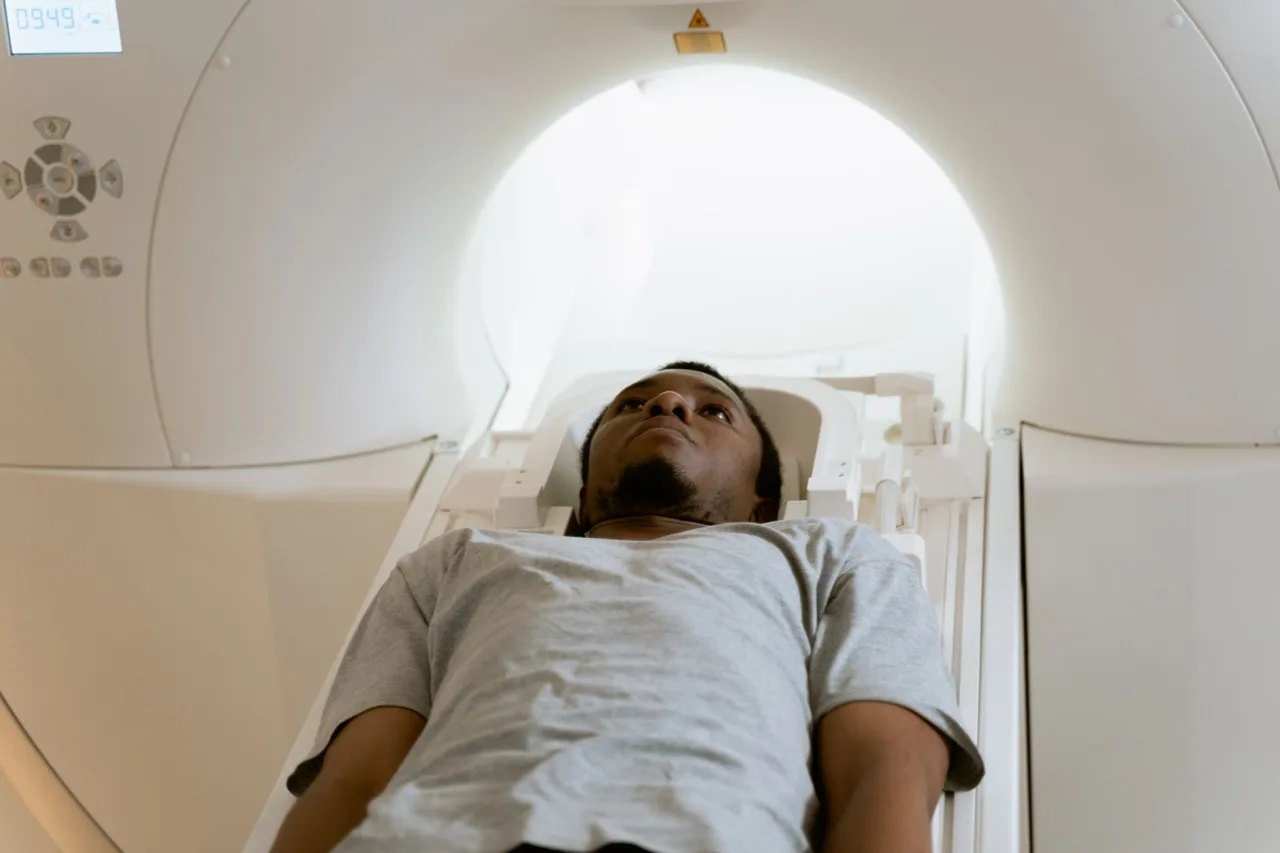
The scan itself is quick and does not require injections or dye. During the procedure you lie on your back on the scanner table with your arms raised overhead. The technologist may use straps and pillows to help you maintain the correct position and remain still. As the table moves through the scanner, you hold your breath for short intervals, often around five to ten seconds, so the lungs are captured clearly.
Most people are in and out in a few minutes, and there is no recovery time. You can return to normal activities immediately afterward.
How to prepare
Preparation is minimal:
- Wear comfortable clothing without metal zippers, snaps or underwire near the chest; you may be given a gown.
- Remove jewelry and other metal objects from the chest area.
- Tell the team if you are or might be pregnant.
- Bring information about prior chest imaging, since comparing scans over time is central to screening.
Understanding results and follow-up
Lung nodules are common, and most are not cancer. When a nodule is found, your doctor will likely recommend a follow-up LDCT scan several months later to see whether it changes over time. Stable nodules are reassuring, while ones that grow or look suspicious may prompt additional imaging or a biopsy for a definitive diagnosis. Many programs report results using a standardized system so that findings and recommended follow-up intervals are consistent.
This is why screening is a program, not a one-off test. It involves repeat scans, comparisons and shared decisions. The trade-off is that screening can lead to more tests and some anxiety over findings that turn out to be benign, which is exactly the balance to weigh with your clinician.
General information, not medical advice
This article is educational only. It does not diagnose any condition and cannot tell you whether you should be screened or what your results mean for you. Please discuss lung cancer screening, your risk factors and any findings with your doctor or another qualified healthcare provider.
Costs and where to go
Coverage for lung cancer screening varies by country, insurer and whether you meet the recommended high-risk criteria, so confirm the details with the clinic and your insurer before booking. Prices for CT scans in general range widely, and our guide to the real price of a CT scan with and without insurance explains why. When choosing where to be scanned, look for an accredited center with experience in lung screening programs; our overview of finding and comparing CT clinics covers what to check.
Frequently asked questions
Who qualifies for a low-dose CT lung cancer screening?
Guidelines generally recommend yearly screening for adults aged 50 to 80 with a 20 pack-year smoking history who currently smoke or have quit within the past 15 years. These criteria define a high-risk group, but your doctor considers your overall health too, so eligibility is best confirmed with them.
How much radiation does an LDCT scan use?
A low-dose CT produces images while using up to about 90 percent less ionizing radiation than a conventional chest CT scan. It still uses more radiation than a chest X-ray, which is one reason it is reserved for people at high risk who are most likely to benefit.
Does a nodule on my scan mean I have cancer?
No. Lung nodules are common and most are not cancer. When a nodule is found, your doctor will often recommend a follow-up LDCT scan several months later to see if it changes. Growth or suspicious features may lead to more imaging or a biopsy for a clear diagnosis.
Do I need contrast dye for a lung screening CT?
No. A screening LDCT does not require an injection of contrast dye. Contrast is generally used for diagnostic scans that need to characterize a known abnormality, not for routine lung cancer screening.
If I quit smoking years ago, should I still be screened?
You may still qualify. Current guidelines include people who quit within the past 15 years and otherwise meet the age and pack-year criteria. Because eligibility depends on your specific history and health, ask your doctor whether screening is right for you.
More guides on MRI, CT & X-Ray
Have a question or a topic to suggest?
We read every message. Tell us what you would like to see next.
You may also like
Fluoroscopy
Fluoroscopy is a form of medical imaging that turns X-rays into a live, moving picture of the inside of your body. Instead of a single still photo, your care team watches organs, joints

Hip X-Ray
A hip X-ray is a quick, low-dose imaging test that shows the bones of the hip joint and upper thigh. Doctors use it to look for fractures, arthritis

Cect Scan
CECT stands for contrast-enhanced computed tomography, a CT scan performed with a contrast dye to make organs, blood vessels and abnormal areas stand out more clearly.