X-Ray Lab Near Me: How to Choose a Place
Where X-rays are actually done, and how to pick a facility that reads them properly.

An X-ray is often the fastest and cheapest imaging test you can get, which is exactly why people search for an X-ray lab near them and want to be seen the same day. This guide explains where X-rays are actually done, how to pick a facility that reads them properly, and what to check on price and safety. It is general educational guidance, not a directory of named labs, because the best option depends on why you need the X-ray and where you are.
The short version
- X-rays use a small amount of radiation and are usually very safe when done for a medical reason.
- Many X-rays are walk-in and same-day at urgent care, hospitals, and imaging centers.
- What matters most is that a certified technologist takes the image and a radiologist reads it.
- Confirm whether a radiologist report is included, and get the price in writing before you go.
What an X-ray is, and why it is so quick
An X-ray takes pictures of the inside of your body using a small amount of radiation, and it is especially good for bones, teeth, the chest, and parts of the digestive system. The NHS guide to X-rays describes the procedure as taking only a few seconds of stillness while the image is captured, with the whole appointment usually lasting minutes. That speed is why X-ray is the workhorse of urgent, everyday imaging. If you want the fuller picture of how the test works, our overview from the technologist's side in the X-ray tech guide is a useful companion.
What an "X-ray lab" really is

"Lab" is a loose, everyday word here. There is no separate X-ray laboratory in the way there is a blood lab. X-rays are taken in a radiology or imaging setting, and the term "X-ray lab near me" simply means "a nearby place that can take an X-ray." Those places include:
- Urgent care and walk-in clinics. Great for suspected sprains, minor fractures, and same-day needs.
- Hospital emergency and radiology departments. Best for serious injuries and cases needing immediate treatment.
- Outpatient imaging centers. Scheduled X-rays, often at a lower cost, frequently alongside other scans.
- Diagnostic centers. One-stop sites offering X-ray plus CT, MRI, and ultrasound.
If you might need more than a plain film, comparing a broader diagnostic center near you or a dedicated X-ray clinic can save a second visit.
The one thing many people skip: who reads it
An X-ray image is only half the service. The other half is interpretation. Two professionals are involved in a well-run X-ray:
- A radiologic technologist positions you and captures the image. In the United States, look for certification from the American Registry of Radiologic Technologists (ARRT).
- A radiologist, a physician trained in imaging, reviews the film and writes a report for your doctor.
Some walk-in settings show you an image on the spot but do not include a formal radiologist reading until later. That is usually fine for a quick answer, but for anything important, confirm that a radiologist will read your X-ray and that the report will reach your doctor. Ask the question directly: is a radiologist report included?
Radiation: small, but worth understanding
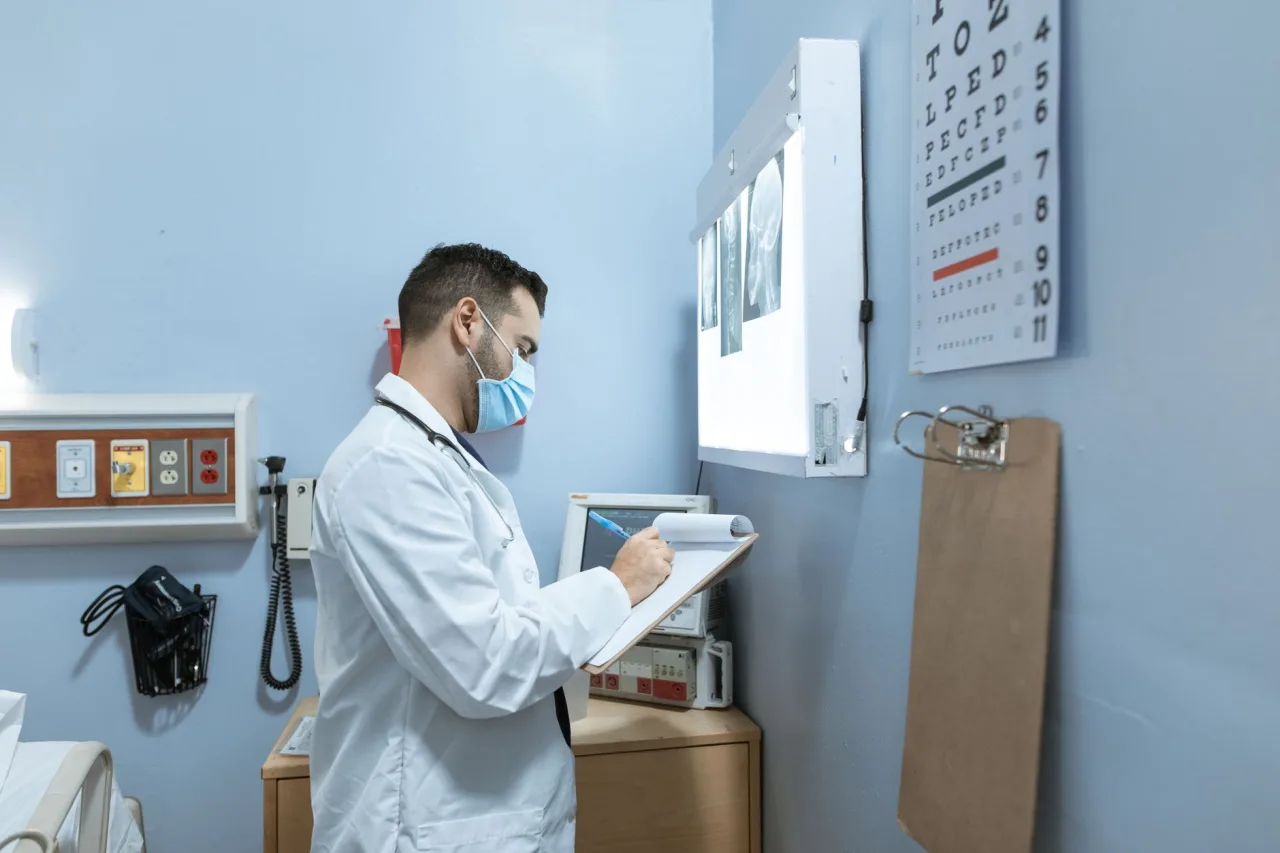
X-rays use much less radiation than CT. RadiologyInfo, the patient resource from the ACR and RSNA, lists a chest X-ray at roughly 0.1 millisieverts, about the same as 10 days of natural background radiation, compared with several millisieverts for a chest CT. You can see the full comparison on RadiologyInfo's radiation dose page. The dose from a single X-ray is small, and for a test your doctor has judged necessary the benefit generally outweighs the minor risk. Always tell staff if you are or might be pregnant.
Good to ask: for children and for repeat imaging, does the facility tailor the technique to keep the dose low? A quality X-ray provider will have a clear answer and will not take more images than the question requires.
What an X-ray costs
X-ray is typically the least expensive imaging test, but the price still varies by country, body part, number of views, facility type, and insurance. In the United States, a self-pay X-ray commonly falls in the low tens to low hundreds of dollars, and urgent care may bundle it into a visit fee. In systems like the NHS, a medically necessary X-ray is usually provided without a direct patient charge. Confirm the number with the facility and your insurer.
- Ask whether the quote includes both the image (technical fee) and the radiologist reading (professional fee).
- At urgent care, ask whether the X-ray is separate from the visit charge.
- If paying out of pocket, ask for the self-pay price, which is often lower than the list price.
Questions to ask before you walk in
- Do you take walk-in X-rays, or do I need an appointment or referral?
- Will a radiologist read my X-ray, and how soon will the report reach my doctor?
- Are your technologists certified?
- What is the all-in price for the views I need, and what does it include?
- Can you send the images and report to me and my physician?
Comparing more than one imaging modality? The way you evaluate an X-ray facility is the same approach we use for choosing ultrasound places and a CT scan clinic: accreditation, physician interpretation, qualified staff, and a transparent price.
This is general information, not medical advice. This article explains how to find and choose an X-ray provider. It cannot tell you whether you need an X-ray or what your images show. Only your referring doctor or a radiologist can interpret your results and advise you. Always follow the guidance of your own healthcare team.
Frequently asked questions
Where can I get an X-ray near me?
X-rays are done at urgent care and walk-in clinics, hospital departments, outpatient imaging centers, and diagnostic centers. For minor injuries, urgent care is often fastest, while a hospital is best for serious cases. Choose a place where a certified technologist takes the image and a radiologist reads it.
Do I need an appointment or referral for an X-ray?
Many X-rays are walk-in and same-day, especially at urgent care, but some outpatient centers require an appointment or a doctor's referral, and insurance may expect one. Call ahead to confirm what the facility needs before you go.
Is an X-ray safe?
Yes, X-rays are usually very safe and serious complications are rare. They use a small amount of radiation, much less than a CT scan, and for a test your doctor has judged necessary the benefit generally outweighs the minor risk. Tell staff if you are or might be pregnant.
How much does an X-ray cost?
X-ray is typically the cheapest imaging test, but the price varies by country, body part, number of views, facility, and insurance. A self-pay X-ray in the United States commonly falls in the low tens to low hundreds of dollars, while medically necessary X-rays in systems like the NHS are usually provided without a direct patient charge. Confirm the figure with the facility and your insurer.
Will a radiologist read my X-ray?
At a well-run facility a radiologist reviews the image and sends a written report to your doctor. Some walk-in settings show you a preliminary image immediately but issue the formal reading later. If it matters, ask directly whether a radiologist report is included and when your doctor will receive it.
More guides on Find a Clinic (Local)
Have a question or a topic to suggest?
We read every message. Tell us what you would like to see next.
You may also like

X-Ray Tech: Uses, Procedure & Results
A clear guide to X-rays: why they are ordered, how the test works, radiation safety, who performs and reads them, and how to think about your results.
X-Ray Clinic Near Me: How to Choose
Nearest is not the same as best. This honest guide shows how to find and choose a good X-ray clinic, what to check before booking, and roughly what an X-ray costs.
Diagnostic Center Near Me: How to Choose
A guide to finding a one-stop diagnostic imaging center near you, how to check accreditation for each modality, and how to compare price and report turnaround.