CT Imaging Near Me: Compare Clinics
A practical scorecard for weighing CT imaging centers on accreditation, reporting, price, and turnaround.
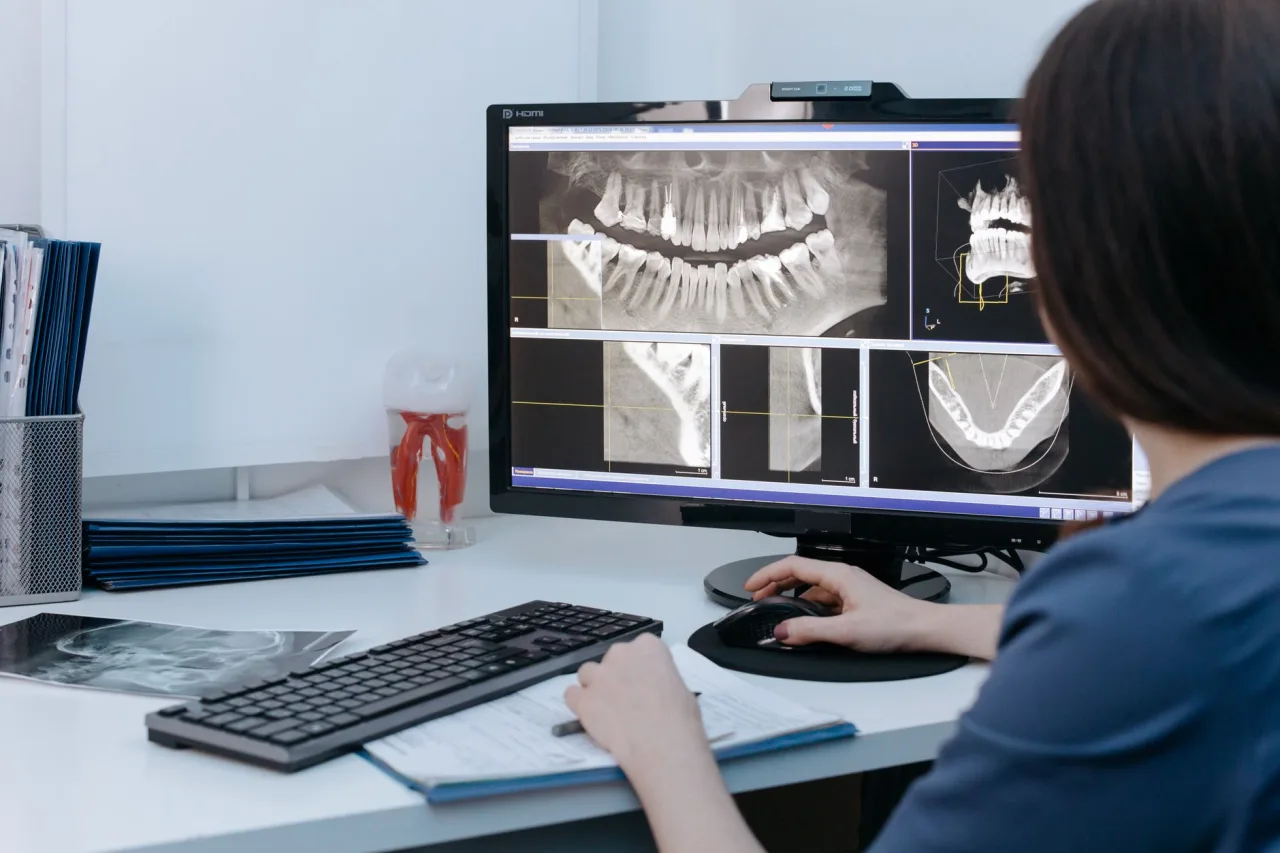
When you search for CT imaging near you, you are usually holding a referral and trying to decide between two or three centers that all look similar from the outside. This guide gives you a practical way to compare them side by side, so you can weigh accreditation, reporting, price, and turnaround instead of picking the first result. It is educational information, not a directory of named clinics, because the right center depends on your referral, your insurer, and where you live.
The short version
- Build a simple scorecard: accreditation, radiologist reporting, price in writing, and report turnaround are the four columns that matter most.
- Match the scan to the referral first: contrast or no contrast, and which body region, changes which centers are appropriate.
- Ask how quickly the images and written report reach your doctor, and whether you can get a copy of the images to keep.
- Compare an outpatient imaging center against a hospital department: for routine scans the outpatient setting is often faster and cheaper.
Read the referral before you compare anything
A CT (computed tomography) scan is ordered for a specific question: a particular organ, an injury, or a symptom your doctor wants to see in cross section. Before you line up clinics, check the referral or ask the ordering clinician which body part is being scanned and whether contrast dye is planned. That one detail decides which centers can do the study, how long the appointment runs, and how you prepare. If you are still getting your head around the test itself, our overview of what a CT scan is used for and how it works is worth reading before you start calling around.
According to the UK's NHS guide to CT scans, a CT scanner uses X-rays and a rotating ring to build detailed cross-sectional images, and contrast may be given as a drink or an injection to make certain tissues stand out. Knowing whether contrast is involved tells you a great deal about preparation and the questions to raise when you compare centers.
Build a comparison scorecard
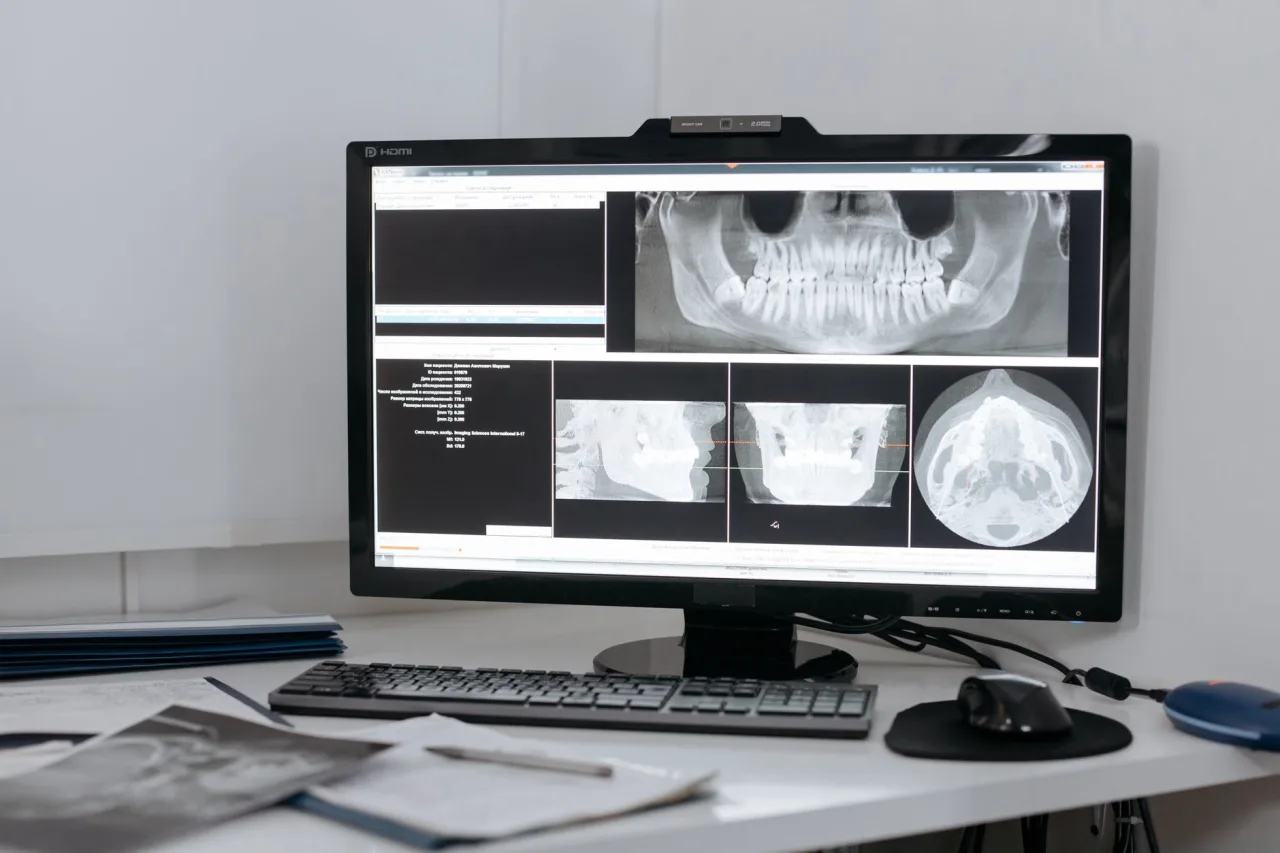
The most useful thing you can do is stop comparing centers on gut feeling and start comparing them on the same handful of factors. Jot down four columns for each clinic you are considering:
- Accreditation. Has the facility passed an independent review of its CT equipment, dose, and staff?
- Radiologist reporting. Will a board-certified radiologist interpret the scan and send a written report?
- All-in price. What is the total cost for your specific scan, including the reading fee and any contrast?
- Turnaround. How soon will the report reach your doctor, and can you get the images too?
Filling in those columns for even two or three centers usually makes the decision obvious. It also stops a single shiny feature, like a brand-new scanner, from distracting you from the things that actually affect your diagnosis and your bill.
Accreditation is the fastest quality signal
You cannot personally inspect a scanner or audit a radiologist, but you can check whether an independent body already has. The American College of Radiology (ACR) accredits imaging facilities across several modalities, including CT, and its review covers image quality, radiation dose, equipment performance, and staff qualifications. Accreditation does not promise a flawless visit, but a center that has earned it has cleared a meaningful, outside bar. Where you have the choice, an accredited CT center is a sensible default, and it is a fair question to ask on the phone.
Dose, contrast, and comparing like with like
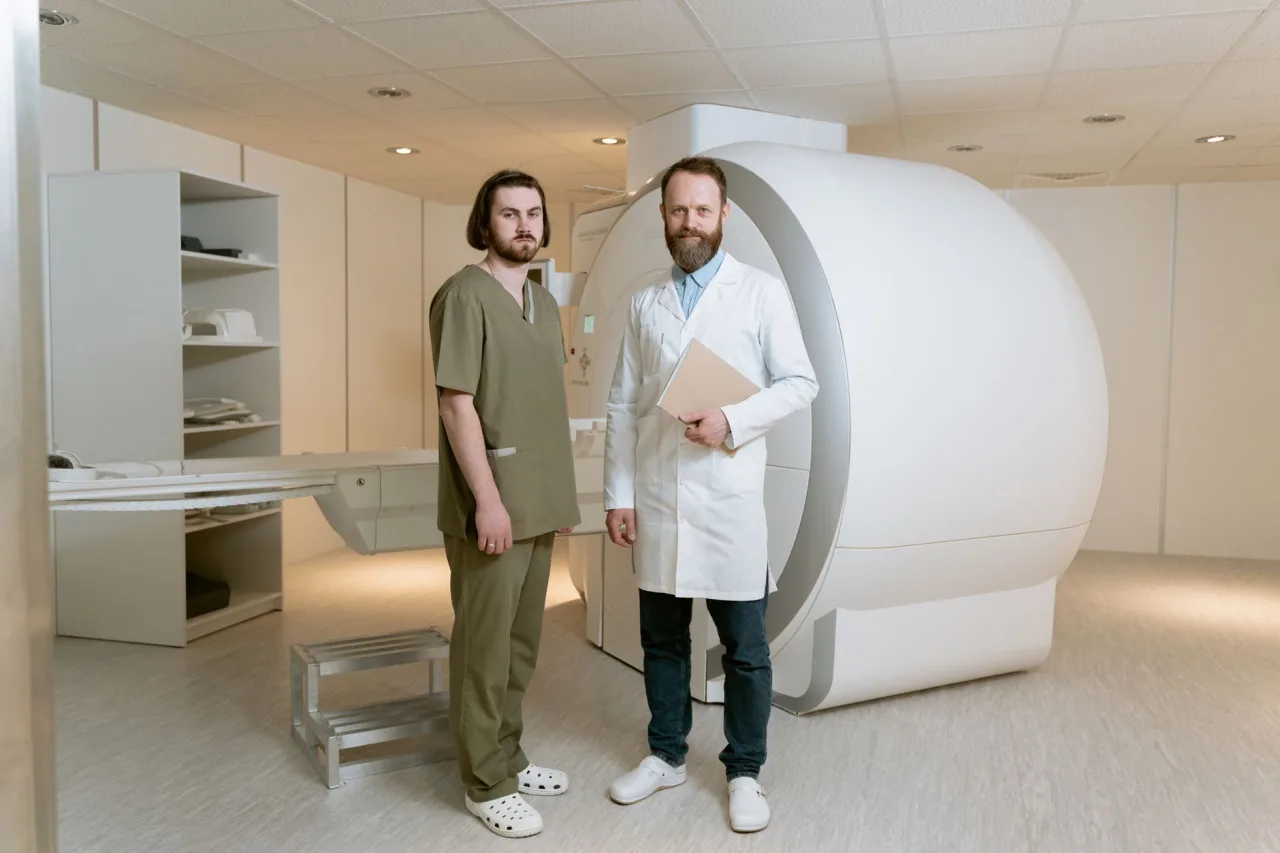
CT uses more radiation than a plain X-ray because it captures many images to build its detailed views. That is a reasonable trade when the scan answers an important question, and good centers work to keep the dose as low as reasonably achievable. RadiologyInfo, the patient resource from the ACR and RSNA, lists effective doses for common exams, for example roughly 0.1 millisieverts for a chest X-ray versus several millisieverts for a chest CT, with abdominal CT often higher depending on contrast. You can read the full comparison on RadiologyInfo's radiation dose page. When you compare centers, make sure you are comparing the same study: a scan with contrast is a different exam, and a different price, than one without.
A practical question to ask: does this center use low-dose or dose-optimized CT protocols, especially for follow-up scans or younger patients? A good clinic will answer plainly. The goal is never zero radiation, it is the smallest dose that still produces a diagnostic image for your specific question.
Outpatient center versus hospital department
CT is done in a few different settings, and the setting affects both speed and cost. Weigh them against your situation rather than assuming one is always better.
- Hospital radiology departments are best for emergencies, complex cases, and patients who may need immediate follow-up care. They are often the most expensive setting for a routine scan.
- Standalone outpatient imaging centers are frequently faster to book and lower cost for non-urgent, scheduled scans.
- Multi-service diagnostic centers offer CT alongside MRI, ultrasound, and X-ray, which helps if your workup needs more than one test.
If more than one test has been ordered, or you are not sure CT is the only imaging you will need, our broader guide to choosing any imaging clinic near you walks through the same scorecard across modalities. If an MRI is also on the table, the approach in our MRI scan comparison guide lines up closely with this one.
What CT imaging costs, and how to compare fairly
Prices vary enormously by country, facility type, body region, whether contrast is used, and your insurance. In the United States, a self-pay CT commonly falls somewhere from the low hundreds to well over a thousand dollars, and the same scan can carry very different sticker prices at a hospital versus an outpatient center. In systems like the NHS, a medically necessary CT is typically provided without a direct charge to the patient. The only reliable number is the one the clinic and your insurer confirm for your exact scan.
- Ask for the total, including the technical fee (the scan) and the professional fee (the radiologist's reading).
- Confirm whether contrast, sometimes billed separately, is included in the quote.
- If you are paying out of pocket, ask about a self-pay or prompt-pay price, which is often lower than the list price.
For realistic ranges and insurance scenarios, see our companion article on the real price of a CT scan with and without insurance, and treat every figure as a range to confirm, never a fixed rate. You can also compare notes against the general CT scan near me guide in this cluster.
Turnaround, records, and second opinions
A scan is only useful once it is read and the report reaches the right hands. When you compare centers, ask how the images and written report are delivered and how quickly. Getting a copy of your own images, on a disc or through a patient portal, is genuinely worth doing: it makes second opinions easier, spares you a repeat scan if you change providers, and gives your future doctors a baseline to compare against. A center that makes records easy to share is usually a center that takes the rest of its work seriously too.
This is general information, not medical advice. This article explains how to find and compare CT imaging providers. It cannot tell you whether you need a scan or what your results mean. Only your referring doctor or a radiologist can interpret your images and advise you on next steps. Always follow the guidance of your own healthcare team.
Frequently asked questions
How do I compare CT imaging clinics near me?
Score each center on the same four factors: accreditation, whether a board-certified radiologist reads the scan, the all-in price for your specific study, and how quickly the report reaches your doctor. Filling in those columns for two or three clinics usually makes the best choice clear, and it stops a single feature from swaying you.
Is an accredited CT center worth choosing over one that is not?
Where you have the choice, yes. An accredited facility has passed an independent review of its equipment, radiation dose, and staff qualifications, which is a bar you cannot check yourself. It is not a guarantee of a perfect visit, but it is a meaningful signal, so it is a fair thing to ask about when you call.
Why do two clinics quote very different prices for the same CT?
CT prices vary by facility type, body region, whether contrast is used, and your insurance, so a hospital and an outpatient center can quote very different figures for what sounds like the same scan. Make sure you are comparing the same study, ask for the all-in price including the reading fee, and confirm the number with the clinic and your insurer.
Should I get a copy of my CT images?
It is a good idea. A copy of your images, on a disc or through a portal, makes second opinions easier, can spare you a repeat scan if you switch providers, and gives future doctors a baseline. Ask each center whether it provides images to patients and in what format.
Do I need a referral for a CT scan?
In most places a CT scan requires a referral from a doctor, both for medical appropriateness and for insurance coverage. Some outpatient centers offer self-referral in certain regions, but a physician should still review the scan. Ask your clinician what is required where you live.
More guides on Find a Clinic (Local)
Have a question or a topic to suggest?
We read every message. Tell us what you would like to see next.
You may also like
CT Scan Near Me: How to Choose a Clinic
A practical guide to finding a trustworthy CT scan clinic near you, covering accreditation, radiation dose, radiologist reporting, and honest cost ranges.

CT Scan Cost: With & Without Insurance
A clear breakdown of CT scan costs: why prices vary, typical ranges with and without insurance, what is in the bill, and how to get a real quote.
MRI Scan Near Me: Choose a Clinic
An MRI is longer, noisier, and pricier than most scans, with a strong magnet that makes safety screening essential. Learn how to choose a good MRI center.