Sonography Centre Near Me: A Guide
What a sonography centre does, who scans you, and how to compare clinics on sonographer credentials, accreditation, and reporting.

When people search for a "sonography centre near me," they usually want a place that focuses on ultrasound, whether for a pregnancy scan, an abdominal check, or a vascular study. This guide explains what a sonography centre does, who performs your scan, and how to choose one on the things that genuinely matter: the sonographer's credentials, the right equipment, and clear reporting.
The short version
- Sonography is medical ultrasound, imaging with sound waves and no ionizing radiation.
- A qualified sonographer performs the scan, and a radiologist or specialist interprets it.
- Look for credentialed sonographers and, where relevant, accredited facilities, not just proximity.
- Different ultrasound types need different preparation, so always follow the centre's instructions.
What a sonography centre does
Sonography is another word for medical ultrasound, a scan that uses high-frequency sound waves to build images of soft tissue, organs, blood vessels, and a developing baby. As RadiologyInfo.org explains, "Ultrasound imaging uses sound waves to produce pictures of the inside of the body," and it "is safe, noninvasive, and does not use radiation." A sonography centre is simply a facility that concentrates on these scans. Compared with a general imaging centre, a dedicated sonography centre may offer a wider range of ultrasound studies and staff who spend all day scanning. Our overview of ultrasound uses, procedure, and what results mean is a good primer before you book.
Who performs and reads your scan
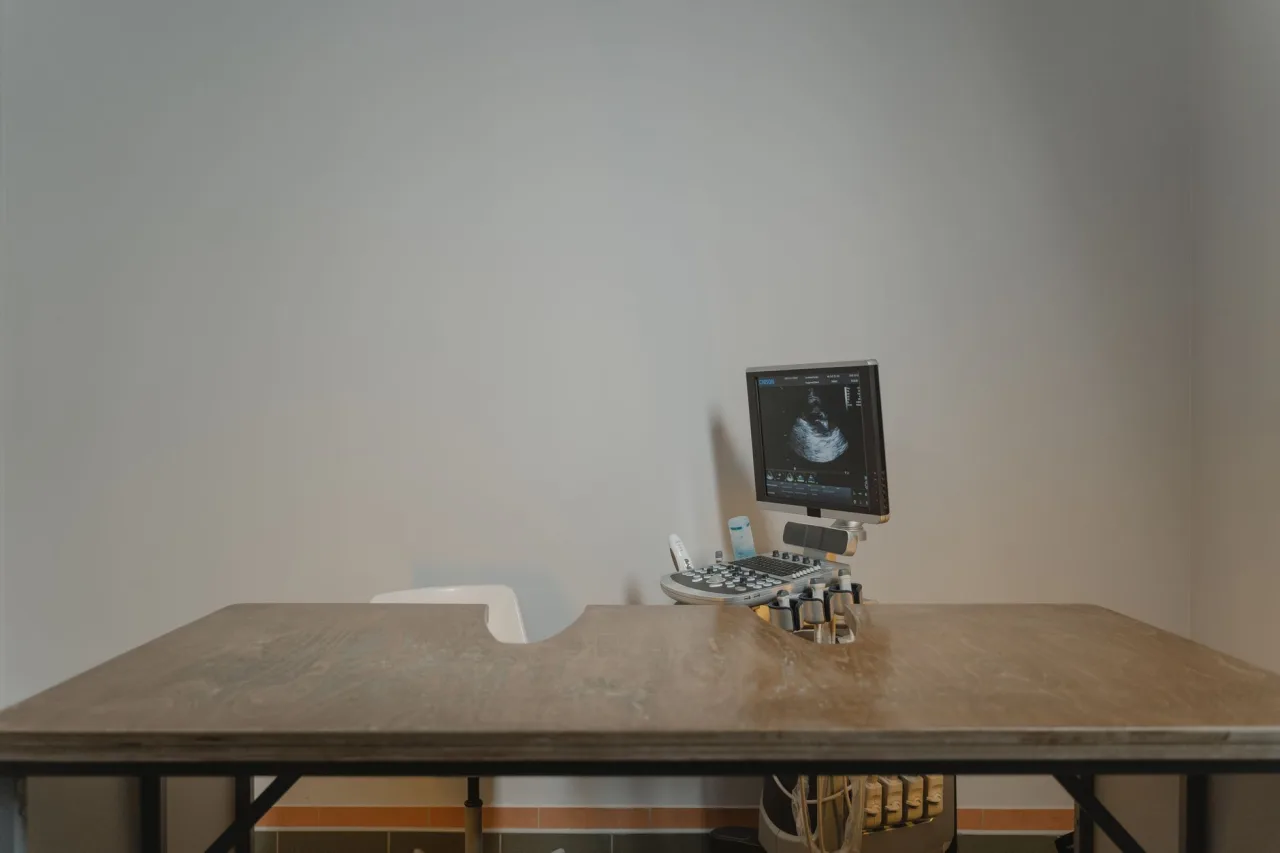
Two different professionals are usually involved in a sonogram. A sonographer, sometimes called an ultrasound technologist, operates the machine and captures the images. A physician, often a radiologist, then interprets those images and writes the report your doctor relies on. The sonographer's skill matters a great deal, because ultrasound is operator-dependent: the quality of the pictures depends on the person acquiring them.
In many countries, sonographers hold a professional credential. In the United States, the American Registry for Diagnostic Medical Sonography (ARDMS) offers the RDMS, or Registered Diagnostic Medical Sonographer, credential and says it "sets the global standards of professional excellence in sonography." If you want to understand the profession in depth, our sonography career guide walks through the training and certification path.
Types of ultrasound a centre may offer
Sonography covers many studies, and not every centre performs all of them. Common types include:
- Pregnancy (obstetric) ultrasound: monitors a developing baby across the pregnancy.
- Abdominal ultrasound: examines the liver, gallbladder, kidneys, and other organs.
- Pelvic and transvaginal ultrasound: looks at the uterus, ovaries, and surrounding structures.
- Vascular and Doppler ultrasound: assesses blood flow in arteries and veins.
- Echocardiography: a specialised ultrasound of the heart.
When you call, confirm the centre performs the exact study your referral names. If you have been referred for a specialised scan such as a transvaginal ultrasound, it is worth checking that the centre routinely does that examination.
How to choose a good sonography centre
Instead of booking the closest name, put each option through the same checklist:
- Credentialed sonographers: ask whether the scan is performed by a registered or otherwise qualified sonographer.
- Accreditation: the American College of Radiology, which calls its accreditation "the Gold Standard in medical imaging," accredits ultrasound facilities as one of its nine modalities.
- The right study: confirm the centre performs exactly the ultrasound your referral specifies.
- Who interprets it: ask which physician reads the images and how soon your doctor receives the report.
- Access and cost: compare appointment times, self-pay prices, and insurance acceptance.
Please note: This is general educational information, not medical advice. It cannot tell you which scan you need or what your results mean for you. Your referring clinician and the reporting radiologist are the right people to interpret your situation.
How to prepare for your scan
Preparation depends entirely on the type of ultrasound, which is why you should always follow the specific instructions the centre gives you. As general context only:
- Some abdominal scans ask you to fast for several hours so the organs are easier to see.
- Some pelvic and early-pregnancy scans ask you to arrive with a full bladder.
- Many scans need no special preparation at all.
- Loose, comfortable clothing makes access to the scanning area easier.
If your instructions are unclear, call the centre before the appointment rather than guessing, because incorrect preparation can mean the scan has to be repeated.
What to expect during a sonogram
Most ultrasound scans are painless and take roughly 15 to 45 minutes depending on the study. The sonographer applies a water-based gel to help the sound waves travel, then moves a handheld probe over the area. You may be asked to hold your breath briefly or change position so the sonographer can capture clear images. Because standard diagnostic ultrasound, in the words of RadiologyInfo.org, "has no known harmful effects on humans," there is no radiation to worry about, which is one reason it is used so widely in pregnancy and in children. If you are having a scan of a moving structure, such as blood flow or the heart, the sonographer may spend extra time capturing clips as well as still images. Afterwards, the images are interpreted by a physician, and you will usually discuss the meaning of the findings with the doctor who referred you rather than at the centre itself.
Tip: If the scan is for reassurance or a keepsake rather than a medical reason, be clear about that when booking. A medical sonogram and a non-diagnostic "social" scan are different services, and only a medically indicated scan interpreted by a qualified physician should inform health decisions.
Common reasons for an ultrasound referral
Doctors order ultrasound for a wide range of questions, which is part of why it is one of the most common scans. General examples include:
- Monitoring a pregnancy and checking a baby's growth and wellbeing.
- Investigating abdominal pain or examining organs such as the liver, gallbladder, and kidneys.
- Looking at the pelvis, uterus, and ovaries.
- Assessing blood flow, lumps, thyroid problems, or soft-tissue swelling.
- Guiding a doctor during certain procedures, such as a biopsy.
Ultrasound is excellent for soft tissue and moving structures such as blood flow and a beating heart, but it does not see through bone or gas as well as some other scans. That is why a doctor sometimes combines it with, or follows it up with, a different study. If your referral mentions another test as well, our overviews of radiology near you and finding a diagnostic centre near you explain how the pieces fit together.
Costs, referrals, and insurance
Ultrasound is usually moderately priced compared with CT or MRI, but the exact figure depends on the study, the centre, and your insurance. As a rough guide only, a self-pay ultrasound in the United States often ranges from roughly one hundred to several hundred dollars, and prices differ widely by country and provider. These are illustrative ranges, not quotes. Ask the centre for an all-in written price that includes both the scan and the reading fee, confirm whether you need a referral, and if you are insured check network status and any pre-authorisation. For a private, self-pay route, our guide to finding a private ultrasound near you covers what to weigh, and the broader sonography near you guide lists more questions to ask.
Frequently asked questions
Is a sonography centre the same as an ultrasound clinic?
Yes, in practice they are the same thing. Sonography is the medical term for ultrasound, so a sonography centre is a facility that performs ultrasound scans. Some centres focus only on ultrasound, while general imaging centres offer it alongside X-ray, CT, and MRI.
Does an ultrasound scan use radiation?
No. Ultrasound uses high-frequency sound waves, not ionizing radiation. RadiologyInfo.org states that ultrasound "is safe, noninvasive, and does not use radiation," and the NHS confirms ultrasound scans do not use radiation unlike X-rays or CT scans. This is one reason ultrasound is widely used in pregnancy.
Who performs the scan at a sonography centre?
A sonographer, also called an ultrasound technologist, operates the machine and captures the images. A physician, often a radiologist, then interprets those images and writes the report. Because ultrasound quality depends on the operator, it is reasonable to ask whether a credentialed sonographer will perform your scan.
How do I prepare for an ultrasound?
It depends on the type of scan. Some abdominal ultrasounds require fasting, some pelvic scans require a full bladder, and many scans need no preparation at all. Always follow the specific instructions the centre gives you, and call ahead if anything is unclear, since incorrect preparation can mean repeating the scan.
How much does an ultrasound cost?
Prices vary by study, centre, country, and insurance. A self-pay ultrasound in the United States often ranges from roughly one hundred to several hundred dollars, but this is only a general estimate. Ask the centre for a written all-in price that includes the reading fee, and check coverage with your insurer before booking.
More guides on Find a Clinic (Local)
Have a question or a topic to suggest?
We read every message. Tell us what you would like to see next.
You may also like

Ultrasound Near Me: How to Choose
An honest guide to finding an ultrasound near you: how to choose an accredited clinic where a radiologist reports the images, what scans typically cost, and the questions worth asking before you book.

Sonography Near Me: How to Choose a Clinic
Sonography near you is the search for a good ultrasound close by. Here is what it involves, how to check the sonographer is qualified, the main scan types, and how to choose a clinic that reports properly.

Private Ultrasound Near Me: A Buyer Guide
People go private for an ultrasound to skip a wait or to see a baby early. Here is when it makes sense, how to tell a diagnostic scan from a keepsake one, and how to choose a safe, reputable clinic.