Sonography Near Me: How to Choose a Clinic
What sonography involves, how to check a sonographer is qualified, the main scan types and preparation, and how to choose a good clinic near you.

"Sonography near me" is the search you make when you need an ultrasound scan and want it done well and close by. This guide explains what sonography is, how to tell a qualified sonographer from an unregulated one, the main types of scan you might book, and how to choose a clinic that produces a proper report for your doctor.
The short version
- Sonography is the use of ultrasound, sound waves, to create images of the inside of the body, with no ionizing radiation.
- A registered sonographer, such as one holding the RDMS credential in the United States, performs the scan, and a radiologist or specialist usually reports it.
- Different scans need different preparation, from a full bladder to fasting, so follow the clinic's instructions.
- Choose a clinic on credentials, accreditation, and clear reporting rather than distance alone.
What sonography actually is
Sonography, also called ultrasound, uses high-frequency sound waves to build real-time images of organs, soft tissue, blood flow, and, in pregnancy, the baby. According to the NHS, "The sound waves used in ultrasound scans are safe. Ultrasound scans do not use any radiation, unlike in X-rays or CT scans." A handheld device called a probe, or transducer, is moved over the skin with gel, or placed internally for certain scans. If you want the full picture before booking, our overview of ultrasound uses, procedure and results is a good companion.
Because it is safe, portable, and radiation-free, sonography is used across almost every part of medicine, and it is the preferred imaging method in pregnancy.
Who performs the scan: sonographer credentials

The person operating the probe makes a real difference, because ultrasound is highly operator dependent. In the United States, the American Registry for Diagnostic Medical Sonography grants credentials such as the RDMS, Registered Diagnostic Medical Sonographer, which signal verified proficiency. Related credentials include the RDCS for cardiac sonography and the RVT for vascular studies. In the UK and other countries, look for a sonographer registered with the relevant professional body.
Tip: It is reasonable to ask a clinic, "Is my scan performed by a registered or credentialed sonographer?" A good clinic will answer clearly. If you are curious about the profession itself, our sonography career guide explains the training and certification path.
Common types of sonography you can book
Sonography covers a wide range of scans. The most frequently requested include:
- Abdominal ultrasound: to look at the liver, gallbladder, kidneys, pancreas, and spleen. See our detailed guide to abdominal ultrasound.
- Pelvic and obstetric ultrasound: for the reproductive organs and to monitor pregnancy.
- Vascular and cardiac ultrasound: to assess blood flow and heart function.
- Musculoskeletal ultrasound: for tendons, muscles, and joint problems.
- Thyroid and small parts: for the thyroid, breast, and other superficial structures.
Match the clinic to the scan your doctor requested, since not every sonography service offers every study. Some clinics focus narrowly, for example on pregnancy scans only, while larger centres cover the full range. If your referral names a specific study, confirm the clinic performs it routinely rather than occasionally, because regular experience with a scan type tends to mean better images and more reliable reports.
Why the operator matters so much
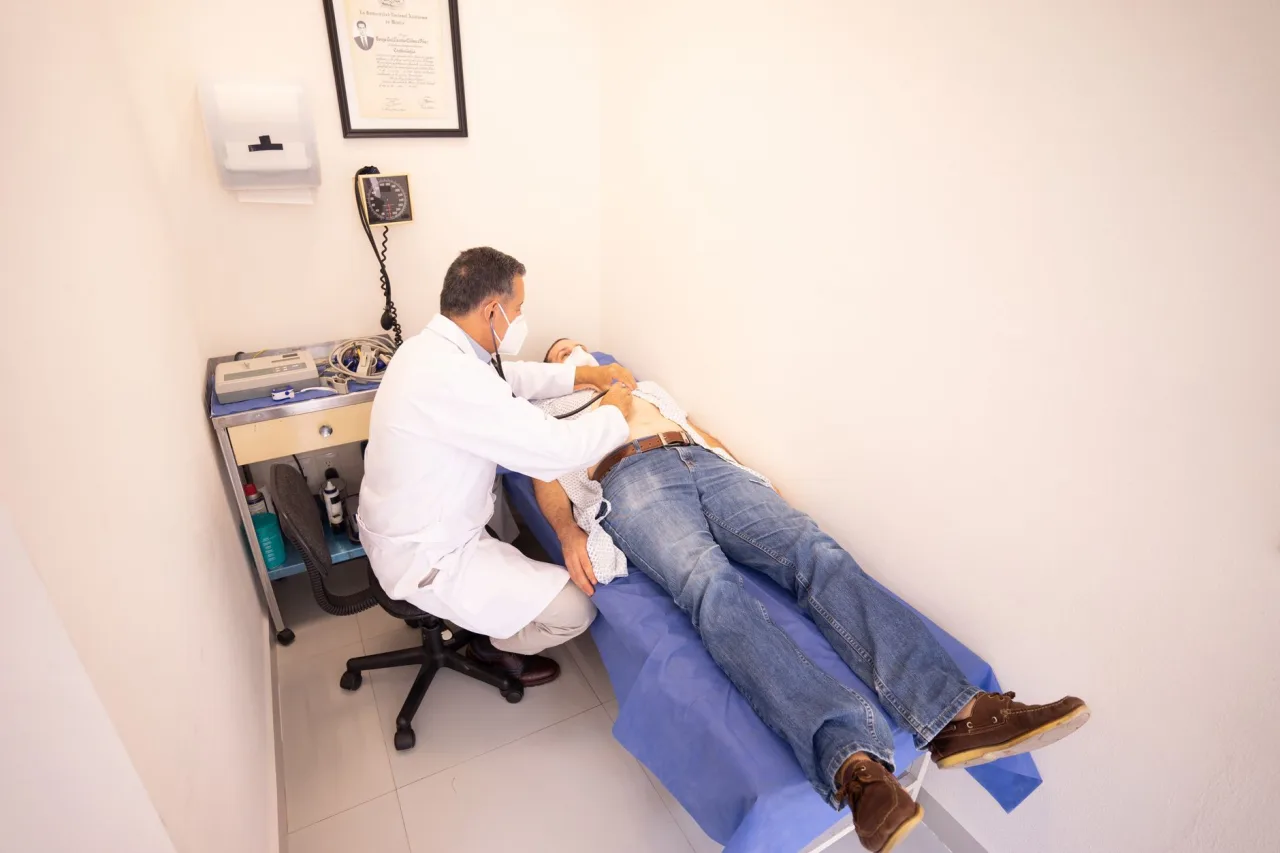
Ultrasound is different from many other scans in one crucial way: the images are captured live by a person moving a probe, not generated automatically by a machine that surrounds you. That makes the result highly dependent on the skill, patience, and training of the sonographer. A skilled operator knows how to angle the probe, adjust the settings, and capture the precise views a radiologist needs to reach a confident conclusion.
This is why credentials and experience matter more in sonography than the sticker on the machine. Two clinics with identical equipment can produce very different quality scans depending on who is holding the probe. It is also why a sonographer may spend extra time or ask you to change position during the scan: they are working to get clear, diagnostic images rather than rushing. If a particular view is difficult to obtain, a good sonographer will say so and note it, rather than guess.
How to find and vet a sonography clinic
A map search lists names, but a few questions separate a strong clinic from a weak one. Work through these before you book.
- Credentialed staff: confirm a registered or credentialed sonographer performs the scan.
- Accreditation: the American College of Radiology accredits ultrasound facilities and calls its accreditation "the Gold Standard in medical imaging," a strong sign of reviewed equipment and quality.
- Reporting: ask whether a radiologist or specialist interprets the scan and how quickly a written report reaches your doctor. A scan without a report has limited medical value.
- Scope and honesty: a good clinic tells you plainly whether a scan is diagnostic or elective and refers you on if it finds something needing follow up.
- Cleanliness and consent: for internal scans, expect clear consent and hygienic, professional practice.
If you are paying out of pocket, our guide to booking a private ultrasound near you covers the extra checks worth making in the self-pay space.
Please note: This article is general educational information, not medical advice. It cannot tell you which scan you need or what any result means for you. Always follow the guidance of your referring doctor and the professional who reports your scan.
How to prepare for your scan
Preparation depends on the type of sonography, so always follow the specific instructions your clinic gives. Common examples include:
- Full bladder: some pelvic and pregnancy scans need you to drink water and not empty your bladder beforehand, which helps the images.
- Fasting: some abdominal scans, such as of the gallbladder, ask you to avoid food for several hours.
- No special preparation: many scans, such as of the thyroid or a joint, need none at all.
Wear loose, comfortable clothing and allow time to change if needed. If you are unsure how to prepare, call the clinic and ask, since good preparation improves the quality of the images.
What sonography typically costs
Ultrasound is generally one of the more affordable imaging options, but prices still vary by country, scan type, and setting. As a rough guide only, a self-pay diagnostic ultrasound often ranges from around the equivalent of fifty to a few hundred US dollars, with specialised or elective scans priced separately. These figures are illustrative, not quotes.
Confirm the exact price with the clinic and ask what is included, such as the scan, the report, and images. If you have insurance and the scan is diagnostic, check whether it is covered through the standard route before paying privately.
What happens during and after the scan
During an external scan, you lie down, gel is applied, and the sonographer moves the probe over the area while watching a screen. It is usually painless and often takes fifteen to forty-five minutes. Internal scans use a slim probe and may feel a little uncomfortable but should not be painful. Afterwards, in a diagnostic setting, a radiologist or specialist interprets the images and sends a report to your doctor, who explains what the findings mean for you. Try not to read too much into what you see on the screen during the scan, since the formal report is what counts. Live ultrasound images can look alarming or reassuring to an untrained eye without either impression being accurate, so wait for the written report and your doctor's explanation before drawing any conclusions. If you would like a copy of the images or report for your records, ask the clinic before you leave.
Frequently asked questions
Is sonography the same as an ultrasound?
Yes. Sonography is the practice of using ultrasound, which is imaging created with high-frequency sound waves. The person who performs it is called a sonographer. The terms sonography and ultrasound are often used to mean the same scan.
Does sonography use radiation?
No. Sonography uses sound waves, not ionizing radiation. The NHS states that the sound waves used in ultrasound scans are safe and do not use any radiation, unlike X-rays or CT scans, which is why ultrasound is the preferred imaging method in pregnancy.
How do I know the sonographer is qualified?
Ask the clinic whether your scan is performed by a registered or credentialed sonographer. In the United States, credentials such as the RDMS from the American Registry for Diagnostic Medical Sonography signal verified proficiency, and other countries have their own registration bodies. A good clinic will answer this question clearly.
How should I prepare for a sonography appointment?
Preparation depends on the scan. Some pelvic and pregnancy scans need a full bladder, some abdominal scans require fasting, and many scans need no preparation at all. Always follow the specific instructions your clinic gives, and call to ask if you are unsure, since good preparation improves image quality.
Who explains my sonography results?
In a diagnostic setting, a radiologist or specialist interprets the images and sends a written report to the doctor who referred you, and that doctor explains what the results mean for you. The sonographer performing the scan does not usually give a diagnosis during the appointment.
More guides on Find a Clinic (Local)
Have a question or a topic to suggest?
We read every message. Tell us what you would like to see next.
You may also like

Private Ultrasound Near Me: A Buyer Guide
People go private for an ultrasound to skip a wait or to see a baby early. Here is when it makes sense, how to tell a diagnostic scan from a keepsake one, and how to choose a safe, reputable clinic.
Ultrasound: Uses, Procedure & Results
An ultrasound uses sound waves, not radiation, to image soft tissue in real time. This guide covers why scans are ordered, how they work, how to prepare, and how results are interpreted, with a reminder to discuss findings with your doctor.

Sonography: 2026 Career Guide
Diagnostic medical sonographers capture the ultrasound images doctors rely on. This 2026 guide covers the education and certification paths, realistic salary ranges, job outlook, and how to decide if the career fits you.