Sonography: 2026 Career Guide
What diagnostic medical sonographers do, how to qualify, what they earn, and whether the career suits you in 2026.

Sonography is the skilled work behind every ultrasound image: capturing clear, diagnostic pictures using sound waves. This 2026 career guide explains what a diagnostic medical sonographer does, the education and certification paths, realistic salary ranges, and how to decide whether the career suits you.
Demand for skilled sonographers is strong, the work is hands-on and patient-facing, and you can often enter the field without a four-year degree. That combination makes sonography one of the more accessible and rewarding roles in medical imaging. Below is an honest, sourced overview of what the job involves and how people qualify.
The short version
- Sonographers operate ultrasound equipment to capture images that a physician interprets.
- Entry typically needs an associate degree or a postsecondary certificate in sonography.
- Certification through bodies such as ARDMS is widely preferred by employers.
- US median pay was $89,340 in May 2024, and the field is projected to grow faster than average.
What a sonographer actually does
A diagnostic medical sonographer, sometimes called an ultrasound technologist, uses specialised equipment to direct high-frequency sound waves into the body and capture the returning echoes as images. Unlike many imaging roles, sonography is highly interactive: the sonographer decides in real time where to place the probe, how to angle it, and which views and measurements will best answer the clinical question. Good images depend heavily on operator skill, which is why the role is so valued.
The job blends technical precision with patient care. Sonographers explain the exam, position and reassure patients, capture and label the images, take measurements, and prepare a summary of findings for the interpreting physician. To understand the imaging these professionals produce, our explainer on what an ultrasound is and how it works is a useful companion.
A day in the life

Most sonographers work in hospitals, imaging centres, or clinics, and the daily rhythm is a series of scheduled patient exams. A typical day might include the following.
- Preparing: reviewing the referral, checking the patient history, and setting up the equipment.
- Scanning: performing exams such as abdominal, obstetric, vascular, or cardiac studies.
- Documenting: recording measurements, saving representative images, and flagging urgent findings.
- Caring: keeping patients comfortable and informed throughout.
The work is physical. Sonographers stand for long periods and hold and angle a probe with sustained pressure, so ergonomics and injury prevention are real parts of the job. Repetitive strain is a genuine occupational concern in the field, and experienced sonographers learn to protect their shoulders, wrists, and neck through posture, adjustable equipment, and pacing. It is honest to acknowledge this rather than pretend the role is purely light technical work.
The emotional side matters too. A sonographer often scans patients who are worried about a diagnosis, and in obstetrics they may be the first to notice difficult news even though they are not the one who delivers it. Composure, empathy, and clear boundaries about what you can and cannot say are part of doing the job well.
Specialties within sonography
Sonography is not a single job but a family of specialties, and many professionals hold more than one credential. Common areas include the following.
- Abdominal: the liver, kidneys, gallbladder, and other organs. See our guide to abdomen and pelvis sonography for this pathway.
- Obstetric and gynecologic: pregnancy and the female reproductive organs.
- Echocardiography: the heart and its valves, a cardiac specialty.
- Vascular: blood vessels and blood flow using Doppler techniques.
- Endoscopic: a physician-led technique explained in our endoscopic ultrasonography guide.
Education pathways

According to the US Bureau of Labor Statistics, diagnostic medical sonographers typically need formal education such as an associate degree or a postsecondary certificate, and employers may prefer candidates who hold certification. There are several routes in.
- Associate degree: the most common entry route, usually about two years, combining classroom science with supervised clinical hours.
- Bachelor's degree: a longer route that can support advancement or teaching.
- Certificate programs: shorter programs aimed at people who already hold a health-related degree or credential.
Wherever you train, choosing a program accredited by a recognised body matters, because accreditation is often a prerequisite for certification exams and for employment. Verify a program's accreditation status directly with the accrediting organisation before you enrol.
Tip: Before paying any tuition, confirm the program's accreditation and its eligibility route to certification directly on the accrediting and certifying bodies' official websites. Requirements change, so rely on the primary source rather than a program's marketing.
Certification and credentials
Certification is not always legally required, but it is widely expected by employers and can affect pay and opportunities. The American Registry for Diagnostic Medical Sonography, ARDMS, is a leading certifying body and is part of the nonprofit Inteleos family of councils. ARDMS awards credentials including the RDMS, Registered Diagnostic Medical Sonographer, the RDCS, Registered Diagnostic Cardiac Sonographer, and the RVT, Registered Vascular Technologist.
For these credentials, candidates generally pass the Sonography Principles and Instrumentation exam plus at least one specialty exam, and the exams must be completed within a set window of each other. Requirements are periodically updated, so always confirm the current rules on the ARDMS official site rather than relying on secondhand summaries.
Salary and job outlook
Sonography pays well relative to the training time required. The Bureau of Labor Statistics reported that the median annual wage for diagnostic medical sonographers was $89,340 in May 2024, with the lowest ten percent earning less than $64,760 and the highest ten percent earning more than $123,170. Employment is projected to grow about 13 percent from 2024 to 2034, much faster than the average for all occupations, with roughly 5,800 openings each year over the decade.
These figures are US national numbers and vary by country, region, specialty, experience, and setting. Salaries differ significantly elsewhere, so treat any single figure as a benchmark rather than a promise, and research pay for your own location and specialty.
Note: Salary and outlook figures reflect published US data and change over time. This article is general career information, not personalised financial or career advice. Verify current numbers and requirements with official sources for your country.
Where sonographers work and how careers grow
Sonographers are needed across a wide range of settings, which gives the career useful flexibility. Hospitals offer the broadest exposure and often the most varied caseload, including urgent and inpatient work. Outpatient imaging centres and specialist clinics tend to have more predictable hours. Some sonographers move into physician offices, mobile imaging services, or point-of-care roles at the bedside.
Career growth usually comes from adding specialties and taking on responsibility rather than leaving scanning altogether. With experience, a sonographer might become a lead or senior sonographer, move into education and clinical instruction, take on quality and equipment oversight, or specialise in a high-skill area such as echocardiography or vascular work. Because good imaging depends so heavily on operator skill, experienced and multi-credentialed sonographers remain in demand. Building a second credential is one of the clearest ways to widen your options and support your earning potential over time.
Is sonography right for you?
Sonography rewards people who enjoy hands-on technical work, are comfortable with close patient contact, and can concentrate for long stretches. Attention to detail is essential, since small differences in probe angle change the image. Physical stamina and good communication also matter, because you spend the day standing and interacting with anxious or unwell patients.
If that appeals, sonography offers a relatively quick, well-paid entry into healthcare with clear specialisation paths. Related imaging careers worth comparing include becoming a mammographer. When you are ready to see where sonographers work locally, our directory guide on finding sonography services near you shows the range of settings in the field.
Frequently asked questions
How long does it take to become a sonographer?
The most common route is an associate degree, which usually takes about two years. Certificate programs can be shorter for people who already hold a related health credential, and a bachelor's degree takes longer. Add time to prepare for and pass certification exams that employers prefer.
Do I need certification to work as a sonographer?
Certification is not always legally required, but most employers strongly prefer or expect it. Credentials such as the RDMS from ARDMS can improve your job prospects and pay. Always confirm current requirements with the certifying body and employers in your area.
How much do sonographers earn?
The US median annual wage was $89,340 in May 2024, with most earning between roughly $64,760 and $123,170. Pay varies widely by country, region, specialty, and experience, so use these US figures as a benchmark and research your own location.
Is sonography a good career in 2026?
The outlook is strong. US employment of diagnostic medical sonographers is projected to grow about 13 percent from 2024 to 2034, much faster than average. The role offers relatively quick entry, good pay, and clear specialisation paths, though it is physically demanding.
What is the difference between a sonographer and a radiologist?
A sonographer captures the ultrasound images, while a radiologist is a physician who interprets images and makes the diagnosis. They work as a team: the sonographer's skill produces the pictures, and the radiologist reads them and writes the report.
More guides on Sonography Career & Training
Have a question or a topic to suggest?
We read every message. Tell us what you would like to see next.
You may also like
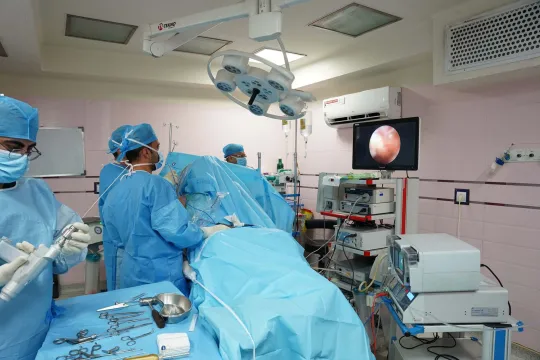
Endoscopic Ultrasonography Careers
Endoscopic ultrasonography combines endoscopy and ultrasound and is performed by trained physicians. This guide maps the careers around EUS, the training involved, and honest salary context for each role.

Abdomen & Pelvis Sonography Careers
Abdomen and pelvis sonography is a strong entry into diagnostic medical sonography. Here is what the job involves, the training and certification path, and realistic salary ranges to expect.

Mammographer: 2026 Career Guide
A 2026 career guide to becoming a mammographer: education, ARRT certification, work settings, salary ranges, and the job outlook, with cited sources.