Medical Imaging Centers Explained
What imaging centers do, what to expect on the day, and how to pick an accredited facility with the right scan and fair pricing.
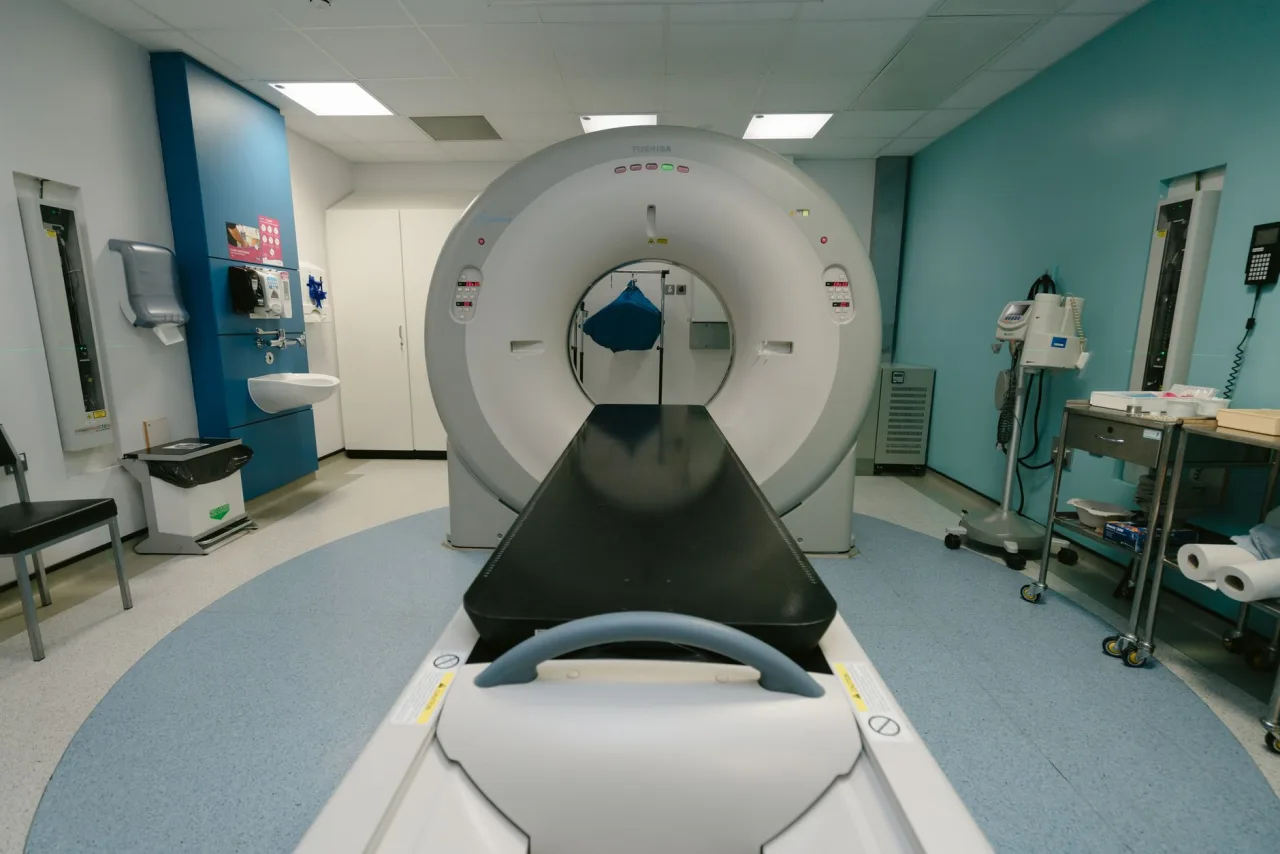
A center for medical imaging is an outpatient facility where you go for scans such as X-ray, CT, MRI, and ultrasound rather than being admitted to a hospital. If a doctor has sent you to one and you are not sure what it is, what happens inside, or how to tell a good one from an average one, this guide explains the whole experience.
The short version
- An imaging center is a dedicated outpatient site for diagnostic scans, often faster and cheaper than a hospital department.
- Most centers offer several modalities under one roof: X-ray, CT, MRI, ultrasound, and often mammography.
- Accreditation, such as ACR accreditation, is a strong signal that equipment, staff, and quality controls were independently reviewed.
- The center produces the images; a radiologist reads them and reports to the doctor who ordered your scan.
What a center for medical imaging is
The phrase "center for medical imaging" is a general description used by many independent clinics and hospital-affiliated outpatient sites, not a single national brand. It refers to a place equipped to perform diagnostic imaging and staffed by technologists who run the machines and radiologists who interpret the results. Because they focus only on imaging, these centers are often more convenient, quicker to book, and lower in cost than a hospital radiology department for routine, non-emergency scans.
Think of an imaging center as the physical home for the tools described in our broader radiology overview. This article focuses on the place and the experience, so you know what to expect and how to choose well.
Services you will typically find
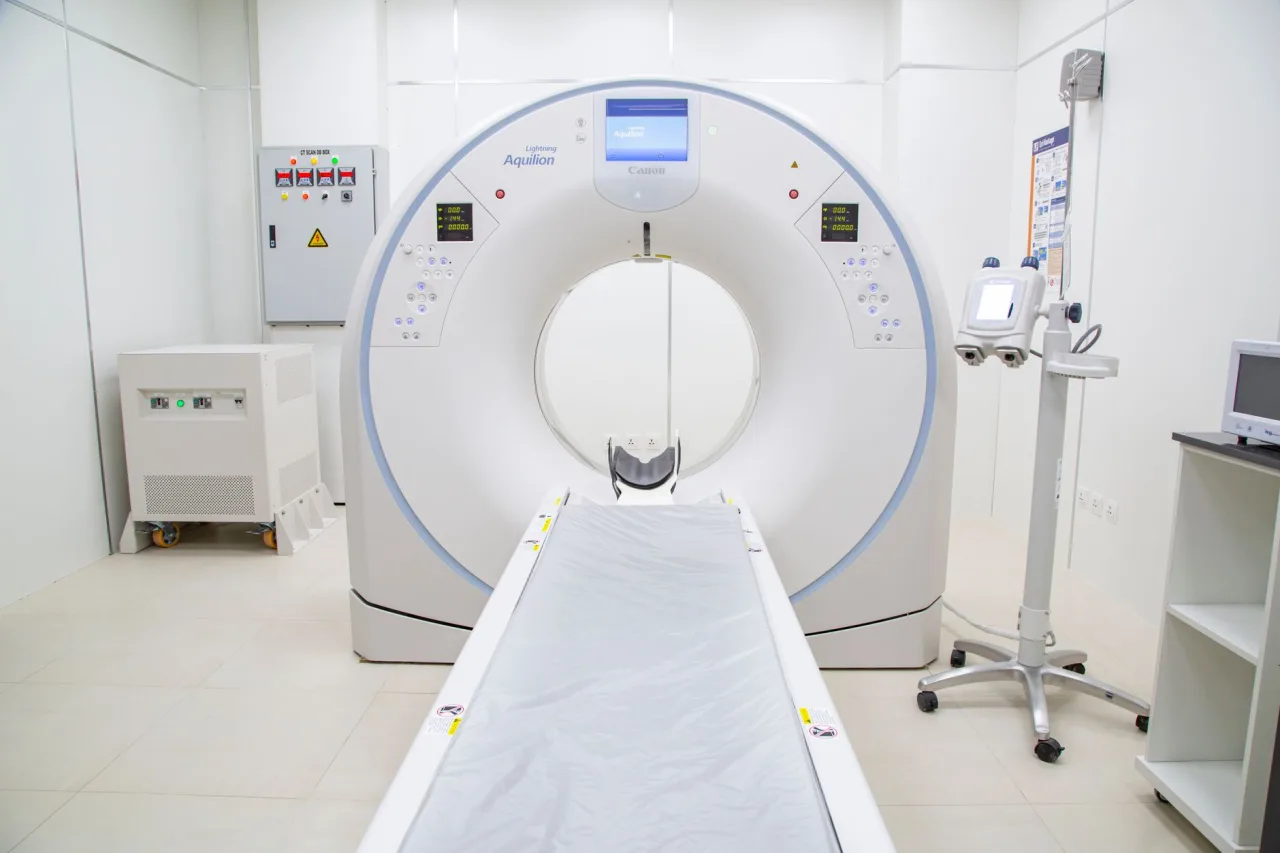
Not every center offers every scan, so confirm your specific exam when you book. A well-equipped center commonly provides:
- X-ray: quick imaging of bones and the chest.
- CT: detailed cross-sections for the chest, abdomen, and injuries.
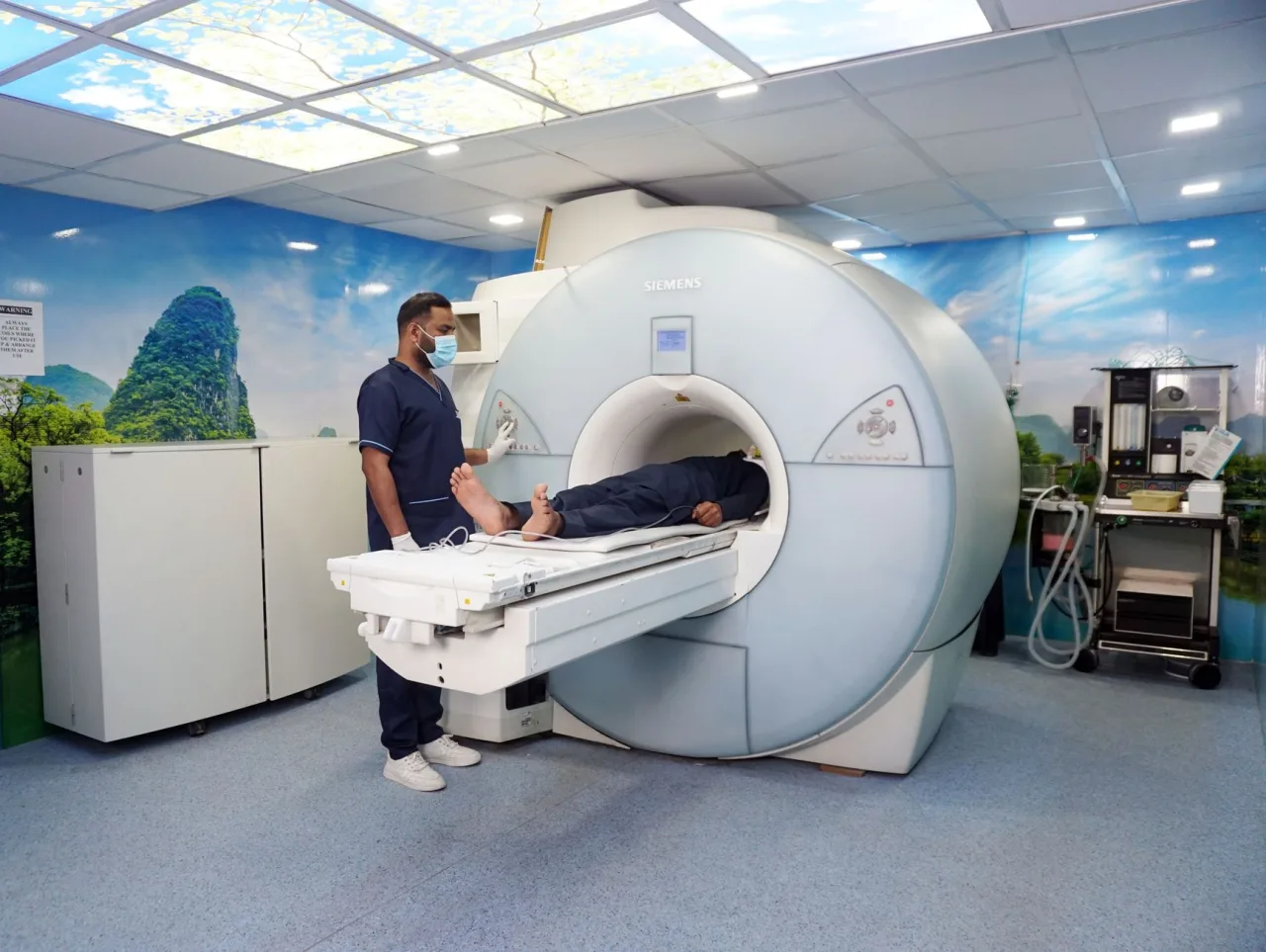
- MRI: high-detail soft-tissue imaging of the brain, spine, and joints, often with open or wide-bore options.
- Ultrasound: sound-wave imaging for pregnancy, the abdomen, and blood vessels.
- Mammography and bone density (DEXA): breast screening and osteoporosis assessment at many centers.
Some larger centers add advanced or specialized services such as PET, cardiac imaging, or breast MRI, while smaller neighborhood centers may focus on X-ray and ultrasound only. Neither is automatically better: what matters is whether the center offers the specific exam your doctor ordered, done well. Calling ahead to confirm your exact scan avoids arriving only to be sent elsewhere.
What happens during your visit
Most visits follow a predictable path. You check in and confirm the exam your doctor ordered, then complete a safety questionnaire, which is especially important for MRI and for any scan using contrast. A technologist explains the process, positions you, and runs the scan. For X-ray and CT you hold still and may hold your breath briefly. For MRI you lie inside the scanner as it makes loud knocking sounds. For ultrasound a technologist moves a probe over gel on your skin. Many appointments take 15 to 45 minutes depending on the modality.
The safety questionnaire is not a formality. For MRI it screens for metal implants, pacemakers, and other devices that the strong magnet can affect, which is why staff ask repeatedly about them. For any exam using contrast, the questions about allergies, asthma, kidney function, pregnancy, and breastfeeding help the team decide whether contrast is safe for you or whether to adjust the plan. Answer honestly and completely, even if a question seems repetitive. Trusted patient resources such as RadiologyInfo and MedlinePlus explain imaging safety and what to expect in more detail.
Preparation tip
When you book, ask whether you need to fast, hold any medication, arrive early for paperwork, or bring prior images. Wear clothing without metal, leave valuables at home, and bring your referral, insurance details, and a list of your medications.
How to choose a good imaging center
Since "center for medical imaging" is a generic label, quality varies. Rather than trusting a name, evaluate each option on a few objective points:
- Accreditation: look for accreditation from the American College of Radiology or a comparable body, which reviews equipment, personnel, and quality assurance.
- The right modality: confirm the center performs the exact scan your doctor ordered, on modern equipment.
- Radiologist expertise: a board-certified radiologist should read your images, ideally one experienced with your body area.
- Insurance and cost: verify the center is in your network and ask for an all-in price if you are paying yourself.
- Access and reports: ask how quickly results are sent to your doctor and how you can get a copy of images and the report.
To compare nearby options, our honest local guides can help, such as the imaging center finder and the radiology near me guide. For provider examples, some patients look at chains like RAYUS Radiology.
Why accreditation matters
Accreditation is one of the clearest signals of quality you can check before booking. The American College of Radiology describes its accreditation as the gold standard in medical imaging and offers programs across modalities including CT, MRI, ultrasound, breast ultrasound, mammography, and nuclear medicine and PET. To earn it, a facility must document that its equipment, medical personnel, and quality-assurance processes meet defined standards. Choosing an accredited center does not guarantee a perfect experience, but it meaningfully raises the odds that the images are high quality and safely obtained.
Costs and insurance
Prices vary widely by country, region, modality, and whether you use insurance. As a rough guide in the United States, a plain X-ray is often the least expensive exam, ultrasound is moderate, and MRI and CT tend to be the most costly, with self-pay MRI frequently running into several hundred to over a thousand dollars. Independent imaging centers are often cheaper than hospital outpatient departments for the same scan. These are general ranges only: always confirm the exact price with the clinic and confirm coverage with your insurer before your appointment. For a worked example, see our guide to the price of a CT scan.
A few habits keep costs predictable. Ask whether the quoted price includes both the technical fee for the scan and the professional fee for the radiologist reading it, since these are sometimes billed separately. If you are using insurance, confirm that any required prior authorization is in place before you arrive, because a scan done without it may not be covered. And if a facility offers a self-pay rate, it is worth comparing that against your insured cost, as the cash price is occasionally lower than a high deductible would make you pay anyway.
This is general information, not medical advice
This guide explains what imaging centers are and how to choose one. It cannot tell you which scan you need or what your results mean. Those decisions belong to the doctor who ordered your imaging and to your radiologist. If a symptom is severe or urgent, seek care immediately.
What happens to your results
The imaging center creates and stores your images, but the interpretation comes from a radiologist who writes a report for your referring doctor. You can usually request a copy of the report and the images on a disc or through a patient portal. Remember that a report describes findings; it does not replace the conversation with your clinician, who puts those findings together with your symptoms and history to decide what, if anything, they mean and what to do next.
It is worth keeping your own copies. If you later see a specialist or switch centers, having your prior images and reports on hand lets the next radiologist compare and avoids repeating a scan. Ask the center how it releases records, how long it stores images, and whether there is a fee for a copy, since policies differ from one facility to another.
Frequently asked questions
Is an imaging center the same as a hospital radiology department?
They do similar scans, but an imaging center is a standalone outpatient facility, while a hospital department is part of the hospital. For routine, non-emergency imaging, a dedicated center is often faster to book and less expensive, though a hospital may be preferred for complex cases or when you are already an inpatient.
Do I need a referral to visit an imaging center?
Usually yes. A doctor typically orders the scan and states the clinical reason, and most insurers require this for coverage. Some centers offer certain self-pay scans without a referral, but you will still need a clinician to interpret the results in the context of your health.
How do I know if an imaging center is good quality?
Check for accreditation from a body such as the American College of Radiology, confirm the center performs your exact scan on modern equipment, make sure a board-certified radiologist reads the images, and verify insurance or an all-in self-pay price. Ask how quickly reports reach your doctor and how you can get copies.
How much does a scan at an imaging center cost?
It varies by country, region, modality, and insurance. X-rays are usually least expensive, ultrasound is moderate, and MRI and CT tend to cost the most. Independent centers are often cheaper than hospital departments. Always confirm the exact price with the clinic and coverage with your insurer beforehand.
Will the imaging center tell me what my scan shows?
The center produces the images and a radiologist writes a report, but the staff there generally will not diagnose you or explain results on the spot. Your referring doctor discusses the findings with you and decides on next steps, because interpretation depends on your full clinical picture.
More guides on Ultrasound & Radiology (General)
Have a question or a topic to suggest?
We read every message. Tell us what you would like to see next.
You may also like

Radiology: A Patient's Guide
What radiology is in plain language: the main imaging types, why doctors order scans, how they work, radiation safety, and how to read your results.
Imaging Center: How to Find & Choose
An imaging center brings several scan types under one roof. Learn how to find and choose a good one, from modality accreditation to radiologist reporting and cost.
ACR Accreditation Explained
What ACR means in radiology: the American College of Radiology, its gold-standard accreditation, and how to use it when choosing an imaging clinic.