Portable USG Machine Explained
How compact and handheld ultrasound scanners work, where they help, and where a full study is still needed.
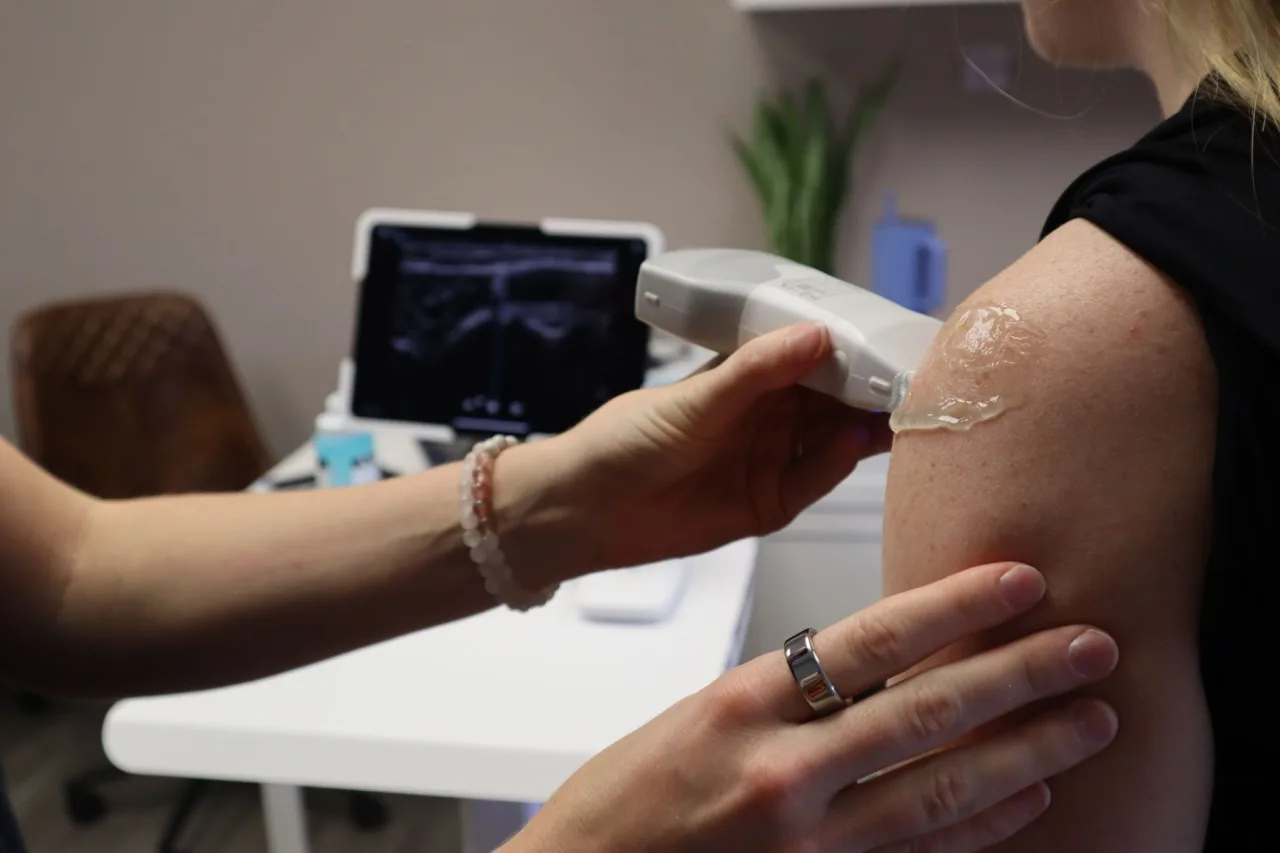
A portable USG machine is a compact ultrasound scanner that can be wheeled to a bedside or even held in one hand. These devices have quietly changed how and where scans happen, bringing imaging to emergency departments, clinics, and remote settings. This guide explains what a portable ultrasound machine is, how it is used, what the scan involves, and where its limits lie.
The short version
- USG means ultrasonography. A portable USG machine is a smaller, mobile version of a standard ultrasound system.
- Ultrasound uses sound waves, not radiation, so it is considered safe and can be repeated when needed.
- Portable scanners power point-of-care ultrasound, where the treating clinician scans and interprets at the bedside.
- Portable does not always mean equal. A focused bedside scan is not the same as a full diagnostic study by a radiology department.
What a portable USG machine is
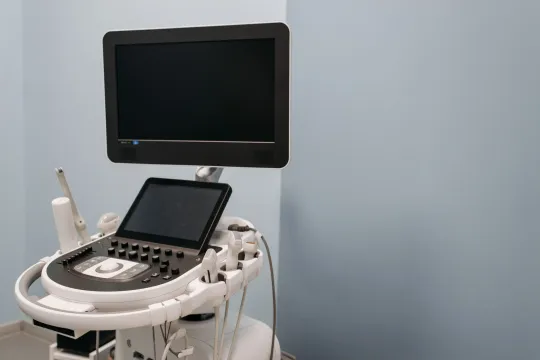
USG is short for ultrasonography, the use of high-frequency sound waves to create live pictures of the inside of the body. A portable USG machine performs the same core task as a large cart-based system, but in a smaller package: a laptop-sized unit on a small trolley, or a handheld probe that connects to a tablet or phone.
According to RadiologyInfo.org, ultrasound imaging uses sound waves to produce pictures of the inside of the body and is safe, noninvasive, and does not use radiation. That safety profile, combined with shrinking hardware, is exactly why ultrasound is the modality that has become truly portable. For the fuller picture of the technology, see our overview of how ultrasound works.
How a portable scan works

The physics is the same regardless of size. A probe, called a transducer, sends pulses of sound into the body and listens for the echoes that bounce back from tissue boundaries. The machine measures how long each echo takes to return and how strong it is, then builds a moving image on the screen in real time. A water-based gel between the probe and the skin removes the air gap so the sound can travel cleanly.
Because the image is live, the operator can watch organs move, blood flow, and structures shift with breathing, which is one of ultrasound's great strengths. Doppler modes add information about the speed and direction of blood flow, and RadiologyInfo describes colour, power, and spectral Doppler as ways of displaying that flow.
Where portable ultrasound is used
Portable USG machines are used wherever bringing the scanner to the patient is easier than bringing the patient to the scanner. This bedside approach is often called point-of-care ultrasound, or POCUS.
- Emergency and critical care: rapid assessment of the heart, lungs, abdomen, and for guiding procedures.
- Obstetrics: quick checks of a pregnancy at the bedside, alongside formal scans in a clinic.
- Procedure guidance: placing intravenous lines, drainage, and nerve blocks under live imaging.
- Rural and mobile settings: clinics and outreach services where a full imaging suite is not available.
Point-of-care ultrasound is distinct from consultative ultrasonography: with POCUS, the treating clinician performs and interprets the scan immediately, rather than a technician acquiring images that a radiologist reads separately. Both approaches have their place.
What the scan involves for you
From a patient's point of view, a portable scan feels much like any ultrasound. You may lie or sit depending on the body area. The operator applies gel and moves the probe over the skin, sometimes pressing gently to get a clearer view. The scan is painless, uses no radiation, and typically takes a few minutes to perhaps half an hour depending on what is being examined. The operator may pause to freeze the image, take measurements, or save stills into your record. If the view is unclear, they may change probes, adjust the settings, or ask you to change position or breathe in a certain way, all of which are routine parts of getting a good picture.
Tip: If a clinician does a quick bedside scan, it is reasonable to ask what they are looking for and whether a more detailed formal ultrasound is still needed. A focused scan answers a focused question; it does not always replace a complete study.
Strengths and honest limitations
Portable ultrasound is powerful, but it is not magic, and understanding its limits protects you. The quality of any ultrasound depends heavily on the operator's skill and on the physics of the body being scanned.
- Strengths: no radiation, real-time imaging, low cost per scan, and the ability to reach the patient anywhere.
- Operator dependent: results rely on the training and experience of the person holding the probe.
- Physical limits: sound waves struggle to pass through bone and air, so ultrasound is less useful for the lungs, bowel gas, and structures hidden behind bone.
- Focused, not comprehensive: a bedside POCUS answers a specific question and may need to be followed by a full department study or a different test such as CT or MRI.
When a fuller or different picture is needed, clinicians turn to other tools. Our guides to the CT scan and MRI scan explain when those cross-sectional tests add information ultrasound cannot.
Types of portable ultrasound devices
The word portable covers a wide spread of devices, and they are not interchangeable. Understanding the categories helps set expectations for image quality and use.
- Handheld probes: a single transducer that plugs into a smartphone or tablet. The most mobile option, ideal for quick focused looks, though usually with fewer features.
- Laptop-style systems: a compact unit with a built-in screen and interchangeable probes, offering a good balance of portability and capability.
- Compact trolley systems: smaller than a full hospital cart but still wheeled, bringing more advanced imaging closer to the bedside.
The right category depends on who is using it and for what. An emergency clinician wanting a fast answer has different needs from a clinic running detailed diagnostic studies all day. Regardless of size, a water-based ultrasound gel is needed for good contact, and probes must be cleaned between patients to control infection.
Are portable machines as good as large ones?
It depends on the task. Modern handheld and laptop systems can produce excellent images for many focused questions, and image quality has improved dramatically. For detailed diagnostic studies, though, larger cart-based systems still tend to offer higher image quality, more advanced Doppler, and a wider range of specialised probes. A skilled operator on a good portable machine can outperform an inexperienced one on a premium system, which is why training matters as much as hardware.
Please note: This article is general information, not medical advice. It cannot tell you what a scan shows or which device is right for a particular medical question. Decisions about imaging should be made with a qualified clinician who knows your situation.
Buying or choosing a portable ultrasound
If you are a clinic considering a portable USG machine, the right choice depends on your specialty, the probes you need, image quality, workflow, and support. Prices vary enormously, from relatively affordable handheld probes to high-end portable systems that cost as much as some fixed units, and figures shift by region, configuration, and warranty. Always request a written quote and, where possible, trial the device on the cases you actually see. Our buyer's guide to portable ultrasound machines covers what to compare, and our overview of the real price of ultrasound machines puts the numbers in context. Patients looking for a scan, rather than a machine, can start with our directory on finding an ultrasound clinic.
Frequently asked questions
What does USG mean?
USG stands for ultrasonography, which is imaging that uses high-frequency sound waves to create live pictures of the inside of the body. A portable USG machine is simply a compact, mobile version of a standard ultrasound scanner. The terms ultrasound and ultrasonography refer to the same technology.
Is a portable ultrasound safe?
Yes. Like all diagnostic ultrasound, portable ultrasound uses sound waves rather than ionizing radiation, and standard diagnostic ultrasound has no known harmful effects on humans. That safety is one reason ultrasound is used so widely, including during pregnancy and for repeated checks.
Is a portable machine as accurate as a big hospital scanner?
It depends on the task and the operator. Modern portable systems produce excellent images for many focused questions, but larger cart-based systems often provide higher image quality and more advanced features for detailed diagnostic studies. Operator skill matters as much as the hardware, so a well-trained user on a good portable device can perform very well.
What can a portable ultrasound not see well?
Sound waves do not pass easily through bone or air, so ultrasound is limited for the lungs, gas-filled bowel, and structures hidden behind bone. In those situations a clinician may recommend a different test, such as a CT or MRI scan, to answer the question.
Who performs a bedside portable scan?
In point-of-care ultrasound, the treating clinician often performs and interprets the scan at the bedside. In a radiology department, a sonographer usually acquires the images and a radiologist interprets them separately. Both approaches are valid; the setting and the question determine which is used.
More guides on Ultrasound Types & Procedures
Have a question or a topic to suggest?
We read every message. Tell us what you would like to see next.
You may also like
Ultrasound: Uses, Procedure & Results
An ultrasound uses sound waves, not radiation, to image soft tissue in real time. This guide covers why scans are ordered, how they work, how to prepare, and how results are interpreted, with a reminder to discuss findings with your doctor.
Best Portable Ultrasound Machine
A practical 2026 buyer's guide to portable ultrasound machines for clinics, covering formats, image quality, probes, budget tiers, regulatory clearance, and total cost.
Ultrasound Machine Price Guide 2026
Ultrasound machine price can mean the cost of a scan or the cost of the equipment. This guide gives honest ranges for both, with and without insurance, and how to get a real quote.