Best Portable Ultrasound Machine
How to choose a portable ultrasound machine for your clinic in 2026, from formats and probes to budget and support.
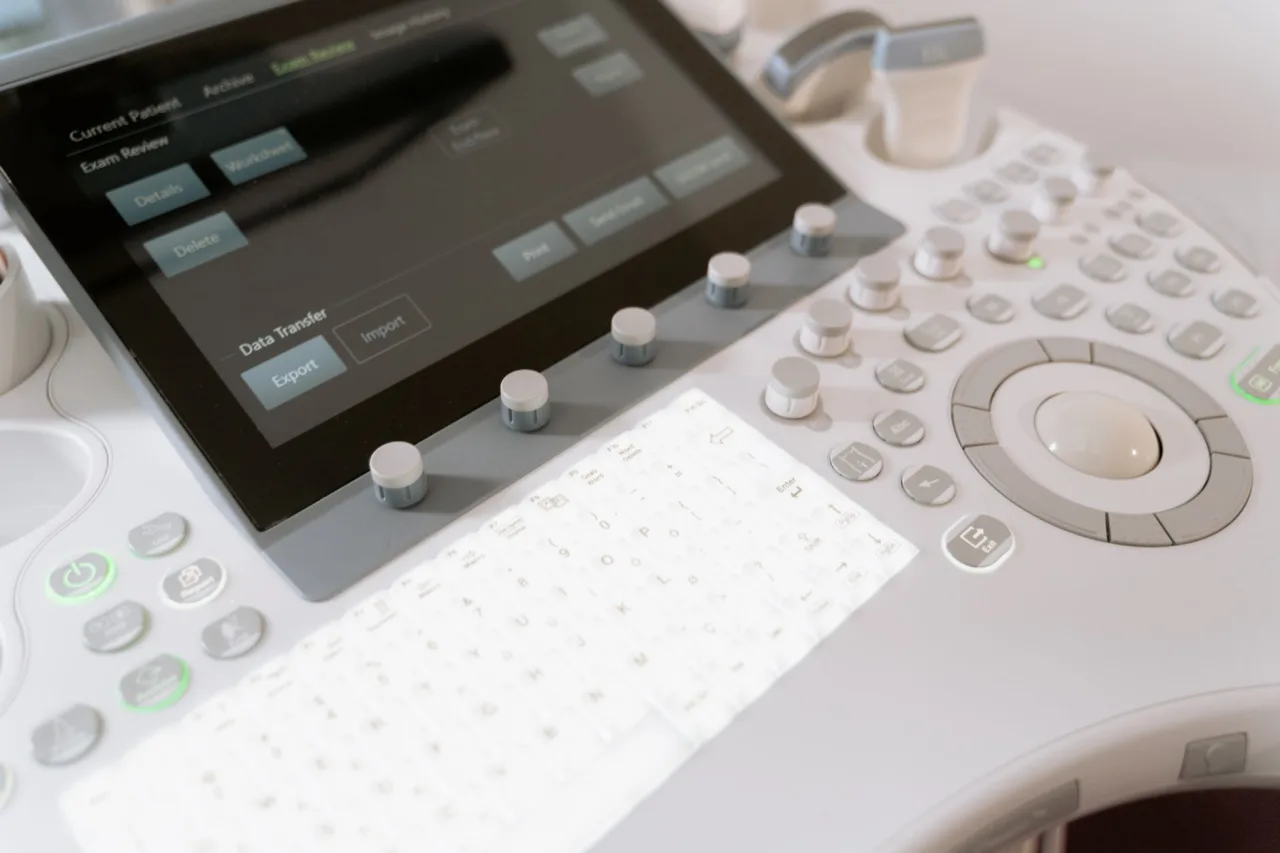
A portable ultrasound machine can bring imaging to the bedside, the clinic room, or the field, without the footprint or cost of a full cart system. But the market ranges from pocket probes that plug into a phone to wheeled laptop units, and the right choice depends on what you scan and where. This buyer's guide explains how to evaluate portable ultrasound for a clinic in 2026, focusing on the criteria that matter rather than any single brand.
The short version
- Match the machine to your clinical use first, because the transducers and image quality you need decide almost everything else.
- Portable formats span handheld probes, tablet-based systems, and compact laptop units, each trading portability against image quality and features.
- Total cost includes probes, software licences, service contracts, and training, not just the sticker price.
- Buy only devices with the proper regulatory clearance for your country, and treat any offer of a "free" machine with healthy scepticism.
What counts as a portable ultrasound machine
Portable ultrasound covers any system designed to be moved easily and used outside a fixed imaging suite. Much of this overlaps with point-of-care ultrasound, where a clinician scans and interprets at the bedside to answer a focused question. The Wikipedia overview of medical ultrasound notes that pocket-sized ultrasound devices can be used as point-of-care screening tools, reflecting how far miniaturisation has come.
Broadly, portable systems fall into three shapes:
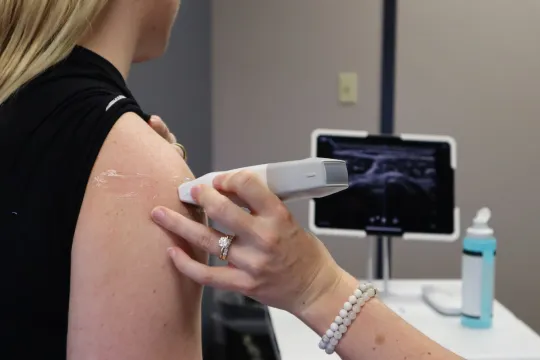
- Handheld probes: a single transducer that streams to a phone or tablet app. Highly portable and lower cost, with more modest image quality and fewer advanced features.
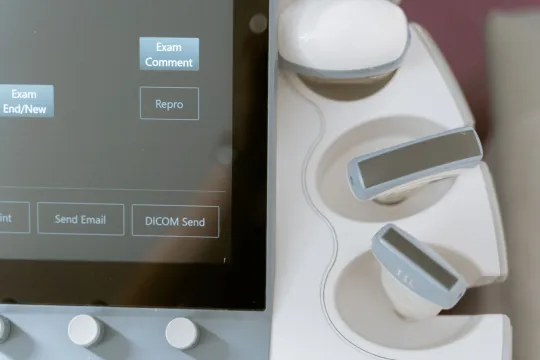
- Tablet-based systems: a compact console with interchangeable probes, balancing portability with better controls and image processing.
- Compact laptop or trolley units: near cart-level performance in a smaller, movable body, suited to a busy clinic room.
If you are weighing portable against a full console, our companion ultrasound machine buyer's guide covers cart systems in more detail.
Start with the clinical use, not the specs
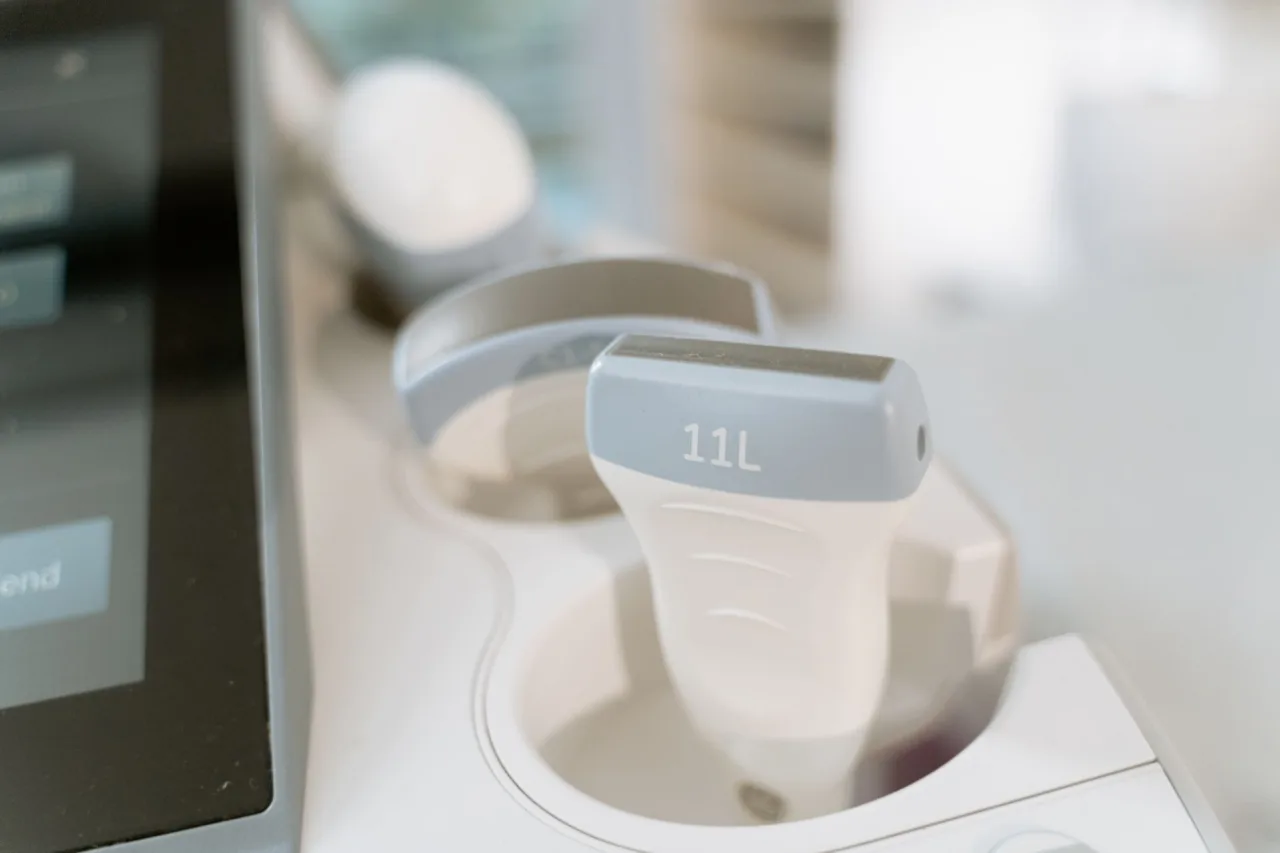
The single most useful step is to write down what you will actually scan. A women's health clinic, an emergency department, a physiotherapy practice, and a veterinary surgery all have different needs. Your use case determines:
- Which transducer types you require, since a probe suited to deep abdominal imaging is not the one for superficial structures.
- The image quality and processing you need for confident decisions.
- Whether you need Doppler, measurement packages, or specific presets.
Because the probe does so much of the work, it is worth reading our dedicated ultrasound probe guide alongside this one before you commit.
Key buying criteria
Once the clinical use is clear, compare candidate systems against a consistent checklist:
- Image quality: the deciding factor. Ask for a live demo on the kind of patients and body regions you actually scan, not a polished showroom sample.
- Transducer range: confirm which probes are available and whether one device can cover all your applications, or whether you need several.
- Frequency and depth: higher frequencies give finer detail near the surface, while lower frequencies reach deeper structures, a physics trade-off described in the medical ultrasound literature.
- Battery life and durability: important for mobile or high-volume use, along with how easy the device is to clean and disinfect.
- Connectivity and workflow: how images are stored, exported, and linked to patient records, including DICOM support if you need it.
- Regulatory clearance: the device must be cleared or registered by the relevant authority in your country for clinical use.
- Warranty and service: response times, loaner availability, and how long the manufacturer commits to support and software updates.
Tip: Always arrange a hands-on trial with your own staff scanning real cases. Image quality claims are easy to make on a data sheet and hard to judge without seeing the device perform in your setting.
Budget tiers, honestly framed
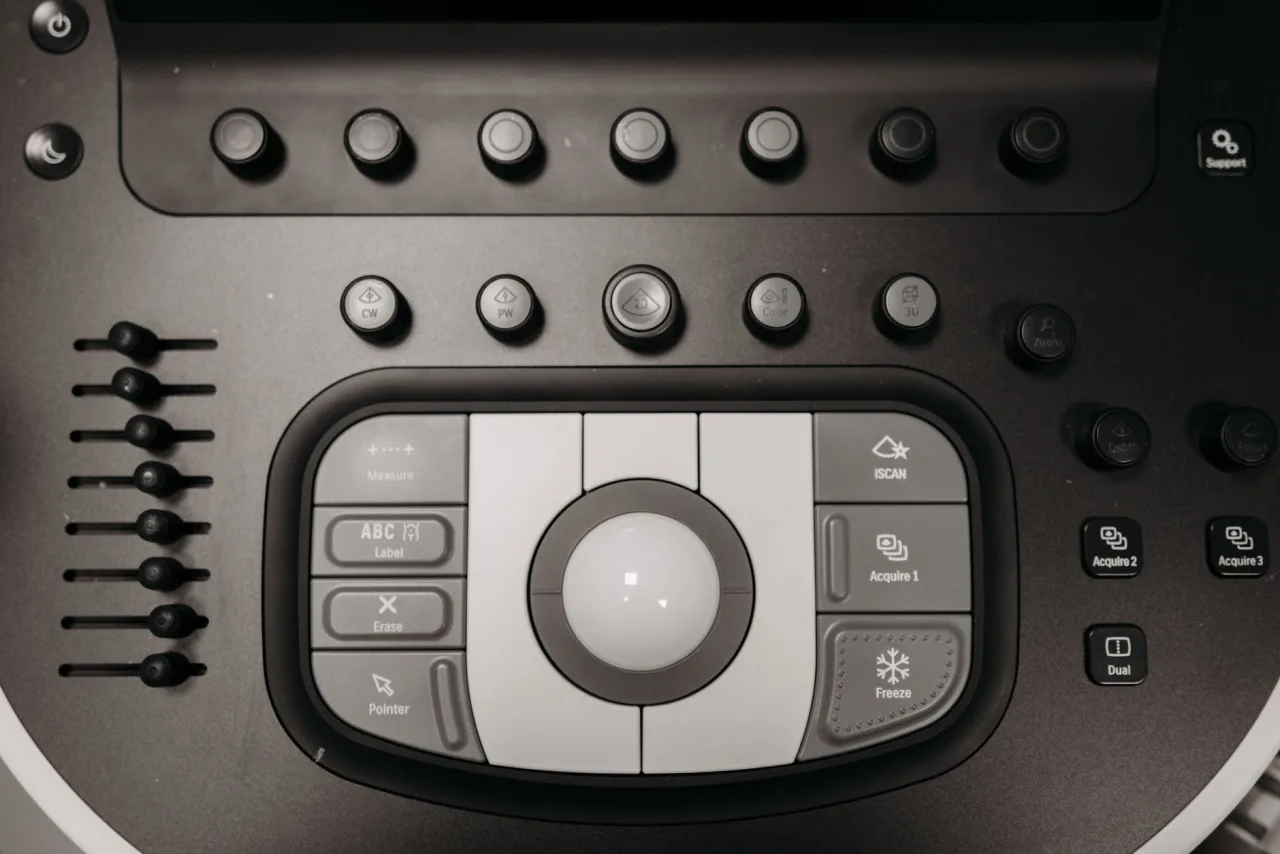
Prices vary widely by region, configuration, probe count, and the software licences bundled in, so treat any figure as a rough guide and confirm current quotes with suppliers and your finance team. As a general shape of the market:
| Tier | Typical format | Best suited to | What to check most |
|---|---|---|---|
| Entry | Handheld probe with app | Focused point-of-care checks, mobile visits | Image quality limits, subscription fees |
| Mid | Tablet system, interchangeable probes | General clinic use across several applications | Probe range, service contract |
| Premium | Compact laptop or trolley unit | Higher volume, advanced measurements | Total cost of ownership, upgrade path |
Note that some handheld systems carry ongoing software subscription fees, which change the long-term cost picture. Factor probes, training, and service into every comparison, not just the headline price.
It is also worth thinking about how a device will age. A slightly more capable system with a clear upgrade path and long support window can outlast a cheaper unit that is discontinued within a couple of years. Ask how older models have been supported, whether probes can be reused if you upgrade the console, and how quickly a broken unit can be repaired or replaced, since downtime in a busy clinic has a real cost of its own.
About "free portable ultrasound machine" offers
The phrase turns up often in searches, so it is worth addressing plainly. Legitimate free or heavily subsidised equipment does exist, usually through grant programmes, charitable donations to clinics in low-resource settings, or manufacturer trials, and these come with clear paperwork and named organisations. Unsolicited online offers of a free machine, by contrast, are frequently marketing hooks, refurbished units with hidden costs, or outright scams. Verify the source, insist on documentation, and confirm regulatory clearance and warranty before parting with any details.
Questions to ask before you buy
A structured conversation with each supplier makes it far easier to compare like with like. Take the same list to every demo:
- Which regulatory clearance does this device hold in my country, and can you show the documentation?
- What is the full price including probes, software licences, and any ongoing subscription?
- How long is the warranty, what does it cover, and what are the service response times?
- How long will the manufacturer support this model with software and security updates?
- Can I trial the exact configuration with my own staff and patients before committing?
- How is data stored and exported, and does it integrate with our records system?
- What is the expected life of the battery and probes, and what do replacements cost?
Write down the answers. A supplier who cannot give clear, documented responses on clearance and support is a warning sign in itself. It is also worth checking independent user feedback and asking to speak with an existing customer in a similar setting.
Tip: Beware of comparing devices only on headline resolution figures. Real-world image quality, reliability, service, and total cost of ownership usually matter more than a single specification on a brochure.
Ownership, training, and safety
A machine is only as good as the person using it. Ultrasound is highly operator dependent, so budget for training and competency, and consider the skills mapped out in our sonography career guide. Build in a cleaning and infection-control routine for probes and gel, plan for regular servicing, and keep records for audits. Ultrasound itself is safe and uses no ionising radiation, as explained in our overview of how ultrasound works, but image quality and patient safety still depend on good practice.
Please note: This guide is general commercial and educational information for clinics, not medical, legal, or financial advice. Confirm clinical suitability, regulatory status, and pricing with the manufacturer, your professional body, and your own advisers before buying.
Frequently asked questions
Is a portable ultrasound as good as a full cart system?
The best portable systems can rival cart machines for many focused tasks, but high-end console systems generally still lead on image quality and advanced features. The right answer depends on what you scan. For focused point-of-care questions a portable device is often enough, while complex diagnostic work may call for a full system.
How much does a portable ultrasound machine cost?
Prices range widely, from relatively affordable handheld probes to premium compact systems that cost much more, and configuration, probes, and software licences all affect the total. Because pricing shifts by region and supplier, request current quotes and compare the full cost of ownership rather than the headline figure.
Do I need more than one probe?
Often yes. Different transducers suit different depths and body regions, so a clinic covering several applications may need two or more probes. Confirm which probes a system supports before buying, and see our separate probe guide for details.
Are handheld ultrasound devices safe to use?
Diagnostic ultrasound uses sound waves rather than radiation and is considered safe when used appropriately by trained operators. Safe use still depends on proper cleaning, correct settings, and clinical competence, so training and infection control remain essential.
Should I trust an offer of a free portable ultrasound machine?
Be cautious. Genuine subsidised equipment usually comes through recognised grant or donation programmes with clear documentation. Unsolicited free offers are frequently marketing or scams, so verify the source, insist on paperwork, and confirm regulatory clearance and warranty first.
More guides on Machines & Equipment (B2B)
Have a question or a topic to suggest?
We read every message. Tell us what you would like to see next.
You may also like
Ultrasound Machine 2026: Buyer's Guide
A practical buyer's guide to choosing an ultrasound machine for your clinic, covering application fit, image quality, probes, budget tiers, total cost of ownership and support.
Best Ultrasound Probe: Buyer's Guide
A 2026 buyer's guide to ultrasound probes for clinics: linear, curvilinear, phased array, and endocavitary transducers, plus frequency, compatibility, and disinfection.
Best Ultrasound Gel: Buyer's Guide
A 2026 buyer's guide to ultrasound gel for clinics: why gel matters, sterile versus non-sterile, infection-control risks, and how to choose and store it safely.