Imaging Center Near Me: Find and Compare
An imaging center is a facility that offers several kinds of scans under one roof, often MRI, CT, ultrasound, X-ray, and mammography.

An imaging center is a facility that offers several kinds of scans under one roof, often MRI, CT, ultrasound, X-ray, and mammography. Searching for one near you usually means your doctor has ordered a test and you want a convenient, reputable place to have it done. This guide explains how to choose a strong imaging center and what to check before you book. It is educational information, not a directory of named centers, because the right choice depends on your referral, your insurance, and where you live.
The short version
- A multi-service imaging center can be convenient when a workup needs more than one type of scan.
- Look for accreditation for the specific modality you need, not just a general claim of quality.
- Confirm a board-certified radiologist reads your images and reports to your referring doctor.
- Compare outpatient centers against hospitals on price and wait time; outpatient is often cheaper for routine scans.
What an imaging center is, and when it helps
An imaging center, sometimes called a diagnostic imaging center or radiology center, is an outpatient facility that performs medical scans and has them interpreted by radiologists. Because it typically offers several modalities in one place, it can be efficient when your doctor has ordered more than one test, or when you are not sure yet which scan you will need. If you want a plain-language primer on the different tests first, our overviews of an MRI scan, a CT scan, and a general ultrasound explain what each is for.
Start with your referral. Ask the ordering clinician exactly which scan is needed and of which body part, because that determines which centers are appropriate and how you should prepare. A center that is excellent for one modality is not automatically the best for another.
Accreditation: the single most useful signal

Across imaging types, accreditation is the clearest independent signal of quality. The American College of Radiology (ACR) accredits facilities in modalities including MRI, CT, ultrasound, mammography, and nuclear medicine, with review by qualified radiologists and medical physicists covering image quality and staff qualifications. When you compare centers, ask which specific modalities are accredited, because a facility may be accredited for one scan and not another.
- Accreditation. Independent review of equipment, images, and personnel for the modality you need.
- Radiologist reporting. A physician trained in imaging interprets your scan and sends a written report to your doctor.
- Qualified technologists. Certified technologists and sonographers operate the equipment.
Hospital department or outpatient imaging center
Two settings dominate, and the difference affects both cost and experience.
- Hospital radiology departments. Best for emergencies, inpatients, and complex cases that may need immediate follow-up care. Often the most expensive setting for routine scans.
- Standalone outpatient imaging centers. Frequently faster to book and lower cost for routine, non-urgent scans, with a focus on scheduled outpatient work.
For a planned, non-urgent scan with a clear referral, an outpatient center is often the more affordable and convenient choice. If your care is urgent or you have complicating conditions, your doctor may prefer a hospital setting. A broad medical imaging provider near you or a full-service diagnostic center can be compared using exactly the same checklist.
Radiation varies by scan, so ask the right question
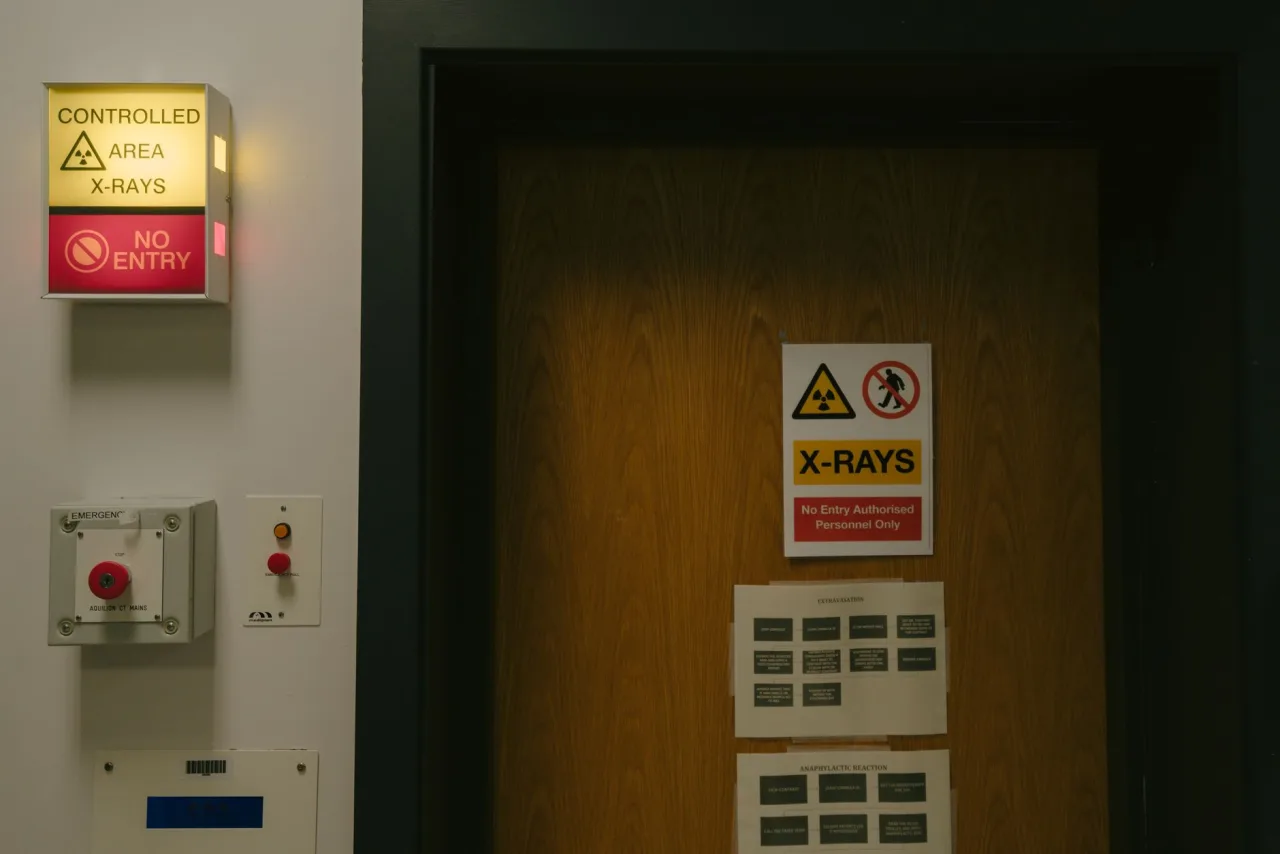
A key advantage of choosing a multi-service center is that it can perform whichever scan is the best fit, and different scans carry very different radiation profiles. MRI and ultrasound use no ionizing radiation. X-ray uses a very small dose, and CT uses more because it captures many images. The RadiologyInfo resource from the ACR and RSNA lists the effective dose of a chest X-ray as about 0.1 millisieverts versus roughly 6 millisieverts for a chest CT. You can review the comparison on RadiologyInfo's radiation dose page.
A practical question to ask: is there a lower-dose or radiation-free test that answers the same clinical question? Only your doctor can decide, but a good center and a good referring clinician will welcome the question, especially for children or repeat imaging.
Comparing centers on the things that matter
Once you have the referral, compare candidate centers on a short list of practical factors:
- Accreditation for the modality you need.
- Availability: how soon can you be seen, and are evening or weekend slots offered?
- Reporting: will a board-certified radiologist read the scan, and how fast is the turnaround?
- Records: can they send images and the report to you and your doctor, and access your prior imaging for comparison?
- Price: the all-in cost for your exact scan, in writing.
- Location and access: parking, public transport, and accessibility if you have mobility needs.
What an imaging center visit costs, honestly
Cost depends heavily on which scan you need, the setting, and your insurance. As a rule, X-ray and ultrasound tend to be the least expensive, CT sits in the middle, and MRI is often the most expensive. In the United States, outpatient centers are frequently cheaper than hospitals for the same routine scan, and self-pay or prompt-pay prices can be lower than list prices. In systems like the NHS, medically necessary scans are typically provided without a direct charge. Always confirm the exact figure for your specific scan with the center and your insurer, and never rely on a general estimate.
Questions to ask before you book
- Are you accredited for the specific scan my doctor ordered, and by whom?
- Will a board-certified radiologist read my images, and how soon will the report reach my doctor?
- What is the all-in price for my exact scan, and what does it include?
- Can you access my previous imaging for comparison, and send my new images and report to my doctor?
- How should I prepare, and how long will the appointment take?
This is general information, not medical advice. This article explains how to find and evaluate an imaging center. It cannot tell you which scan you need or what your results mean. Only your referring doctor or a radiologist can interpret your images and advise you on next steps. Always follow the guidance of your own healthcare team.
Frequently asked questions
How do I choose a good imaging center near me?
Start with your doctor's referral and confirm exactly which scan is needed. Then favor a center that is accredited for that specific modality, where a board-certified radiologist reads the images and a certified technologist runs the equipment. Compare availability, report turnaround, and the all-in price before you book.
Is an outpatient imaging center as good as a hospital?
For routine, non-urgent scans with a clear referral, an accredited outpatient center often provides the same quality of imaging and reporting as a hospital, frequently faster and at lower cost. Hospitals remain the better choice for emergencies, inpatients, and complex cases that may need immediate follow-up. Your doctor can advise which setting suits you.
Which imaging test has the most radiation?
Among common scans, CT uses the most radiation because it captures many images, X-ray uses a small dose, and MRI and ultrasound use no ionizing radiation at all. The best test is the one that answers your clinical question, which only your doctor can decide. It is reasonable to ask whether a lower-dose or radiation-free option would work.
How much does a scan at an imaging center cost?
It depends on the scan, the setting, and your insurance. X-ray and ultrasound are usually least expensive, CT sits in the middle, and MRI is often the most expensive. Outpatient centers are frequently cheaper than hospitals for the same routine scan. Confirm the exact figure for your study with the center and your insurer.
Do I need a referral to visit an imaging center?
In most places a diagnostic scan requires a referral from a doctor, both for medical appropriateness and for insurance coverage. Some centers offer self-referral options for certain scans in certain regions, but a physician should still review the results. Ask your clinician what is required where you live.
More guides on Find a Clinic (Local)
Have a question or a topic to suggest?
We read every message. Tell us what you would like to see next.
You may also like
MRI Near Me: Find and Compare Clinics (2026
Typing "MRI near me" usually means a doctor has already ordered the scan and you want it done soon, safely, and without a shock on the bill.
X-Ray Centre Near Me: Find and Compare
Searching for an X-ray centre near you usually means a doctor, dentist, or urgent care clinic has asked for a plain film, and you want it done quickly and correctly.
4 D Ultrasound Near Me: Find and Compare
Searching "4 D ultrasound near me" usually means you want a lifelike, moving keepsake video of your baby rather than a medical appointment. The catch is that these elective sessions vary a lot in quality