MRI Scan Near Me: Choose a Clinic
Choosing an MRI center: metal and implant screening, scanner comfort, contrast, and cost.
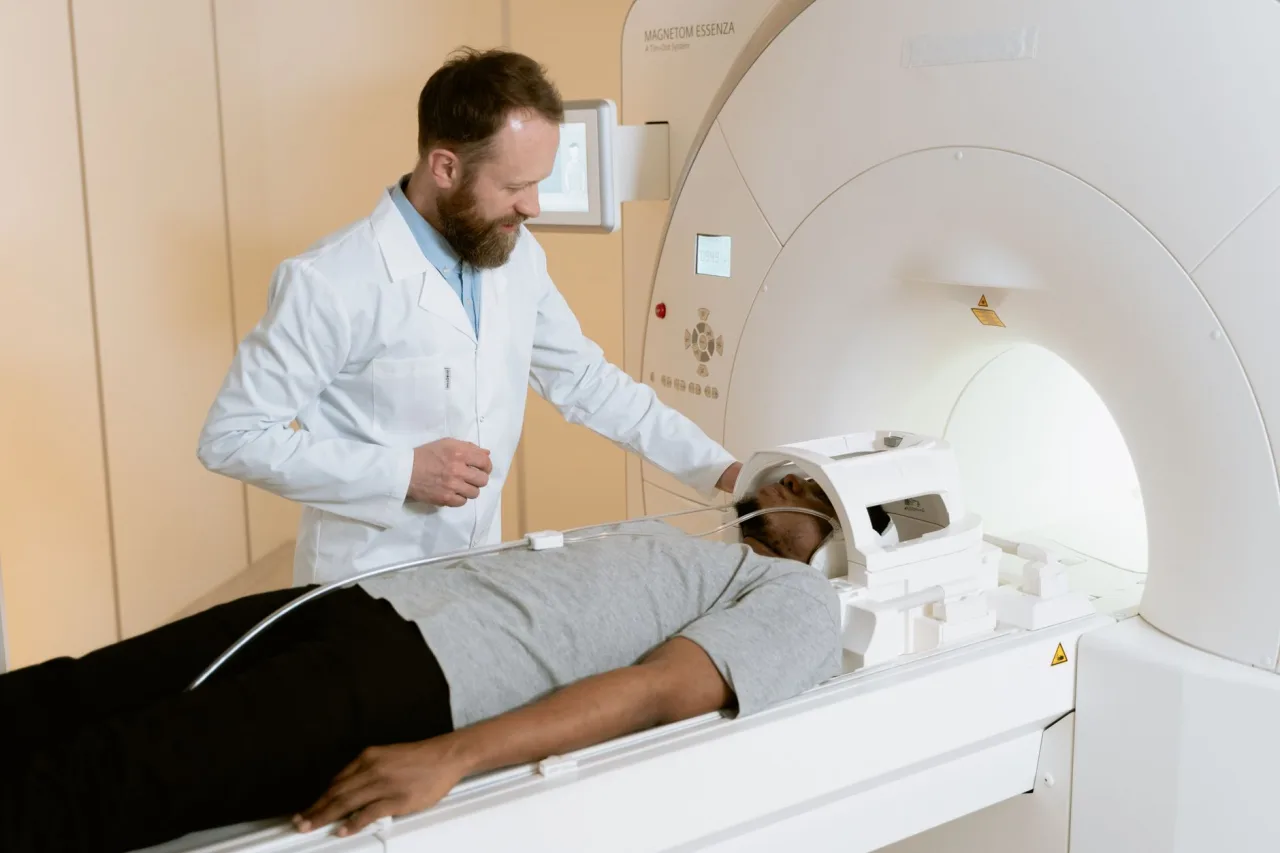
An MRI is a longer, noisier, and more expensive scan than most, and it comes with one thing the others do not: a very strong magnet that makes safety screening non-negotiable. This guide covers how to find a good MRI center, what separates a strong one from an average one, and the metal, comfort, and cost questions worth asking first. It is general information, not a directory of named clinics, because the right center depends on your referral, your insurer, and where you live.
The short version
- MRI uses a powerful magnet and radio waves, not radiation, so implants and metal in the body must be declared before you go anywhere near the scanner.
- If you are claustrophobic or larger-bodied, ask about open or wide-bore scanners and how the center handles anxiety.
- Confirm accreditation, that a radiologist reports the scan, and whether gadolinium contrast is planned.
- MRI is often the most expensive routine scan, so get the all-in price in writing and check coverage.
Start with your referral and the body part
MRI (magnetic resonance imaging) is ordered for a specific question, often about soft tissue, the brain, the spine, or joints. Before comparing centers, check the referral or ask which body part is being scanned and whether contrast is planned, because that changes the appointment length, the coil the center needs, and how you prepare. For a fuller walkthrough of the test itself, our overview of what an MRI is used for and how it works is a good starting point before you book.
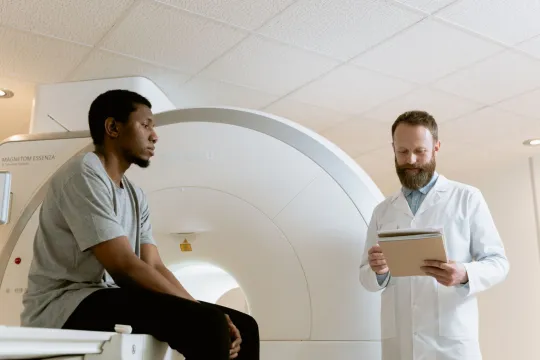
The NHS guide to MRI scans describes the scanner as a large machine with a short tunnel and a bed that moves through it, with scans typically taking from 15 minutes to an hour. Knowing roughly how long your scan will take and whether contrast is involved helps you ask the right questions when you compare centers.
Safety screening is the part you cannot skip
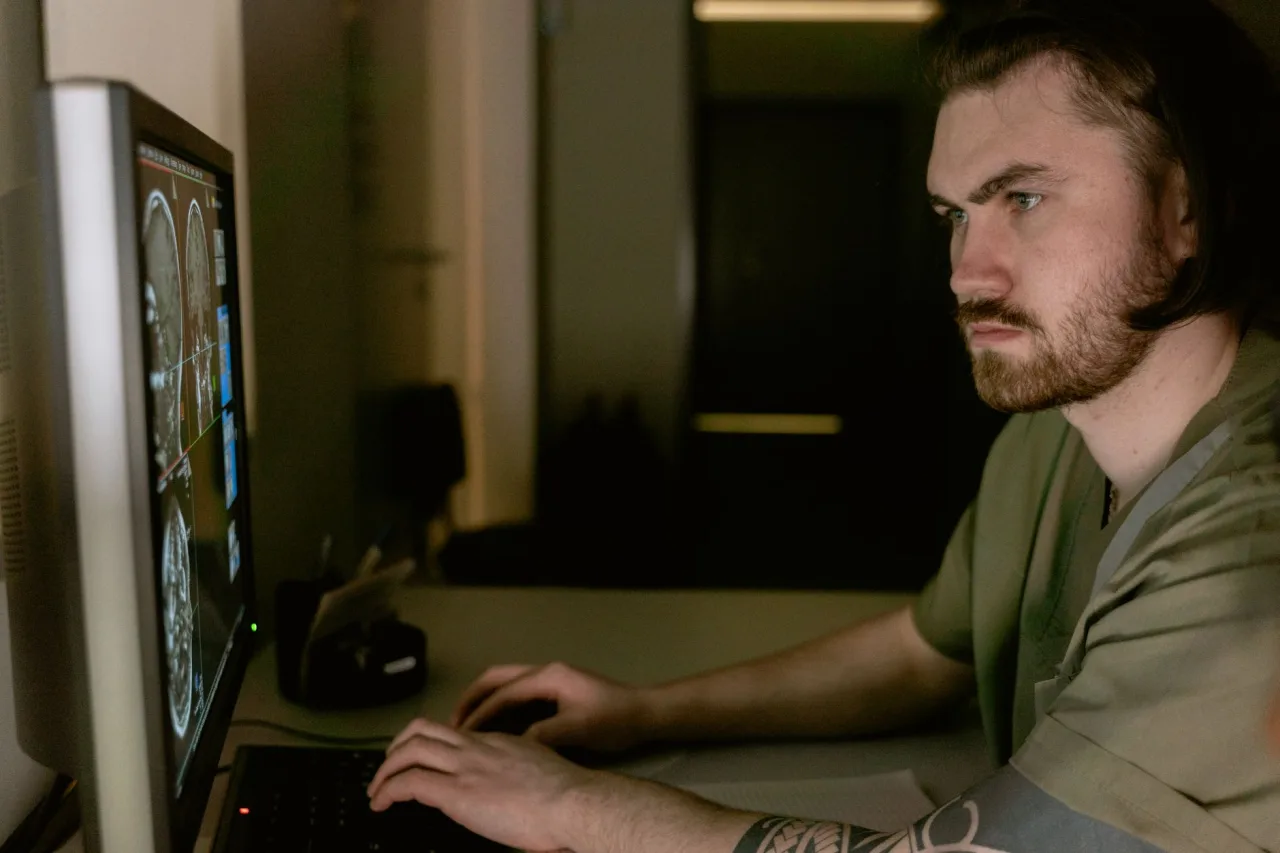
Because MRI uses a strong magnetic field, anything magnetic can be dangerous near the scanner, and some implanted devices can be affected. The NHS notes that you will be asked whether you have metal parts in your body such as surgical clips, a pacemaker, or certain dental work, and that these must be disclosed before scanning. A good center takes this seriously and screens you carefully. Tell staff in advance if you have:
- A pacemaker, defibrillator, or other implanted electronic device.
- Surgical clips, stents, a cochlear implant, or metal fragments, for example from an injury at work.
- Any implant, prosthesis, or device you are unsure about, so the center can check whether it is MRI safe.
Important note: never assume an implant is fine. Bring any implant card or documentation you have, and let the center confirm it against the manufacturer's guidance. If you cannot remember the details, tell them anyway so they can look into it before your appointment rather than on the day.
Open, wide-bore, and closed scanners
The standard closed MRI is an enclosed tube, which some people find claustrophobic, and it has a weight and size limit. Centers may offer alternatives, and it is worth asking which they have.
- Closed (traditional) MRI generally gives the highest image quality and is the default for most scans.
- Wide-bore MRI keeps the closed design but with a larger opening, which helps with comfort and larger patients while keeping image quality high.
- Open MRI is more open on the sides and can help severe claustrophobia, though image quality can be lower for some studies.
If comfort in the scanner is your main concern, our guide to finding an open MRI near you goes into the trade-offs in more detail. The NHS also notes that if you feel anxious you can discuss it with staff beforehand, and you may be able to have medicine to help you relax.
Noise, comfort, and how long it takes
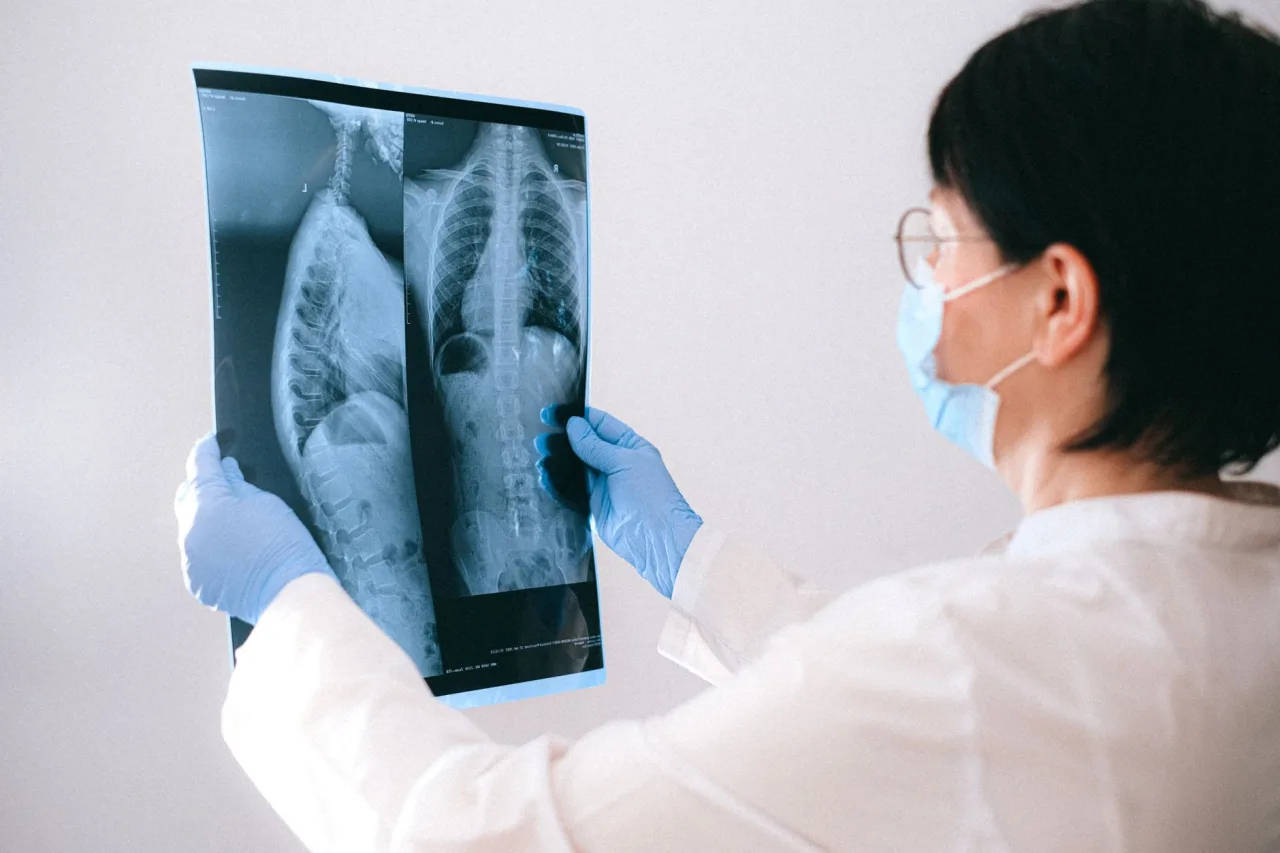
MRI scanners are loud. The NHS explains that you will be given ear plugs or headphones because the scanner makes loud bangs and clicks, and you need to lie still for the images to be sharp. Some centers offer music, a mirror to see out, or a companion in the room. None of that changes the diagnosis, but for a scan that can last up to an hour it changes the experience, so it is fair to ask what the center does to keep patients comfortable.
Accreditation and who reads the scan
As with any imaging, the system around the scanner matters more than the badge on the machine. Favor a center that is accredited and where a board-certified radiologist interprets your images. The American College of Radiology accredits MRI facilities, with a review covering image quality, equipment performance, and staff qualifications. You might also hear about field strength, usually 1.5 tesla or 3 tesla; a higher field can give more detail for some studies, but the right choice depends on what is being scanned, and a well-run 1.5 tesla center is excellent for most exams. Ask what suits your specific scan rather than assuming higher is always better.
Contrast dye and pregnancy
Some MRI scans use a contrast agent, usually gadolinium, injected to make certain tissues clearer. The NHS notes that contrast can cause mild side effects such as nausea or a metallic taste, and that rare allergic reactions can occur, which is why you may be observed briefly afterward. On pregnancy, RadiologyInfo, the patient resource from the ACR and RSNA, states that gadolinium is not normally used during pregnancy and that there are no proven risks to pregnant women or unborn babies from MRI itself, with contrast used only when necessary; you can read more on RadiologyInfo's MRI safety in pregnancy page. Always tell the center if you are or might be pregnant, and let your care team decide.
What an MRI costs, honestly
MRI is often the most expensive routine scan. Prices vary by country, facility type, body region, whether contrast is used, and your insurance. In the United States, a self-pay MRI commonly runs from several hundred to a few thousand dollars, and a hospital and an outpatient center can quote very different figures for the same study. In systems like the NHS, a medically necessary MRI is typically provided without a direct charge. The only reliable number is the one the clinic and your insurer confirm for your exact scan.
- Ask for the all-in price, including the scan and the radiologist's reading fee.
- Confirm whether contrast is included in the quote or billed separately.
- If you are paying out of pocket, ask about a self-pay or prompt-pay price.
If you are weighing several centers, the general MRI centers near me guide and the broad guide to choosing any imaging clinic near you apply the same checklist, and the MRI near me guide covers the basics from another angle.
This is general information, not medical advice. This article explains how to find and evaluate an MRI provider and what to disclose for safety. It cannot tell you whether you need a scan or what your results mean. Only your referring doctor or a radiologist can interpret your images and advise on next steps. Always follow the guidance of your own healthcare team, and never withhold implant or pregnancy information from the imaging staff.
Frequently asked questions
How do I find a good MRI scan clinic near me?
Start with your doctor's referral, then favor an accredited MRI center where a board-certified radiologist reads the scan. Ask about safety screening, whether contrast is planned, scanner comfort options if you are anxious, and the all-in price for your specific study. Confirm coverage with your insurer before booking.
Is an MRI safe? Does it use radiation?
MRI does not use ionizing radiation; it uses a strong magnet and radio waves. It is very safe for most people, but because the magnet is powerful, you must declare any implants, pacemaker, or metal in your body beforehand so the center can confirm it is safe to scan you. Tell staff if you are or might be pregnant.
What should I tell the clinic before an MRI?
Disclose any pacemaker or implanted device, surgical clips, stents, a cochlear implant, metal fragments, or any implant you are unsure about, and mention pregnancy, claustrophobia, and kidney problems if contrast is planned. Bring any implant card or documentation so the center can check it against the manufacturer's guidance.
What if I am claustrophobic or larger-bodied?
Ask whether the center has a wide-bore or open MRI, which can be more comfortable, and how they help anxious patients. The NHS notes you can discuss anxiety with staff beforehand and may be able to have medicine to help you relax. Open scanners can lower image quality for some studies, so ask what suits your scan.
How much does an MRI cost?
MRI is often the most expensive routine scan, and costs vary by country, facility, body region, contrast, and insurance. A self-pay MRI in the United States can range from several hundred to a few thousand dollars, while medically necessary scans in systems like the NHS are typically provided without a direct charge. Confirm the exact figure with the clinic and your insurer.
More guides on Find a Clinic (Local)
Have a question or a topic to suggest?
We read every message. Tell us what you would like to see next.
You may also like
MRI Centers Near Me: How to Compare
With a scan request in hand, the real question is which MRI centre is accredited, affordable and staffed by strong radiologists. Here is how to compare MRI centres near you like an informed patient.
MRI Near Me: Find and Compare Clinics (2026
Typing "MRI near me" usually means a doctor has already ordered the scan and you want it done soon, safely, and without a shock on the bill.
Open MRI Near Me: How to Choose a Clinic
Searching for an open MRI near you usually means you want MRI detail without the enclosed tunnel. Here is what an open MRI is, who benefits, the real image-quality trade-off, and how to find and choose a good clinic.