Whole Abdomen Ultrasound Price 2026
Realistic 2026 price ranges for a whole abdomen ultrasound, what changes the cost, and how to compare self-pay and insured options.

A whole abdomen ultrasound is one of the more affordable imaging tests, but the price you actually pay can swing widely depending on where you live, the type of facility and your insurance. This 2026 guide explains what drives the cost, the ranges you might expect, and practical ways to keep the bill predictable, without pretending any single number applies to everyone.
The short version
- A whole (complete) abdomen ultrasound images the liver, gallbladder, kidneys, pancreas, spleen and aorta using sound waves, with no radiation.
- Self-pay prices commonly fall in a broad range, roughly the low hundreds of US dollars, but vary enormously by country, city and facility type.
- Hospitals usually cost more than independent imaging centers for the same scan; insurance, deductibles and referral rules change what you owe.
- Prices here are general ranges only. Always confirm the exact fee with the clinic and your insurer before booking.
What a whole abdomen ultrasound includes
A whole abdomen ultrasound, sometimes called a complete abdominal ultrasound, is a broad survey of the upper abdominal organs. RadiologyInfo.org lists the structures it examines as the kidneys, liver, gallbladder, bile ducts, pancreas, spleen and abdominal aorta. It uses high-frequency sound waves rather than radiation, and the NHS confirms that ultrasound scans do not use any radiation, unlike X-rays or CT scans.
Understanding what is covered matters for price, because a "complete" abdomen study assesses more organs than a limited or single-organ scan, and clinics may bill them differently. For the clinical detail behind the test, see our guides to abdominal ultrasound and to the liver ultrasound.
Why prices vary so much

There is no single national price for an abdominal ultrasound. The same scan can cost very different amounts because of factors such as:
- Facility type. Hospital outpatient departments generally charge more than independent or standalone imaging centers.
- Location. Costs differ by country and even between neighboring cities, driven by local wages, rent and competition.
- Complete versus limited study. A full abdomen survey is usually priced above a focused, single-organ scan.
- Who reads it. A separate radiologist interpretation fee may be billed on top of the scan itself.
- Add-ons. Doppler blood-flow imaging or additional views can raise the total.
Because of this, treat any figure you see online as a starting point, not a quote. A whole abdomen scan is often priced similarly to other complete-organ ultrasound studies; comparing against our general ultrasound price guide can help you sense-check a quote.
Typical price ranges in 2026
With the caveat that these are broad, illustrative ranges and not a promise of what you will pay, self-pay abdominal ultrasound prices commonly land somewhere in the low hundreds of US dollars at independent centers, with hospital pricing often higher. In some countries with lower costs of living, or at clinics running promotions, prices can be considerably less. In high-cost cities or hospital settings, the total can be several times higher once separate scan and interpretation fees are combined.
How to read a range. A quoted "price" may cover only the scan, only the radiologist reading, or both. When you call, ask whether the number includes the technical fee (the scan) and the professional fee (the interpretation), so you are comparing like with like between clinics.
With insurance versus paying yourself

If you have health insurance, an abdominal ultrasound that is medically necessary and properly referred is often covered, but what you personally owe depends on your plan. Key variables include your deductible (how much you pay before coverage starts), any copay or coinsurance, and whether the facility is in-network. A scan can be "covered" and still leave you with a meaningful bill if your deductible has not been met.
Paying yourself (self-pay or cash price) is sometimes cheaper than the insured price, especially at independent centers that publish flat rates. It is worth asking both your insurer what your share would be and the clinic what its self-pay price is, then comparing. Never assume a specific insurer covers a specific scan; confirm it directly.
Questions to ask before you book
- Is this a complete (whole) abdomen ultrasound, or a limited study, and does the price reflect that?
- Does the quoted price include both the scan and the radiologist's interpretation?
- Is the facility in-network for my insurance, and what will my out-of-pocket share be?
- What is the self-pay price if I do not use insurance, and is there a prompt-payment discount?
- Do I need a referral or prior authorization to be covered?
Comparing a few nearby facilities is often the single most effective way to lower the cost. Our directory-style guide to the imaging center explains how to weigh price against accreditation, wait times and convenience rather than choosing on cost alone.
How to prepare for the scan
Preparation is simple and can affect image quality, which in turn avoids repeat visits and repeat charges. RadiologyInfo.org notes that your doctor may ask you to fast before an abdominal ultrasound, since food and drink can obscure the gallbladder and other organs. It also advises leaving jewelry at home and wearing loose, comfortable clothing. Follow the specific fasting instructions your clinic gives, because they vary by protocol.
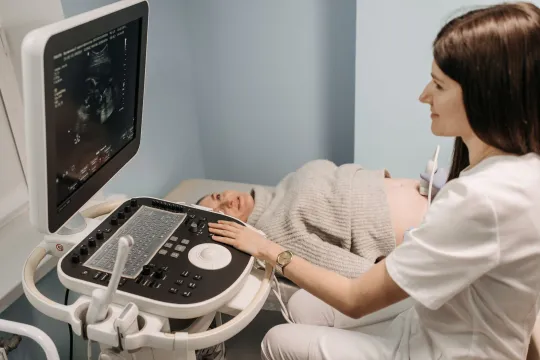
The scan itself is quick and painless. A technologist applies gel and moves a handheld probe across your abdomen. The NHS notes external ultrasound scans usually take around 10 to 45 minutes and generally cause no pain. If your abdomen scan is being combined with pelvic imaging, our guide to USG of the abdomen and pelvis explains what the combined study covers.
Important: this is general information, not medical advice, and not a price quote. Cost ranges here are broad and vary by country, provider and insurance. Only the clinic and your insurer can tell you what you will actually pay, and only your clinician or a radiologist can interpret your scan. If a doctor has ordered this test, discuss any concerns about cost or results with your care team.
Getting good value without cutting corners
The cheapest scan is not automatically the best value. An accredited facility with qualified sonographers and prompt radiologist reporting reduces the chance of an unclear result that has to be repeated elsewhere. Look for transparent pricing, reasonable turnaround for the report, and accreditation, then compare on price among facilities that clear those bars. A slightly higher fee that delivers a clear, timely, correctly read scan can save money and worry overall.
Frequently asked questions
How much does a whole abdomen ultrasound cost?
Self-pay prices commonly fall in the low hundreds of US dollars at independent centers, with hospitals often charging more, but this varies widely by country, city and facility. The only reliable figure is the one you confirm directly with the specific clinic and, if relevant, your insurer.
Is an abdominal ultrasound cheaper than a CT or MRI?
Generally yes. Ultrasound is usually one of the least expensive cross-sectional imaging options because it needs no radiation and less costly equipment than CT or MRI. It cannot answer every clinical question, though, so your doctor chooses the test that fits your situation, not just the cheapest one.
Will my insurance cover it?
Often, when the scan is medically necessary and properly referred, but what you owe depends on your deductible, copay, coinsurance and whether the facility is in-network. A covered scan can still generate a bill. Confirm your specific coverage with your insurer before booking, and ask the clinic about self-pay rates too.
Is the self-pay price ever lower than the insured price?
Sometimes. Independent centers may offer flat cash prices that beat what you would owe toward a deductible. It is worth asking both your insurer for your out-of-pocket estimate and the clinic for its self-pay price, then comparing the two before you decide.
Do I need to fast before the scan?
Often yes. RadiologyInfo.org notes that fasting is commonly required so the gallbladder and other organs are easier to see. Follow the exact instructions from your clinic, since fasting times differ by protocol. Good preparation improves image quality and helps avoid a repeat visit.
Why did I get two separate charges?
Many facilities bill a technical fee for performing the scan and a separate professional fee for the radiologist who interprets it. When comparing quotes, ask whether a price includes both, so you are not surprised by a second charge later.
Sources: RadiologyInfo.org, Abdominal Ultrasound; NHS, Ultrasound scan.
More guides on Costs & Insurance
Have a question or a topic to suggest?
We read every message. Tell us what you would like to see next.
You may also like
Abdominal Ultrasound: Uses and Results
A clear guide to the abdominal ultrasound: which organs it checks, why doctors order it, how to prepare and how to understand the report your clinician receives.

Ultrasound Price: Real Prices With
There is no single price for an ultrasound. The same scan can cost a modest cash fee at a freestanding imaging centre or several times that in a hospital, depending on the study, where you go, and how you pay.
Liver Ultrasound: Uses and Results
A plain guide to the liver ultrasound: why doctors order it, how to prepare, what happens during the scan and how to understand the report your clinician receives.