Nuchal Ultrasound: What to Expect
What the first-trimester nuchal translucency scan checks, when it happens, and why it estimates chance, not diagnosis.

The nuchal ultrasound, often called the nuchal translucency scan, is one of the first detailed looks at your baby, usually offered in the late first trimester. It can feel loaded with meaning, so it helps to understand what it actually measures, when it happens, and what the results do and do not tell you. This guide walks through it gently, week by week.
The short version
- A nuchal ultrasound measures the small pocket of fluid at the back of a baby's neck, the nuchal translucency.
- It is usually done between about 11 and 14 weeks, often at the same appointment as the dating scan.
- It is a screening test, not a diagnosis. It estimates chance, it does not confirm a condition on its own.
- Your midwife, doctor, or a genetic counsellor explains what your specific result means. This article cannot.
What a nuchal ultrasound is
Every baby has a small amount of fluid at the back of the neck in early pregnancy. The nuchal translucency is a measurement of the thickness of that fluid pocket, taken by ultrasound. According to the NHS, this measurement of fluid at the back of the baby's neck forms part of screening for Down's syndrome and some other conditions.
It is important to hold this lightly: a nuchal ultrasound is a screening test. It helps estimate the chance that a baby has certain chromosomal conditions, so that parents can decide whether they want further, more definitive testing. It does not, by itself, diagnose anything. For a wider view of the scans across pregnancy, see our overview of ultrasonography in pregnancy.
When it happens, week by week
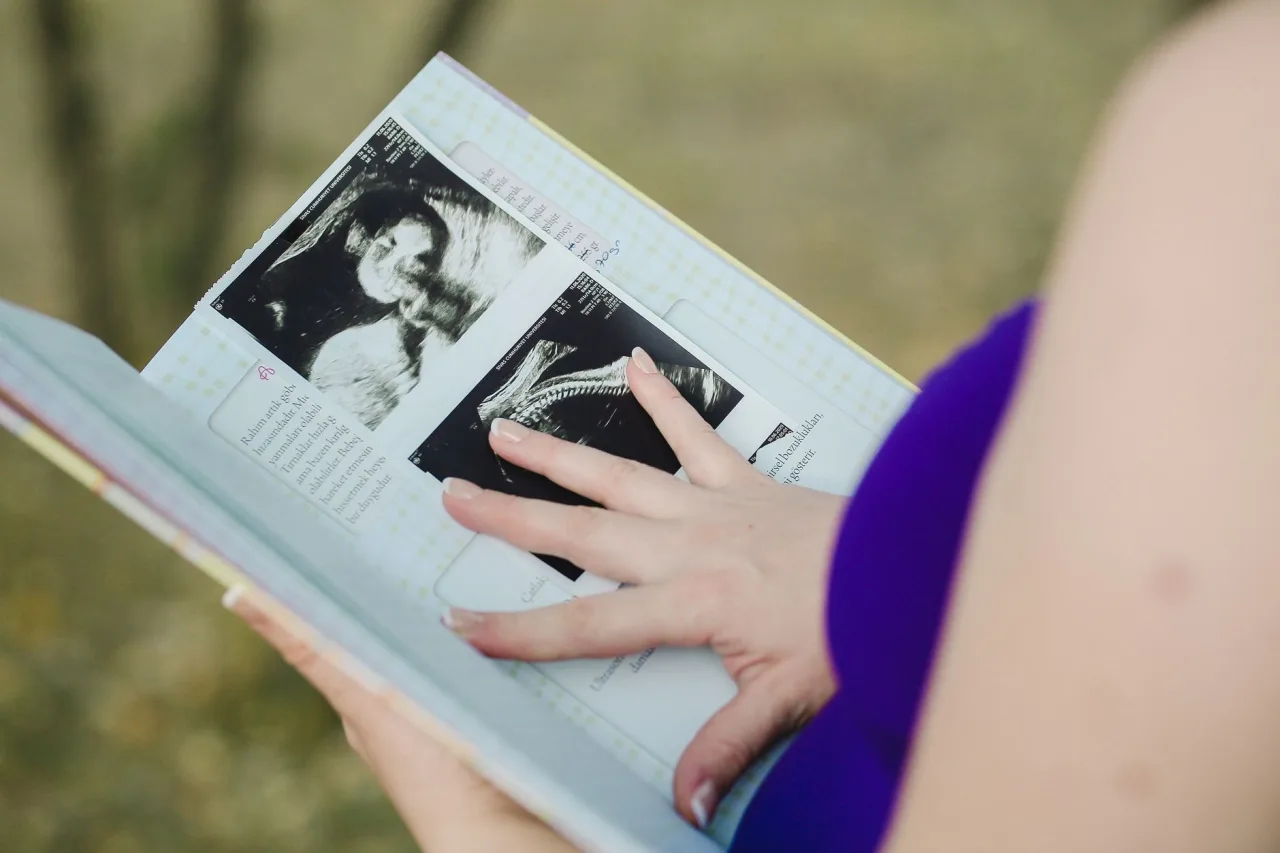
Timing matters for this scan, because the measurement is only reliable within a specific window.
- Before 11 weeks: the baby is usually too small for an accurate nuchal measurement, so the scan is not yet done.
- Around 11 to 14 weeks: this is the window for the nuchal translucency, commonly combined with the dating scan at about 12 weeks.
- After 14 weeks: the nuchal measurement is generally no longer possible. The NHS notes that if the scan happens after this point, a different blood test is offered instead, which is not quite as accurate as the combined test.
Because of that window, it is worth booking promptly once your pregnancy is confirmed. Our companion guides to the nuchal scan and the 12-week ultrasound cover the same appointment from slightly different angles.
The combined screening test
The nuchal ultrasound is usually not used alone. In what is called the combined test, the nuchal translucency measurement is brought together with a blood test and your age to estimate the chance of certain conditions. The NHS explains that the combined test includes both the blood test and the nuchal translucency ultrasound measurement when the scan is done in the right window.
The result is expressed as a chance, such as a number like 1 in 1,000, not a yes or no. A screening result that suggests a higher chance does not mean a baby has a condition; it means further testing can be offered so you have more information.
Tip: Screening is your choice. You can accept all of it, part of it, or none of it, and your antenatal care continues either way. If you are unsure, ask your midwife to talk through what each result could mean before you decide.
How to prepare

Preparation is simple and there is little to do. A full bladder can help the sonographer get a clearer view early in pregnancy, so you may be asked to drink water beforehand and not empty your bladder just before the scan. Wear comfortable, two-piece clothing so your abdomen is easy to reach.
It also helps to prepare emotionally. Bring your partner or a support person if you can, and think in advance about whether you would want further testing if the screening suggests a higher chance. There is no wrong answer, and you do not have to decide everything at once.
What happens during the scan
The nuchal ultrasound is usually done through the abdomen. You lie on your back, the sonographer applies gel to your tummy, and moves a probe over the skin to bring the baby into view. It is painless and uses sound waves, not radiation.
The sonographer will position the baby just so, then measure the nuchal translucency along with the length of the baby to confirm dates. Occasionally, if the view is difficult, a transvaginal ultrasound may give a clearer picture. Many parents find this the first real moment of seeing their baby move, which can be genuinely moving. The measurement itself takes only a short time, but the sonographer may wait patiently for the baby to settle into the right position, so the appointment can feel longer than the imaging alone. It is fine to ask what you are looking at on the screen, within the sonographer's need for quiet concentration.
What can affect the measurement
A nuchal ultrasound is a careful, technical measurement, and several things can influence whether it can be taken accurately. This is normal and not a cause for alarm.
- The baby's position: the sonographer needs a specific side-on view, so they may ask you to wait, move, or cough gently to encourage the baby to shift.
- How many weeks you are: the measurement is only reliable in the 11 to 14 week window, which is why dating is confirmed at the same time.
- The clarity of the view: occasionally the abdominal view is difficult, and a transvaginal approach gives a clearer picture.
If the measurement cannot be obtained, your care team will explain the alternatives, which may include a blood test on its own. None of this means something is wrong; it simply reflects the practical limits of imaging a very small, moving baby.
The emotional side, and support
It is completely normal to feel nervous before and during a nuchal ultrasound. For many parents it is the first time they see their baby, which can be joyful, and at the same time the screening element can bring worry. Both feelings can sit together.
You do not have to face the appointment alone. Bring a partner, friend, or family member if you can. If you find the waiting for results hard, your midwife is there to talk things through, and there are dedicated support organisations for parents going through antenatal screening. Give yourself permission to ask as many questions as you need.
Understanding your result
Your result combines the nuchal measurement with your blood test and other factors into an estimated chance. It is given as a probability, and it guides the next conversation rather than ending it. A higher-chance result may lead to an offer of further tests, such as non-invasive prenatal testing or a diagnostic test, each with its own considerations that your care team will explain.
Please note: This article is general information, not medical advice, and it cannot tell you what your own result means. Screening results need to be interpreted by your midwife, doctor, or a genetic counsellor who knows your full history. Always talk through your specific result with your healthcare provider.
After the nuchal scan
Whatever the result, the nuchal ultrasound is one step in a longer journey of antenatal care. Most pregnancies go on to a detailed anatomy scan at around 18 to 21 weeks, which looks closely at the baby's physical development. Our overview of scans during pregnancy maps out the appointments still ahead, so you can see how this one fits into the whole picture.
Frequently asked questions
What does a nuchal ultrasound measure?
It measures the nuchal translucency, the thickness of a small pocket of fluid at the back of the baby's neck. This measurement is used as part of screening for Down's syndrome and some other conditions. It is combined with a blood test and your age to estimate a chance, not to give a diagnosis.
When is the nuchal scan done?
It is usually done between about 11 and 14 weeks of pregnancy, often at the same appointment as the dating scan. After 14 weeks the nuchal measurement generally cannot be taken, and a different blood test is offered instead, which is not quite as accurate as the combined test.
Does a higher-chance result mean my baby has a condition?
No. The nuchal ultrasound is a screening test that estimates chance, not a diagnosis. A higher-chance result means further testing can be offered so you have more information. Many babies with a higher-chance screening result do not have the condition being screened for.
Do I have to have the nuchal scan?
No. Screening is your choice, and you can accept all, part, or none of it. Your antenatal care continues either way. If you are unsure, ask your midwife to explain what the results could mean before you decide.
Is the nuchal ultrasound safe?
Yes. It uses sound waves rather than radiation, and ultrasound has no known risks to the baby or mother. The scan is painless and is usually done gently through the abdomen with a probe and gel.
More guides on Pregnancy Ultrasound
Have a question or a topic to suggest?
We read every message. Tell us what you would like to see next.
You may also like

The Nuchal Scan, Step by Step
The nuchal scan is your first trimester ultrasound. Here is what to expect on the day, from booking and preparation to the scan itself and your screening results.
12 Week Ultrasound: Uses & Results
A guide to the 12 week dating scan: timing, purpose, preparation, what you might see, combined screening and safety, with a reminder to talk to your clinician.

Ultrasound in Pregnancy Guide
A reassuring, week-by-week guide to pregnancy ultrasound, from the early weeks through the dating and anomaly scans, including safety, preparation, and understanding results.