MRI During Pregnancy, Explained
Why MRI is sometimes used in pregnancy, how safe it is, and what to expect on the day.
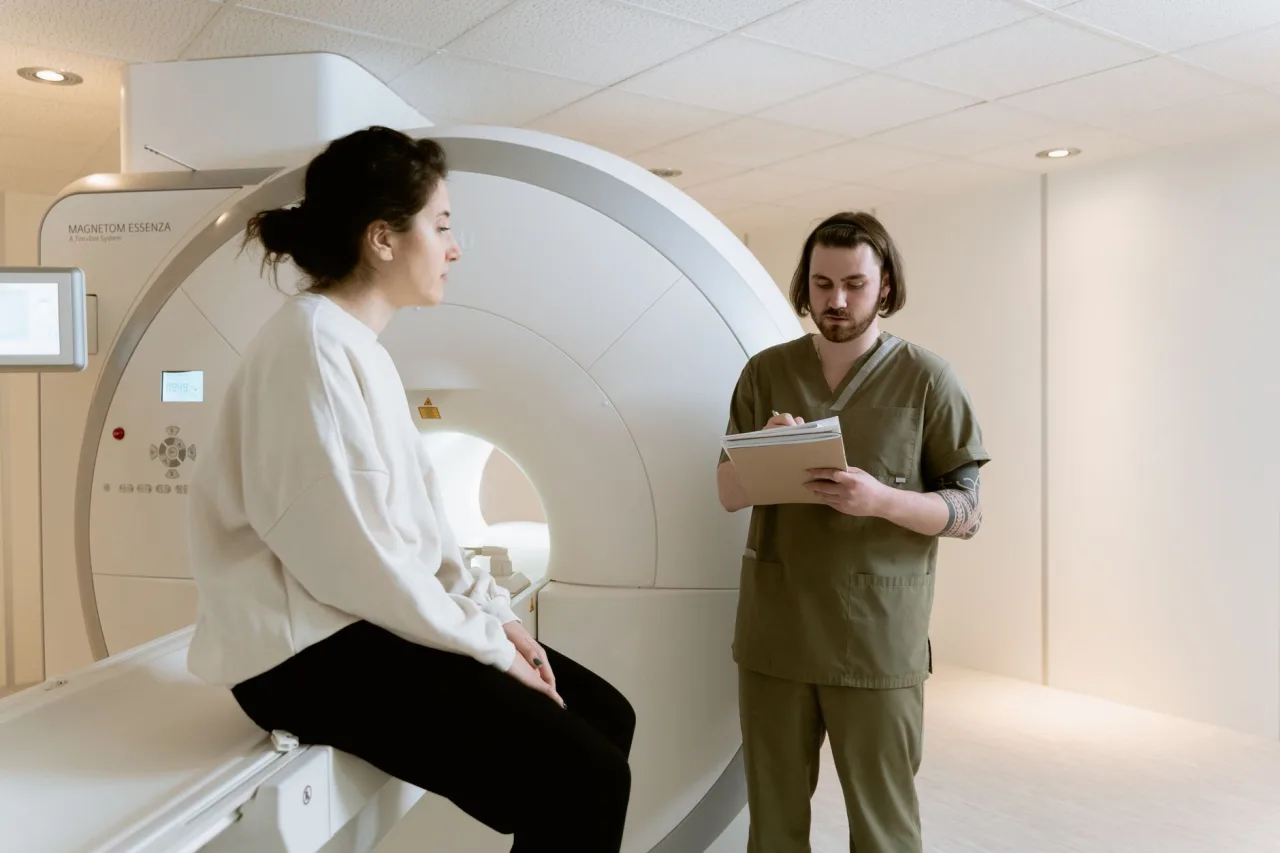
If your doctor has mentioned an MRI while you are pregnant, it is natural to feel a flutter of worry. The reassuring truth is that MRI does not use radiation, it is not a routine part of antenatal care, and when it is recommended it is usually to answer a specific question that ultrasound cannot fully resolve. This guide explains why an MRI might be used in pregnancy, when it tends to happen and what to expect. It is general information, so always follow the advice of your own doctor.
The short version
- MRI uses strong magnets and radio waves, not ionising radiation, so it is generally considered safe in pregnancy.
- It is not a routine pregnancy scan. Ultrasound remains the everyday tool for monitoring a baby's growth.
- MRI is used as a problem solving test, often after the first trimester, when more detail is needed than ultrasound gives.
- Gadolinium contrast is usually avoided in pregnancy unless it is truly necessary. Discuss any scan with your doctor.
Why MRI is used differently in pregnancy
Unlike x-ray and CT, magnetic resonance imaging does not use ionising radiation. As RadiologyInfo.org explains, MRI creates detailed pictures using a strong magnetic field, radio waves and a computer, and it has been used since the 1980s with no reports of harmful effects on pregnant patients or their babies. That safety profile is the main reason MRI, rather than a CT, may be chosen when cross sectional detail is genuinely needed during pregnancy.
That said, MRI is never the routine pregnancy scan. The workhorse of antenatal care is ultrasound, which is quick, widely available and excellent for watching a baby grow. Our guide to scans during pregnancy covers the standard ultrasound schedule, and our overview of the MRI scan explains how the technology works in general.
When an MRI might be recommended
MRI in pregnancy is a targeted test, used when a doctor needs more information than ultrasound can provide. Common reasons fall into two broad groups.
- Looking at the baby: occasionally MRI is used to examine the baby's brain, spine or other structures in more detail after something is seen on ultrasound.
- Looking at the mother: more often, MRI examines the pregnant person for a condition unrelated to the baby, such as suspected appendicitis, other abdominal pain, or a problem that needs clear imaging without radiation.
In both cases the goal is the same, to get accurate information safely so that your care team can make the best decision. If a doctor recommends MRI, it usually means they want to avoid a radiation based scan such as CT while still getting the detail they need.
Safety and timing, week by week
Guidance from radiology bodies is broadly reassuring, with sensible caution. RadiologyInfo.org notes that there is no known risk from having an MRI while pregnant, and that MRI is usually safer for the baby than imaging with x-rays or CT. It also notes that MRI is generally avoided in the first trimester unless the benefit of the exam clearly outweighs any potential risk, which is why non urgent scans are often scheduled for later in pregnancy.
- First trimester: MRI is usually reserved for situations where the benefit clearly outweighs any theoretical risk, and non urgent scans are often postponed.
- Second and third trimesters: MRI is more commonly used when needed, as the baby is more developed and positioning is easier.
- Any stage in an emergency: if a serious condition is suspected, the priority is your health, and your doctors weigh the timing accordingly.
Note: Always tell the radiology team you are pregnant, or think you might be, before any scan. This lets them tailor the exam, decide on timing and avoid contrast unless it is genuinely needed.
What about contrast dye?
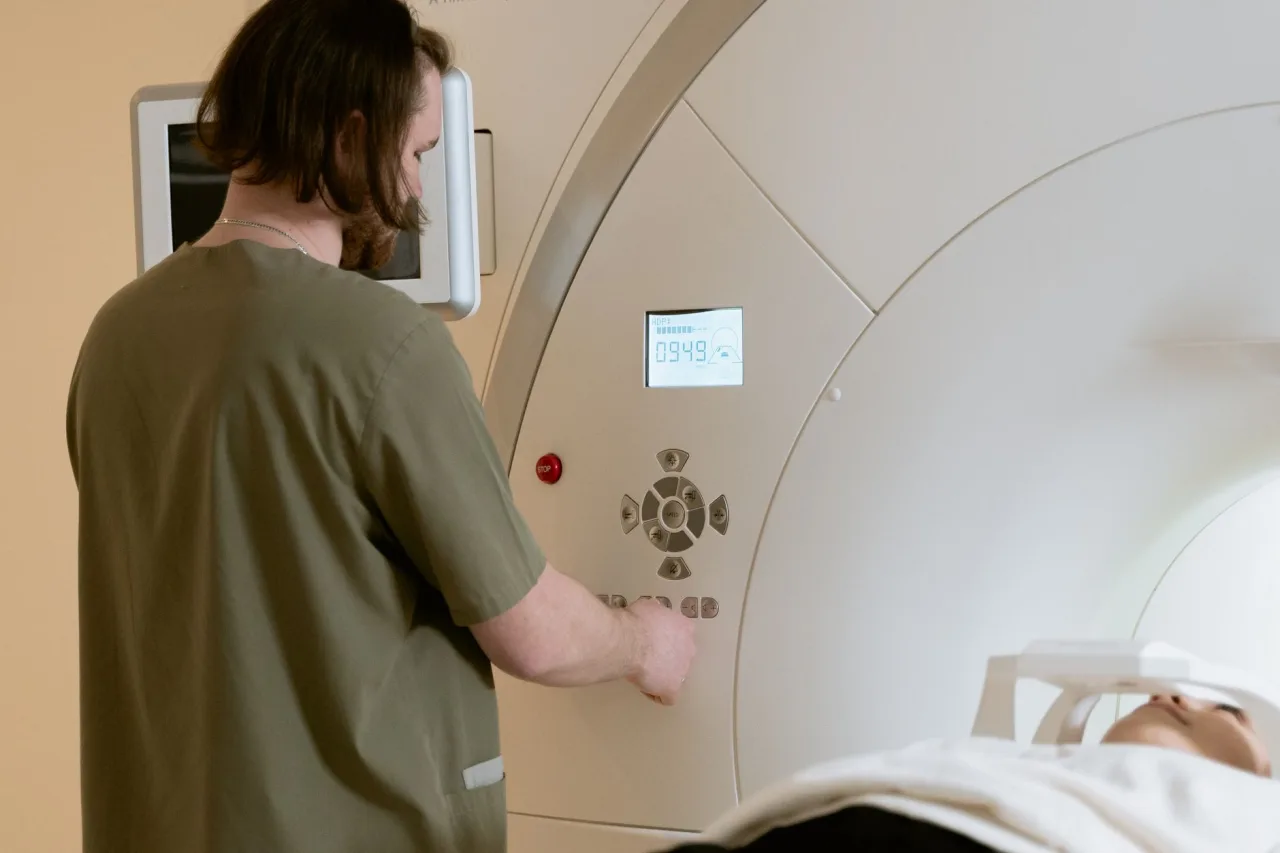
Some MRI scans use a contrast agent called gadolinium to make certain tissues clearer. In pregnancy, the standard approach is caution. RadiologyInfo.org advises that pregnant patients should not receive gadolinium contrast unless it is absolutely necessary, and that most centres avoid contrast in pregnancy out of an abundance of caution. Many pregnancy MRIs are done without any contrast at all and still give the information the team needs.
If contrast is being considered, your doctor will weigh the benefit against the cautious approach and explain the reasoning to you. It is always reasonable to ask whether the scan can be done without contrast, and why contrast is or is not needed in your situation.
What an MRI is like when you are pregnant
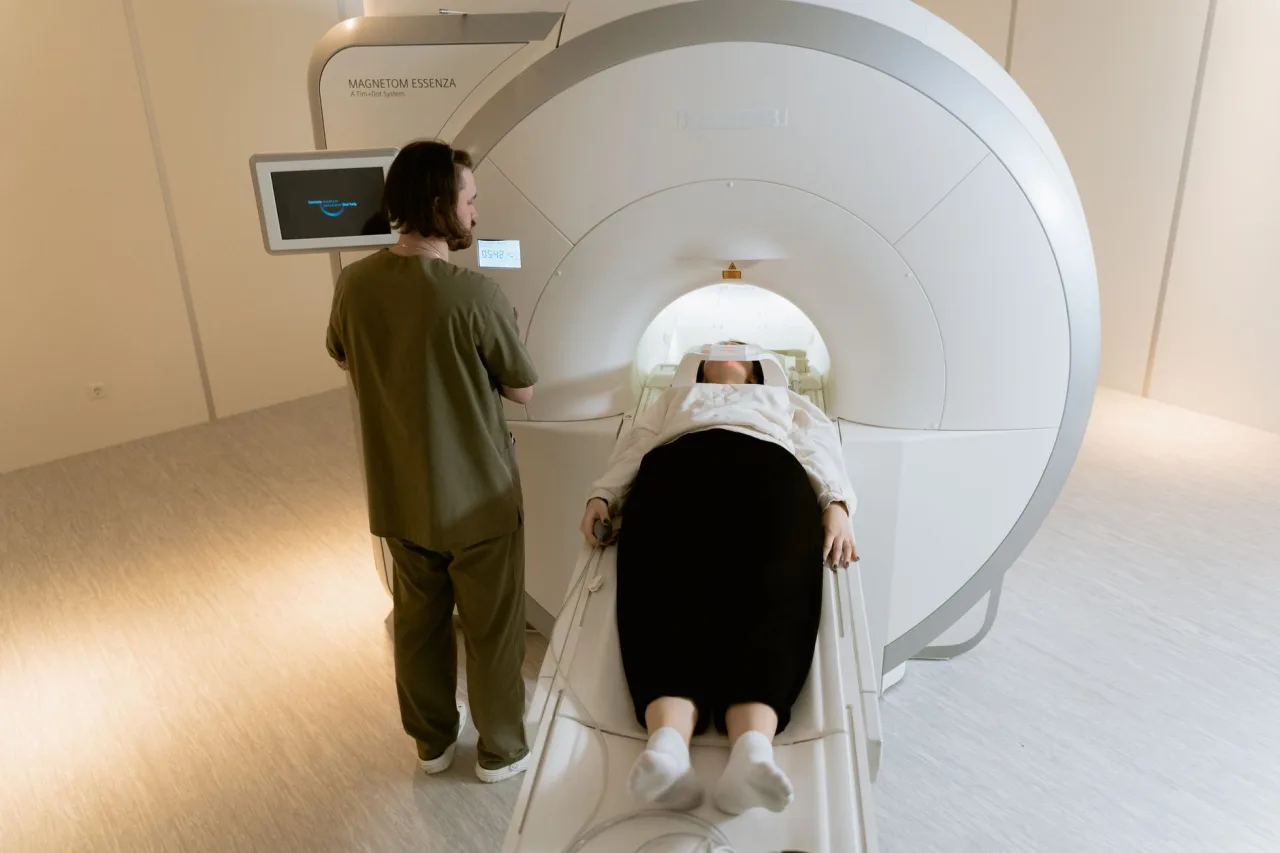
An MRI scanner is a large tube shaped machine. You lie on a padded table that slides into the opening, and you need to stay still while the machine takes its images. The scanner is noisy, making knocking and humming sounds, so you are given earplugs or headphones. A scan can take anywhere from around twenty minutes to an hour depending on what is being examined.
- You lie down, so tell staff if lying flat is uncomfortable later in pregnancy, as they can help with positioning.
- You will be asked to remove metal items, and to declare any implants, since the magnet is always on.
- There is an intercom and a call button, so you can speak to the team throughout.
- The scan is painless, though staying still and the noise can feel tiring.
If you find enclosed spaces difficult, tell the team in advance. They are used to this and can talk you through options. Our general MRI scan guide describes the experience in more depth, and a broader look at MRI in pregnancy sits in our companion article on MRI and pregnancy.
Getting your results
After the scan, a radiologist reviews the images and writes a report for the doctor who requested it. You usually do not get results on the spot. Instead, the referring doctor or specialist discusses them with you, often alongside your ultrasound findings and the rest of your care. This joined up view is important, because no single scan tells the whole story.
Try not to interpret images or reports on your own, as MRI findings need the context of your history and other tests. If you are waiting for results and feeling anxious, it is completely reasonable to ask your team when to expect them and who will explain them to you.
Important: This article is general information and is not medical advice. It cannot tell you whether you need an MRI or what your results mean. Always discuss the reasons for any scan, and your results, with your doctor or maternity team.
Questions worth asking your doctor
If an MRI has been suggested, a few clear questions can help you feel more in control and confident about the plan.
- What is the scan looking for, and why is MRI the right choice rather than ultrasound?
- Can the scan be done without contrast, and if not, why is contrast needed?
- Is this urgent, or can it wait until later in pregnancy?
- Who will explain the results to me, and when?
A good team will welcome these questions. Understanding the purpose of a scan often takes a lot of the worry out of it, and it helps you make decisions that fit your own pregnancy and comfort.
Frequently asked questions
Is an MRI safe during pregnancy?
MRI does not use ionising radiation, and radiology bodies report no known risk from having an MRI while pregnant, noting it is usually safer for the baby than x-ray or CT. It is generally avoided in the first trimester unless the benefit clearly outweighs any theoretical risk. Always tell staff you are pregnant so they can plan the scan.
Why would I need an MRI instead of an ultrasound?
Ultrasound is the routine tool in pregnancy, but occasionally more detail is needed than it can give. MRI may be used to look more closely at the baby's brain or spine after an ultrasound finding, or to examine the mother for a condition such as suspected appendicitis, without using radiation.
Can I have contrast dye during a pregnancy MRI?
Gadolinium contrast is usually avoided in pregnancy unless it is truly necessary, and many scans are done without any contrast at all. If contrast is being considered, your doctor will weigh the benefit carefully and explain why. It is reasonable to ask whether the scan can be done without it.
When in pregnancy is MRI usually done?
Non urgent MRI scans are often scheduled after the first trimester, because MRI is generally avoided early on unless the benefit clearly outweighs any potential risk. In an emergency, the timing is guided by the urgency of your condition and your doctors decide what is safest overall.
Will the MRI harm my baby's hearing because it is loud?
MRI scanners are noisy, and this is a common worry. Current evidence has not shown harm to babies from the noise of routine scans, and teams take care with each exam. If you have concerns, raise them with the radiology staff before your scan so they can explain how the exam is managed.
Sources and further reading:
- MRI of the Body, RadiologyInfo.org for MRI safety in pregnancy and the caution around gadolinium contrast.
- MRI Safety, RadiologyInfo.org for MRI compared with x-ray and CT during pregnancy.
- MRI scans, MedlinePlus (US National Library of Medicine) for how MRI works without ionising radiation.
More guides on Pregnancy Ultrasound
Have a question or a topic to suggest?
We read every message. Tell us what you would like to see next.
You may also like

MRI and Pregnancy: What to Expect, Week by
Being told you need an MRI while you are pregnant can feel unsettling, but it helps to know why doctors reach for this particular scan and what the evidence says about safety.

Scans During Pregnancy, Week by Week
Different pregnancy scans happen at different stages. Here is what each one checks, week by week, from the dating scan to the anomaly scan and later growth checks.

MRI Scan: Uses, Procedure & Results
A plain-language guide to MRI scans: what they show, why a doctor might order one, how to prepare, what happens during the scan, and how results are read.